New cannabis growing and processing operations are setting up shop in the wake of legalization in many states. They come with new hazards safety professionals need to know.
Drug testing in the workplace, especially in the manufacturing industry, has become a common part of pre-employment screening and health/safety measures in the workplace, which may include random, post-accident, and reasonable-suspicion testing.
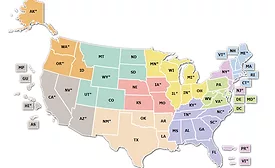
Although 35 states, three U.S. territories, and the District of Columbia have legalized cannabis for recreational or medical use, there still are no uniform standards for regulating potentially harmful contaminants in cannabis products.
The cannabis plant, Cannabis sativa, contains a number of active ingredients, including THC and CBD. THC, the most active ingredient of marijuana, is the component that makes a person high when either smoked or ingested. CBD, on the other hand, is not psychoactive: it doesn't induce a mind-altering effect.
That CBD wellness product you’re using could cause you to fail a workplace drug test. That’s according to an admittedly small study out of Johns Hopkins Medicine, in which researchers found that a single vaping episode of cannabis that is similar in chemical composition to that found in legal hemp products could possibly result in positive results on urine drug screening tests commonly used by many employers and criminal justice or school systems.
Cannabidiol (CBD) has been recently covered in the media, and you may have even seen it as an add-in booster to your post-workout smoothie or morning coffee. What exactly is CBD? Why is it suddenly so popular?
Employers who are struggling to understand how the evolving cannabis legalization landscape will impact their workplaces are getting some guidance from the National Safety Council (NSC).
Regardless of whether cannabis consumption is allowed by their state, the NSC says employers should prohibit cannabis use for those in safety sensitive positions.
Less than half of the states where the drug treatment is legal protect patients from employment discrimination. Courts have generally sided with employers -- until recently.
Summary: Of the 33 states where medical marijuana is legal, 14 protect patients from employment discrimination. Recent court rulings signal a potential shift in favor of employees.
Ohio employers can fire employees who use medical marijuana or refuse to hire them in the first place.
Medical marijuana is legal in Ohio, but it remains illegal at the federal level and Ohio employers are testing for it like they would any other illegal drug.
“Under Ohio law, employers don’t have to currently hire someone who uses medical marijuana and they don’t have to retain an employee that tests positive for medical marijuana,” said Michael Griffaton, an attorney at Vorys, Sater, Seymour and Pease LLP.