OSHA is proposing nearly two million dollars in fines against a Wisconsin corn milling facility, after five employees were killed in 12 others injured in a grain dust explosion. Among those injured in the May 31, 2017 accident at Didion Milling, Inc.: a 21-year-old employee who suffered a double leg amputation after being crushed by a railcar. OSHA found that the explosion likely resulted from Didion’s failures to correct the leakage and accumulation of highly combustible grain dust throughout the facility and to properly maintain equipment to control ignition sources.
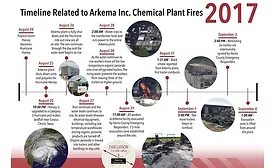
In the flooding caused by Hurricane Harvey in August, the water rose so rapidly at the Arkema chemical plant in Crosby, Texas site that the first combustion occurred less than 72 hours after flooding commenced. The backup generators at Arkema were elevated 2 feet off the ground, but the flooding exceeded 3 feet in the vicinity of the generators.
In short, says the U.S. Chemical Safety Board (CSB), the facility was not prepared for such heavy rainfall and such a rapid flood rate. When the floodwaters knocked out power to the plant’s refrigerators, leaving the organic peroxides and volatile chemicals stores at the plant at risk of heating up, Arkema employees moved the peroxides to refrigerated trailers. But the waters kept rising, forcing the evacuation of the workers and ultimately flooding the trailers.
OSHA inspectors found numerous hazards at an auto auction facility, after an accident that claimed the lives of five people.
The tragedy at Lynnway Auto Auction Inc. occurred on May 3, 2017, when five people died of their injuries after being struck by a sport utility vehicle.
The agency issued 16 citations to the company for motor vehicle hazards, blocked exit routes, violations of the hazard communication standard, and recordkeeping deficiencies.
When designing and laying out the piping loop for a recirculating tepid water system for a series of emergency showers, there are a number of important items to consider to maximize the performance and minimize the cost of the required tepid water delivery system.
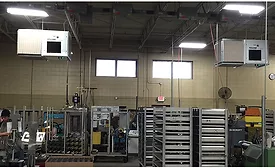
One manufacturing company implemented a new fume collection system to not only improve working conditions for its employees but to increase the overall efficiency and safety of their plant.
The Chemical Safety Board (CSB) may be preparing to take a significant step backwards in its advocacy for worker participation in preventing chemical facility incidents, including catastrophes like the Deepwater Horizon oil spill.
In April, 2016 the CSB unanimously approved a 4-volume “Macondo Investigation Report” in response to the catastrophic Deepwater Horizon blowout that killed 11 workers, injured 17 and spilled 5 million barrels of oil into the Gulf of Mexico. The report contained a number of recommendations, including four recommendations calling for the Bureau of Safety and Environmental Enforcement (BSEE) to significantly enhance its regulations requiring worker participation in the employer’s safety program, and enhanced whistleblower protections for workers participating in safety activities.
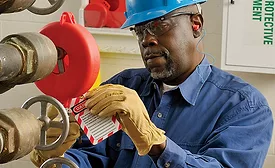
OSHA’s Control of Hazardous Energy standard -- the Lockout-Tagout rule -- addresses the safety of employees engaged in servicing and maintenance activities in general industry when exposure to the unexpected release of hazardous energy is possible.
On the heels of an incident in which a worker was injected with a flammable propellant gas, OSHA has reached agreements with three Massachusetts packaging companies to correct workplace hazards and enhance safety.
OSHA found that Dudley- based Shield Packaging Co. Inc. – which packages aerosol containers – failed to implement required procedures to lock out the machine's power sources or train the employee on how to recognize and avoid the hazard.
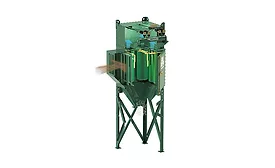
'Method of Testing the Performance of Industrial Pulse Cleaned Dust Collectors,' provides a way to accurately assess and compare self-cleaning dust collection systems. These are systems that use compressed air to discharge the dust cake from the filter without taking the air filter off line.
Loading docks are flooded with potential danger, and without the proper training, procedures, equipment, and maintenance they are liable to deliver disaster at every turn.