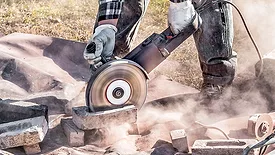
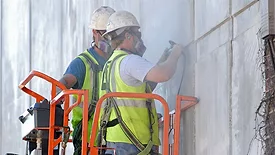
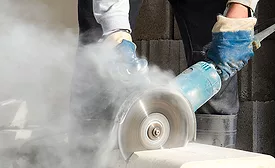
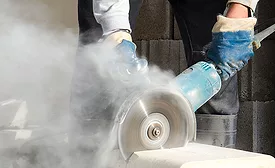
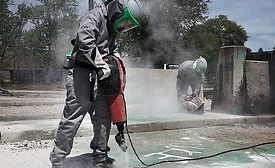
Silica is released into the air during the construction process and breathing it in can lead to cancer. Use this guide to learn how to work safely with silica in every setting.
Exposure to mixed coal mine dust that contains respirable crystalline silica can lead to the development of coal workers’ pneumoconiosis, commonly known as black lung disease.
Cases of silicosis have recently been associated with the manufacture of artificial stone products, and a discussion of the industry practices leading to these occupational injuries is provided here.
What makes dust so harmful for construction workers is that it’s a combination of particles from various materials used on project sites. These fine grains could be heavy metals, asbestos, pollen, silica and much more.
Hearing conservation has apparently not been a priority at Prestress Services Industries of Ohio LLC, a full-service structural precast company headquartered in Columbus, Ohio.
Among the 20 safety and health violations found by OSHA inspectors at the company’s Mount Vernon, Ohio concrete production plant:
Noise levels in the facility were above the permissible exposure limit, and
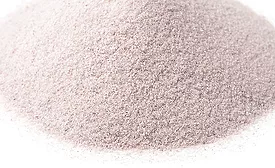
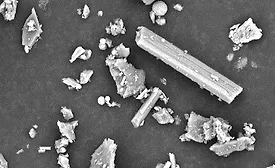
Crystalline silica is one of the most common elements on the planet, just behind oxygen. About 2.3 million workers are exposed to it in their workplace. It’s about 100 times smaller than sand and can be found on construction sites in building materials such as concrete, block, stone, sand, and mortar.
Crystalline silica is an abundant natural material found in soil, stone and sand. It is also present in many construction materials such as brick, mortar and concrete. It becomes respirable when any of the afore-mentioned materials are cut or broken down into fine particles.
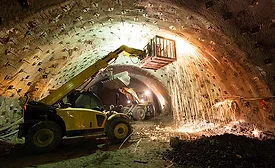
Crystalline silica is one of the most common minerals found worldwide in the earth’s crust. It is frequently used in many industrial processes such as mining, quarrying and stone-cutting. Breathing air contaminated with crystalline silica particles can cause serious respiratory and lung diseases.