ISHN logo
search
cart
facebook twitter linkedin youtube
  • Sign In
  • Create Account
  • Sign Out
  • My Account
ISHN logo
  • NEWS
    • Today's News
    • Global Safety News
    • Government Regulations
  • PRODUCTS
    • Product Innovations
    • Featured Products
  • TOPICS
    • Environmental Health and Safety
    • Facility Safety
    • Workplace Health
    • Occupational Safety
    • PPE
    • More Topics
  • CONSTRUCTION
  • TECHNOLOGY
  • COLUMNS
    • Best Practices
    • Dave Johnson: What’s going on
    • Editorial Comments
    • Leading Safety
  • MULTIMEDIA
    • ISHN Podcast
    • Videos
    • Cold Stress Education Quiz
    • Webinars
    • White Papers
  • MORE
    • Buyer's Guide
    • Newsletters
    • Convention Companion
    • Polls
    • Events
    • ISHN Store
    • Sponsor Insights
  • EMAGAZINE
    • eMagazine
    • Archived Issues
    • Contact
    • Advertise
  • JOIN TODAY!
Facility SafetyIndustrial HygieneConstruction Industry Safety and Health

How to reduce dust exposure for construction workers
By Holly Welles
Dust hazard analysis deadline approaches
October 12, 2020

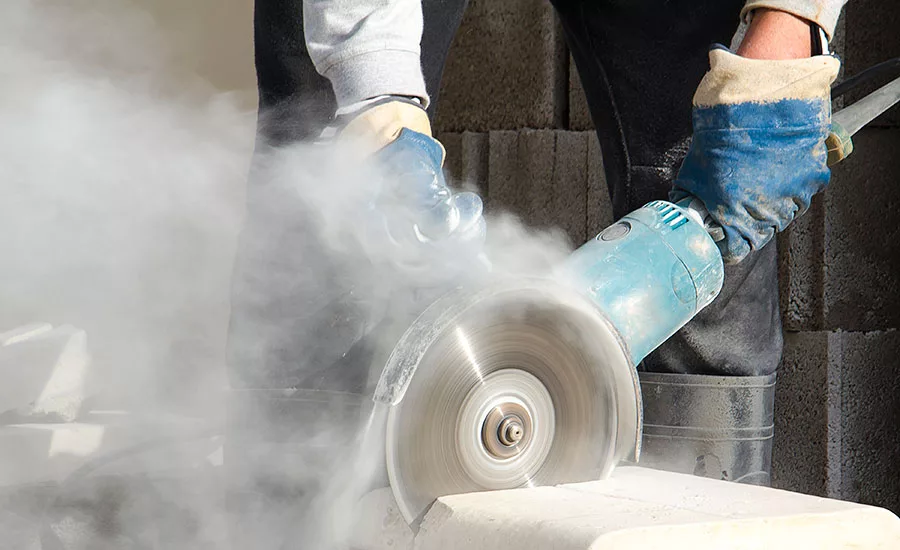
What makes dust so harmful for construction workers is that it’s a combination of particles from various materials used on project sites. These fine grains could be heavy metals, asbestos, pollen, silica and much more. 

If inhaled, this dust can induce a number of health issues, such as heart strain, reduced lung capacity and irritation of the eyes, nose, throat and lungs. Silica, a small crystalline substance that’s more than 100 times smaller than ordinary sand, can also cause lung cancer, kidney disease, chronic obstructive pulmonary disease (COPD) and silicosis, an incurable lung illness that can be fatal.

In the U.S., around 2.3 million people get exposed to silica at work. When construction workers breathe in this material, along with any type of dust, they may feel like they’re experiencing allergies or a mild cold. However, as the irritants settle into the lungs, they can damage the surrounding tissue. Some diseases come on quickly, but most take a long time to develop. If workers don’t detect the issue early, it becomes harder to treat.

Mitigating dust on the worksite is something that organizations must do, as it’s a matter that affects the health of the people working in and living near construction areas. Discover some of the top dust mitigation strategies that project managers can incorporate into their plans.

Personal protective equipment

All employees should have personal protective equipment (PPE) and proper training on how to use it to limit exposure to dust. Filtering respirators and dust masks can offer extra protection against breathing in harmful particles. The National Institute for Occupational Safety and Health (NIOSH) recommends half-face particulate respirators with N95 filters or better to limit exposure to silica, as these models offer improved efficiency over earlier dust and mist filters.

Workers should also wear safety goggles when irritants are present, as they’re the only type of protection that creates a seal around the eyes. These goggles can incorporate prescription lenses mounted behind the protective material for those requiring vision correction. While this PPE should have adequate ventilation, it must protect against dust entry.

Restricted site access

Excessive vehicle movement can lead to dust generation on construction sites. To keep the debris to a minimum, site managers should restrict access points. They should also create paved parking areas to limit the spots where vehicles can create dust. Beyond vehicular access, construction companies can limit activity during high winds, as continuing tasks will only accelerate particulate problems. 

Water applications via trucks

Another standard method for dust control during construction is to water down the site. While project managers can always hope for rain, they should also opt for water trucks to spray down the area and keep dust suppressed. Depending on the scope of the project, workers should apply water at least three times a day.

Water is an extremely effective and economical technique compared to many others. Plus, it offers excellent insurance for those that work in fire-prone areas. Most truck models offer two water tank capacities — 2,000 and 4,000 gallons. Be sure to track water usage, however, as excess can lead to potential environmental erosion.

Chemical suppression products

Project managers can find certain chemical dust suppressants, though the performance of these products will depend on the application method, surface moisture content, site precipitation, drainage and more. Most of these suppressants are designed for areas with medium traffic and surfaced with gravel.

Calcium chloride, for example, is a salt that can absorb moisture from the air without becoming a liquid. The result is a binding effect on particles, preventing dust. This chemical works best during the spring season when the road still has moisture from rains. During times of low humidity, a water truck may need to soak the area for the calcium chloride to be effective.

Pre-work preparation materials

Site managers can offer protection against dust with the right preparation materials. For example, plastic sheeting on the floors and ceilings of the workspace can contain particles. Sticky plastic sheeting is another option, viable for hard surfaces and carpets. Accessory kits with zipper closures are also useful, as they keep the particles contained to one area.

When outside, workers can apply mulch and vegetation to the soil to prevent dust, a method that's considered eco-friendly. Another way to control harmful inhalants is to properly store and cover materials, especially when carried on trucks.

Natural and block barriers

Another technique that can help with dust control is to use barriers on construction sites, such as board or snow fences, crate walls or bales of hay. These barriers play a significant role in controlling airflow, preventing gusts from blowing soil particulates off the ground. They can also stop erosion.

How to reduce dust and protect construction workers

Experts believe that more than 500 construction workers die from exposure to silica dust each year. Other irritants, too, such as those from wood, gypsum, limestone and marble, can lead to serious illness. To keep workers safe, construction companies must utilize dust mitigation methods, such as the ones above, on every project site.

KEYWORDS: dust dust protection silica

Share This Story

Looking for a reprint of this article?
From high-res PDFs to custom plaques, order your copy today!

Holly welles

Holly Welles is a construction and real estate writer for publications including Construction Executive, Constructible and Modern Contractor Solutions. Learn more about her work on her website, The Estate Update, or connect on LinkedIn.

Recommended Content

JOIN TODAY
to unlock your recommendations.

Already have an account? Sign In

  • forklift safety

    Exploring the latest technologies in forklift safety

    With more staff and more stock in warehousing now more...
    Workplace Training Strategies
    By: Josh Cramer
  • welding

    All about welder’s flash or arc eye

    A flash burn is a painful inflammation of the cornea,...
    Environmental Health and Safety
  • dangerous jobs

    The 10 most dangerous jobs in the U.S.

    On-the-job deaths have been rising — hitting the highest...
    Government Safety Regulations
    By: Benita Mehta
Manage My Account
  • eMagazine Subscriptions
  • ISHN Newsletter & Other Newsletter Alerts
  • Online Registration
  • Manage My Preferences
  • Subscription Customer Service

More Videos

Sponsored Content

Sponsored Content is a special paid section where industry companies provide high quality, objective, non-commercial content around topics of interest to the ISHN audience. All Sponsored Content is supplied by the advertising company and any opinions expressed in this article are those of the author and not necessarily reflect the views of ISHN or its parent company, BNP Media. Interested in participating in our Sponsored Content section? Contact your local rep!

close
  • man wearing the the Sundström SR200 Full Face Mask Respirator
    Sponsored byOHD

    5 Fit Testing Mistakes That Could Cost You

  • This image shows Magid AcuSpex polarized blue mirrored safety glasses.
    Sponsored byMagid Glove and Safety

    Construction PPE Guide: What Crews Need for Each Task

  • lone worker in confined space
    Sponsored byAlphasense Ltd.

    GET THE LEAD OUT of your Safety Oxygen Sensors!

Popular Stories

SpaceX 7 launch

OSHA Investigating Fatal Fall at SpaceX Starbase

Automated loading dock equipment

After March 2026 Rivian Death, Safety Managers Reassess Loading Dock Systems Under OSHA's Warehouse Emphasis Program

psychology in the workplace

Most Workplaces Measure Psychological Safety, Ignoring Psychosocial Risks

top 10 most dangerous jobs

Poll

Seasonal Readiness

With the federal heat stress prevention rule on the horizon, which area of your safety program needs the most attention?
View Results Poll Archive

Products

Surviving an OSHA Audit A Management Guide, 2nd Edition

Surviving an OSHA Audit A Management Guide, 2nd Edition

See More Products

ISHN Podcasts

Related Articles

  • the Mine Safety and Health Administration

    OSHA announces proposed rule to reduce silica dust exposure, better protect miners’ health

    See More
  • Working through chronic pain

    The constant pressure for construction workers to work in pain

    See More
  • Asbestos safety measures for construction workers

    See More

Related Products

See More Products
  • Top Ten Pitfalls in OSHA Recordkeeping and How to Avoid Them

See More Products

Related Directories

  • Scientific Dust Collectors

    Scientific Dust Collectors (SDC) began in 1981 when our first patent for improving filter cleaning was issued. Our patented UniFlow Supersonic Nozzle -based cleaning system is where it all starts. Combined with our High Side Inlets, Wide Filter Spacing, and Inlet Baffling, we are able to guarantee performance, efficiency, and filter life. ASHRAE 199 Test Lab on site.
  • SafetyLine Lone Worker

    SafetyLine Lone Worker helps companies monitor the status of workers who are remote, alone, or working in hazardous situations. We are an automated check-in monitoring and emergency notification service. SafetyLine uses its communications infrastructure to ensure that workers have comprehensive monitoring, 24/7, without the need for costly monitoring centers.
×

Become a Leader in Safety Culture

Build your knowledge with ISHN, covering key safety, health and industrial hygiene news, products, and trends.

JOIN TODAY
  • RESOURCES
    • Advertise
    • Contact Us
    • Directories
    • Manufacturing Division
    • Store
    • Want More
  • SIGN UP TODAY
    • Create Account
    • eMagazine
    • Newsletters
    • Customer Service
    • Manage Preferences
  • SERVICES
    • Marketing Services
    • Reprints
    • Market Research
    • List Rental
    • Survey/Respondent Access
  • STAY CONNECTED
    • LinkedIn
    • Facebook
    • YouTube
    • X (Twitter)
  • PRIVACY
    • PRIVACY POLICY
    • TERMS & CONDITIONS
    • DO NOT SELL MY PERSONAL INFORMATION
    • PRIVACY REQUEST
    • ACCESSIBILITY

Copyright ©2026. All Rights Reserved BNP Media, Inc. and BNP Media II, LLC.

Design, CMS, Hosting & Web Development :: ePublishing