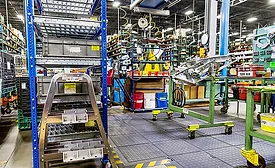
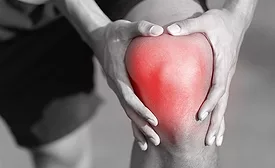
In this article, we'll explore the intricacies of ergonomic hazards, from physical ailments like muscle strains and carpal tunnel syndrome to the broader implications they have in the workplace. We'll also explore OSHA's national emphasis program and uncover practical, impactful solutions that can be implemented across various work environments.
Locker room talk. A fellow was saying he was in bed for ten days after having his big toe operated on. “Ten days for your big toe?” “Yeah, the doc said my joint was shot and if I didn’t have a pin put in, I couldn’t walk and would be in a wheelchair the rest of my life. Man, I’d wake up in the middle of the night and my toe was killing me.”
Recent statistics indicate that 51% of occupational injuries involve the hand and fingers. The most common types of hand injuries are traumatic injuries, contact injuries and repetitive motion injuries.
Squeezing limes for fresh juice may improve the taste of any summer cocktail, but for bartender Justin Fehntrich, it only left him with severe and blistered hands. On a hot summer day this past June, Fehntrich was bartending at a fundraiser on Fire Island, which required that he prep drinks by cutting up and squeezing 100 limes into pitchers for the guests’ cocktails directly under the sun.
Shawn Roll has expertise in a specific type of “handiwork.” Roll, an assistant professor at the USC Chan Division of Occupational Science and Occupational Therapy, focuses primarily on research for the prevention, rehabilitation and assessment of musculoskeletal disorders like carpal tunnel syndrome (CTS).
For some workers, a simple trip to the bathroom could result in the loss of a job.
Poultry-processing workers are sometimes disciplined for taking bathroom breaks while at work because there is no one available to fill in for them if they step away from the production line.
Most construction workers use hand tools. Some use them all day long. Using the wrong hand tool, or the right tool the wrong way, can injure the muscles, tendons, or nerves in your hand, wrist, or arm. These types of injuries develop over time. Early symptoms may include achy, tired hands and wrists that feel better after rest. It is easy to just write these off to a hard day’s work – and in some cases you can end up with an injury that might even force you to quit construction work.
Hand therapy is a type of rehabilitation performed by an occupational or physical therapist with patients who suffer from conditions affecting the hands and upper extremities. Therapy enables patients to hasten their return to a productive lifestyle.
Work-related musculoskeletal disorders (WMSDs) are a group of painful disorders of muscles, tendons, and nerves. Carpal tunnel syndrome, tendonitis, thoracic outlet syndrome, and tension neck syndrome are examples.
Compared to the roles of a power-line worker, bounty hunter, or coal miner, working in an office may not seem very dangerous. What's the worst that could happen -- a papercut or two? As The Office's Dwight Schrute would say, FALSE!