ISHN logo
search
cart
facebook twitter linkedin youtube
  • Sign In
  • Create Account
  • Sign Out
  • My Account
ISHN logo
  • NEWS
    • Today's News
    • Global Safety News
    • Government Regulations
  • PRODUCTS
    • Product Innovations
    • Featured Products
  • TOPICS
    • Environmental Health and Safety
    • Facility Safety
    • Workplace Health
    • Occupational Safety
    • PPE
    • More Topics
  • CONSTRUCTION
  • TECHNOLOGY
  • COLUMNS
    • Best Practices
    • Dave Johnson: What’s going on
    • Editorial Comments
    • Leading Safety
  • MULTIMEDIA
    • ISHN Podcast
    • Videos
    • Cold Stress Education Quiz
    • Webinars
    • White Papers
  • MORE
    • Buyer's Guide
    • Newsletters
    • Convention Companion
    • Polls
    • Events
    • ISHN Store
    • Sponsor Insights
  • EMAGAZINE
    • eMagazine
    • Archived Issues
    • Contact
    • Advertise
  • JOIN TODAY!
Psychology in the Workplace

How to give quality recognition

By E. Scott Geller
May 19, 2000
How many times have you heard: "We can't learn unless we make mistakes." This might make us feel better about the errors of our ways, but nothing could be further from the truth. Behavioral scientists have shown convincingly that success-not failure-produces learning.

Just look at our own experiences. A pleasant consequence gives us direction and motivation to continue the behavior. We know what we did to receive the reward, and we're motivated to earn another.

A negative consequence following a mistake only tells us what not to do. It provides no specific direction for problem-solving. And overemphasizing a mistake can discourage us from continuing the learning process.

Learning occurs most smoothly and is most enjoyable when there are no errors. Mistakes disrupt the teaching/learning process and can lead to a negative attitude, especially if negative social consequences follow. Even subtle reactions to an error-disappointed faces or verbal tone-can increase feelings of despair and turn a person off to the entire learning process.

The antidote to this kind of depressed learning is to provide positive consequences for correct behavior. And the most powerful positive consequence to support a learning process is social recognition-the theme of this article. Here are seven guidelines for giving quality recognition: ·

  • Be on time: People need to know what they did to earn your appreciation. Then they are motivated to continue that behavior. So timely feedback is important. If it's necessary to delay recognition, when you do give it relive the behavior or activities that were noteworthy. Talk specifically about the performance. Don't hesitate to ask the recipient to recall aspects of the situation and the desirable behavior. ·
  • Get personal: Recognition should not be generic, fit for anyone in any situation. It should be customized. This happens naturally when recognition is linked to individual performance under designated circumstances. It's tempting to say "we appreciate" rather than "I appreciate," and to refer to company gratitude rather than personal acknowledgment. But speaking for the company can come across as impersonal and insincere. Of course it's appropriate to reflect value to the organization when giving recognition, but the focus should be personal. ·
  • Take it to a higher level: Adding a universal attitude like leadership, integrity, trust-worthiness, or actively caring to your recognition statement obviously makes what you're saying more rewarding. This is called reflecting a higher-order characteristic, a potent way to boost self-esteem and make recognition most memorable. But it's important to state the specific behavior first, and then make an obvious linkage between the behavior and the positive attribute it reflects. ·
  • Go one-on-one: It's customary to recognize individuals in front of a group. Just think of the 1996 Olympics. Many managers take the lead from sporting events and give their individual recognition in group settings. But many people feel embarrassed when singled out in front of a group.
There might be accusations of "sucking up to management."

In athletic events the participants' performance is measured fairly and the winner is objectively determined. Behavior-based safety recognition is also objective, but it is usually impossible to assess everyone's safety-related behaviors and obtain a fair ranking for individual recognition. So praising a person in public can be seen as favoritism by individuals who feel they did equally well, but did not get praised. Plus, this ranking sets up a win/lose atmosphere-perhaps appropriate for sporting events but not in workplaces that need everyone actively caring for the safety of others to eliminate injuries. Recognizing teams of workers can be done in a group setting. Since individual responsibility is diffused or dispersed across the team, there's minimal risk of individual embarrassment or peer harassment.

Remember, though, that team achievement rarely results from equal performances by all team members. It's important to deliver private recognition to those who went beyond the call of duty for the sake of their team.

Let it sink in: In this fast-track age, we all try to communicate as much as possible when we finally get in touch with a busy person. After recognizing a person's special safety effort, we're tempted to tag on a bunch of unrelated statements, even a request for additional behavior. This comes across as "I appreciate what you've done for safety, but I need more." Resist this temptation. Give your rewarding words a chance to be internalized, so they become part of the person's own long-term self-motivation for safe behavior. Don't misplace the focus: If a material reward accompanies social approval, words of appreciation can become less significant. This, in turn, lessens the impact on one's self-reinforcement system. Tangibles can add to the quality of interpersonal recognition if they are delivered as tokens of appreciation. But they must not be viewed as a payoff for the safety-related behavior-only as a symbol of going beyond the call of duty for safety.

Spread the word: Sometimes people are suspicious of praise when it's delivered face-to-face. Is there is an ulterior motive? Perhaps a favor is expected in return. Or maybe the recognition is seen merely as an extension of a communication exercise.

Suppose I tell you that someone else in your work group told me about the superb job you did leading a safety meeting. Chances are you'll consider the recognition genuine because I was only reporting what someone else said. This secondhand recognition also can build a sense of belonging or group cohesion among individuals. Gossip can be beneficial-if it is positive.

Share This Story

Looking for a reprint of this article?
From high-res PDFs to custom plaques, order your copy today!

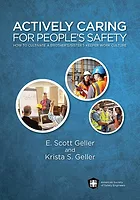
E. Scott Geller, Ph.D., is Alumni Distinguished Professor, Center for Applied Behavior Systems, Virginia Tech, and senior partner with Safety Performance Solutions, Blacksburg, VA. For more information visit www.safetyperformance.com. "Actively Caring for People's Safety: How to cultivate a brother’s/sister’s keeper work culture," co-authored by Scott’s daughter Krista, was recently published by ASSE. Scott’s 15-minute TEDX talk on You Tube can be accessed at: https://www.youtube.com/watch?v=7sxpKhIbr0E


Recommended Content

JOIN TODAY
to unlock your recommendations.

Already have an account? Sign In

  • forklift safety

    Exploring the latest technologies in forklift safety

    With more staff and more stock in warehousing now more...
    Facility Safety
    By: Josh Cramer
  • welding

    All about welder’s flash or arc eye

    A flash burn is a painful inflammation of the cornea,...
    Environmental Health and Safety
  • dangerous jobs

    The 10 most dangerous jobs in the U.S.

    On-the-job deaths have been rising — hitting the highest...
    Construction Industry Safety and Health
    By: Benita Mehta
Manage My Account
  • eMagazine Subscriptions
  • ISHN Newsletter & Other Newsletter Alerts
  • Online Registration
  • Manage My Preferences
  • Subscription Customer Service

More Videos

Sponsored Content

Sponsored Content is a special paid section where industry companies provide high quality, objective, non-commercial content around topics of interest to the ISHN audience. All Sponsored Content is supplied by the advertising company and any opinions expressed in this article are those of the author and not necessarily reflect the views of ISHN or its parent company, BNP Media. Interested in participating in our Sponsored Content section? Contact your local rep!

close
  • man wearing the the Sundström SR200 Full Face Mask Respirator
    Sponsored byOHD

    5 Fit Testing Mistakes That Could Cost You

  • This image shows Magid AcuSpex polarized blue mirrored safety glasses.
    Sponsored byMagid Glove and Safety

    Construction PPE Guide: What Crews Need for Each Task

  • lone worker in confined space
    Sponsored byAlphasense Ltd.

    GET THE LEAD OUT of your Safety Oxygen Sensors!

Popular Stories

SpaceX 7 launch

OSHA Investigating Fatal Fall at SpaceX Starbase

dust explosion

Tennessee OSHA Issues Record $3.1M Fine After Deadly Explosion at Munitions Plant

roofing dangerous jobs Getty.jpg

OSHA Finds Florida Roofing Company Willfully Exposed Workers to Safety Hazards After Worker’s Fatal Fall

top 10 most dangerous jobs

Poll

Seasonal Readiness

With the federal heat stress prevention rule on the horizon, which area of your safety program needs the most attention?
View Results Poll Archive

Products

Surviving an OSHA Audit A Management Guide, 2nd Edition

Surviving an OSHA Audit A Management Guide, 2nd Edition

See More Products

ISHN Podcasts

Related Articles

  • ASSE

    Hot off the ASSE press: Actively Caring for People’s Safety

    See More
  • Actively Caring for People’s Safety

    4 STEPS to cultivating a brother’s/sister’s keeper culture

    See More
  • actively caring for people, behavior-based safety

    Actively caring for people’s safety

    See More

Related Products

See More Products
  • Top Ten Pitfalls in OSHA Recordkeeping and How to Avoid Them

See More Products
×

Become a Leader in Safety Culture

Build your knowledge with ISHN, covering key safety, health and industrial hygiene news, products, and trends.

JOIN TODAY
  • RESOURCES
    • Advertise
    • Contact Us
    • Directories
    • Manufacturing Division
    • Store
    • Want More
  • SIGN UP TODAY
    • Create Account
    • eMagazine
    • Newsletters
    • Customer Service
    • Manage Preferences
  • SERVICES
    • Marketing Services
    • Reprints
    • Market Research
    • List Rental
    • Survey/Respondent Access
  • STAY CONNECTED
    • LinkedIn
    • Facebook
    • YouTube
    • X (Twitter)
  • PRIVACY
    • PRIVACY POLICY
    • TERMS & CONDITIONS
    • DO NOT SELL MY PERSONAL INFORMATION
    • PRIVACY REQUEST
    • ACCESSIBILITY

Copyright ©2026. All Rights Reserved BNP Media, Inc. and BNP Media II, LLC.

Design, CMS, Hosting & Web Development :: ePublishing