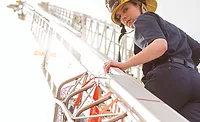
Workwear that works for women

Workwear apparel protects both men and women working in many different trades. Whether workers are toiling on construction sites, in manufacturing assembly plants, up on utility power lines, farming or find themselves in other work environments, the clothing must fit right to protect the worker who wears it.
In the beginning, workwear apparel predominantly focused on men’s product lines. As more women entered into different trades over the decades, the development of workwear took into account the need to supply properly fitting protective workwear for women in construction, on assembly lines, farming, and in other jobs.
In 2004, about 59 percent of women were in the labor force, according to the U.S. Bureau of Labor Statistics. In 2005, BLS reported that females accounted for a nationwide total of 415,880 nonfatal injuries and illnesses, roughly one-third of the total count of 1,234,680. In 2006, 292,000 women were employed in construction, 2.8 million in production occupations; 1.3 million in transportation and material moving occupations; 248,000 in installation, maintenance and repair jobs; and 212,000 in farming, fishing and forestry work, according to the BLS.
The rise in the number of women entering the manual labor workforce has driven the need to launch a women’s line of protective workwear options. Not to mention, women working in these trades are handling the same day-to-day manual labor challenges as men who work in these trades, so why not offer women the same durable-type apparel currently worn by their male peers?
Unaware of women’s wear?
Unfortunately, many working women are still unaware that there are protective workwear product lines available at retail that have been launched solely to meet their fit needs. The majority still purchase men’s garments, which ultimately can slow down their productivity because the clothes are too big and can get caught on various objects on the jobsite.
For years, working women had to go to sportswear products to get clothing that would fit them on the job, but the garments didn’t meet the durability requirements or the value that men’s workwear apparel could provide for them. The solution was simple. Workwear manufacturers began to launch women’s lines of workwear apparel that meet the durability of men’s apparel, but fit the contours of a woman.
Fit: first and foremost
The biggest question manufacturers needed to answer was: what do working women want in their clothing? The general consensus is that women want the same premium fabrics and tough-as-nails garment construction used in men’s workwear product lines.
But the difference is the cut.
Women want clothes that fit them. Better fit means more comfort on the jobsite and a greater moving ease to get the job done. Most working women’s purchasing decisions are based on these factors and also on the endorsement of brands from people who already wear the product and know that it’s proven to work and easy to maintain.
Becoming masters in tweaking popular outerwear styles for men and designing them to comfortably fit a woman’s body is the biggest evolution for manufacturers who currently make workwear product lines for women. Women’s workwear coats, jackets, jeans, shirts, sweats, vests and accessories are designed with the fit of their bodies in mind. Advancements in women’s fit designs include princess seaming, more color options, no-gap waistbands and longer length shirts, which provide coverage while bending and reaching on the job.
Here are characteristics to look for in high-quality, durable garments for men or women: triple-stitched main seams; generous work-functional pockets; heavy-duty zippers; ring-spun cotton for added softness; two-way stretch fabrication; adjustable waistbands; interior draw cords; and fabric with moisture management and anti-odor properties. The difference lies in details such as these.
A work in progress
Looking ahead, there are many new trends hitting women’s protective workwear product lines that focus on producing more lighter-weight workwear options in bottoms and tops. This option would provide greater appeal for all-season workers in different regions of the world.
Most women’s protective workwear product lines have only recently been launched and are still a work in progress. Up to this point, advancements in women’s product lines have mostly hinged on female consumer opinion. Female consumers wanted details like additional pockets in their garments that are both protective and functional to carry tools and personal items, a greater variety of anti-odor and moisture management products to help keep them cool on the job, and workpants with articulated knees to boost performance and durability of their clothing on the job. Female consumers are seeking these functional performance enhancements to get the job done and to get it done comfortably.
The industry is still learning how to continue to improve products for working women so that they may feel protected properly while completing even the toughest tasks, without sacrificing the comfort, ease of movement and durability women need in their garments.
Looking for a reprint of this article?
From high-res PDFs to custom plaques, order your copy today!