ISHN logo
search
cart
facebook twitter linkedin youtube
  • Sign In
  • Create Account
  • Sign Out
  • My Account
ISHN logo
  • NEWS
    • Today's News
    • Global Safety News
    • Government Regulations
  • PRODUCTS
    • Product Innovations
    • Featured Products
  • TOPICS
    • Environmental Health and Safety
    • Facility Safety
    • Workplace Health
    • Occupational Safety
    • PPE
    • More Topics
  • CONSTRUCTION
  • TECHNOLOGY
  • COLUMNS
    • Best Practices
    • Dave Johnson: What’s going on
    • Editorial Comments
    • Leading Safety
  • MULTIMEDIA
    • ISHN Podcast
    • Videos
    • Cold Stress Education Quiz
    • Webinars
    • White Papers
  • MORE
    • Buyer's Guide
    • Newsletters
    • Convention Companion
    • Polls
    • Events
    • ISHN Store
    • Sponsor Insights
  • EMAGAZINE
    • eMagazine
    • Archived Issues
    • Contact
    • Advertise
  • JOIN TODAY!

OSHA's plan for improving MSDSs

January 5, 2004
Responding to criticisms about the quality of many material safety data sheets (MSDS) circulating in workplaces, OSHA is preparing three guidance documents to improve the quality of chemical hazard information provided to workers.

“Guidance for Hazard Determination” — This guideline will detail and hopefully simplify the process of how to determine a hazard. Per OSHA’s hazard communication standard, chemical manufacturers and importers must evaluate scientific evidence in order to identify hazards associated with any chemical they manufacture or import. This provides the basis for the hazard information provided in MSDSs, on labels and during worker training.

“Guidance for Preparation of MSDSs” — Another of the three guidance documents intended to enhance chemical hazcom, this will help MSDS preparers write data sheets that are clear, consistent and comprehensive. The document includes a recommended MSDS format, instructions for composing individual sections of the MSDS, sources for obtaining information to complete sections, and guidance on what type of information to include in each section. OSHA says this document should help improve both the accuracy and comprehensibility of MSDSs.

“Model Training Program for Hazard Communication” — Employers are required to provide training to employees exposed to hazardous chemicals, and this new guidance document will help develop a training program tailored to the needs of each workplace, regardless of size or complexity. It will help employers explain the information presented on labels and MSDSs.

Look for these documents to made public in 2004.

Under review

In addition to developing the three guidance documents, OSHA has examined some key hazcom issues that the agency says need improvement. OSHA is expected to issue a report on its findings sometime early this year. The issues include:

Complexity of MSDSs: OSHA’s hazcom standard requires MSDSs to be accurate and complete. Since the qualifications of chemical manufacturers and employers writing the MSDSs vary, the quality of the MSDSs also varies. In addition, the availability of information on different chemicals varies widely. Dealing with mixtures of chemicals presents certain challenges as well, and the science regarding certain types of hazards along with various protective measures continues to evolve. All of these factors contribute to the complexity of developing an accurate and complete MSDS, and OSHA is considering how these factors can be harmonized to better facilitate MSDS development.

Multiple elements of hazcom: MSDSs are paramount to a comprehensive hazard communication program. Still, OSHA recognizes that they are only one component of such a program. MSDSs provide detailed technical information and serve as a reference source for workers, but don’t forget that labels and training are complementary parts of a complete hazcom program. Labels are intended to provide a brief, conspicuous summary of hazard information at the site where the chemical is used. Training ensures that workers understand chemical hazards in their workplace and are aware of protective measures to follow.

Each element — MSDS, labels and training — has its place in effectively protecting workers, according to OSHA.

SIDEBAR: Hazcom going global?

OSHA is taking a look at the Globally Harmonized System of Classification and Labeling of Chemicals (GHS) as a way of improving chemical hazard communication. The GHS, according to OSHA, has the potential to serve as a mechanism for addressing many of the concerns that have been raised regarding the comprehensibility of chemical hazard information.

The result of a ten-year effort to establish international consensus on criteria for classifying chemicals according to their hazards, and to create consistent requirements for labels and safety data sheets, the GHS was formally adopted by the United Nations in December 2002, though it has not been implemented in the U.S.

The GHS is intended to:

  • Improve the quality and consistency of chemical hazard information;
  • Facilitate international chemical trade;
  • Reduce the need for chemical testing and evaluation; and
  • Provide a recognized framework for those countries without an existing hazard communication system.

In addition to criteria for classifying chemicals according to their health, environmental and physical hazards, the GHS includes standardized requirements for labels and safety data sheets. A standardized 16-section format for safety data sheets provides a consistent sequence for presentation of information. Section headings (e.g., First Aid Measures, Handling & Storage) are standardized to facilitate locating information of interest. The GHS also establishes standardized and more detailed requirements for labels, including consistent use of pictograms, signal words and hazard warning statements.

A document summarizing and explaining the GHS is under development by OSHA to assist in considering adoption of the GHS in the U.S.

Share This Story

Looking for a reprint of this article?
From high-res PDFs to custom plaques, order your copy today!

Recommended Content

JOIN TODAY
to unlock your recommendations.

Already have an account? Sign In

  • forklift safety

    Exploring the latest technologies in forklift safety

    With more staff and more stock in warehousing now more...
    Facility Safety
    By: Josh Cramer
  • welding

    All about welder’s flash or arc eye

    A flash burn is a painful inflammation of the cornea,...
    Environmental Health and Safety
  • dangerous jobs

    The 10 most dangerous jobs in the U.S.

    On-the-job deaths have been rising — hitting the highest...
    Transportation Safety
    By: Benita Mehta
Manage My Account
  • eMagazine Subscriptions
  • ISHN Newsletter & Other Newsletter Alerts
  • Online Registration
  • Manage My Preferences
  • Subscription Customer Service

More Videos

Sponsored Content

Sponsored Content is a special paid section where industry companies provide high quality, objective, non-commercial content around topics of interest to the ISHN audience. All Sponsored Content is supplied by the advertising company and any opinions expressed in this article are those of the author and not necessarily reflect the views of ISHN or its parent company, BNP Media. Interested in participating in our Sponsored Content section? Contact your local rep!

close
  • man wearing the the Sundström SR200 Full Face Mask Respirator
    Sponsored byOHD

    5 Fit Testing Mistakes That Could Cost You

  • This image shows Magid AcuSpex polarized blue mirrored safety glasses.
    Sponsored byMagid Glove and Safety

    Construction PPE Guide: What Crews Need for Each Task

  • lone worker in confined space
    Sponsored byAlphasense Ltd.

    GET THE LEAD OUT of your Safety Oxygen Sensors!

Popular Stories

SpaceX 7 launch

OSHA Investigating Fatal Fall at SpaceX Starbase

Automated loading dock equipment

After March 2026 Rivian Death, Safety Managers Reassess Loading Dock Systems Under OSHA's Warehouse Emphasis Program

psychology in the workplace

Most Workplaces Measure Psychological Safety, Ignoring Psychosocial Risks

top 10 most dangerous jobs

Poll

Seasonal Readiness

With the federal heat stress prevention rule on the horizon, which area of your safety program needs the most attention?
View Results Poll Archive

Products

Surviving an OSHA Audit A Management Guide, 2nd Edition

Surviving an OSHA Audit A Management Guide, 2nd Edition

See More Products

ISHN Podcasts

Related Articles

  • OSHA seeks members to serve on national advisory committee for improving worker safety and health (6/1)

    See More
  • Ideas for improving OSHA

    See More
  • OSHA certifies New York State plan for public employees (8/16)

    See More

Related Products

See More Products
  • industrial hy.jpg

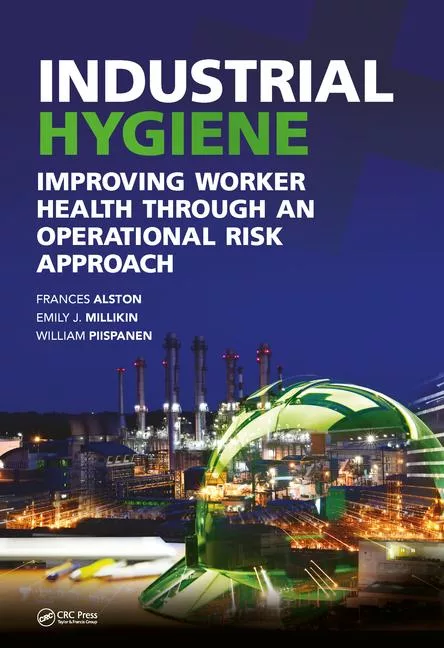
    Industrial Hygiene: Improving Worker Health through an Operational Risk Approach

  • 0470387408.jpg

    Preparing for OSHA s Voluntary Protection Programs: A Guide to Success

  • 9780849365461.jpg

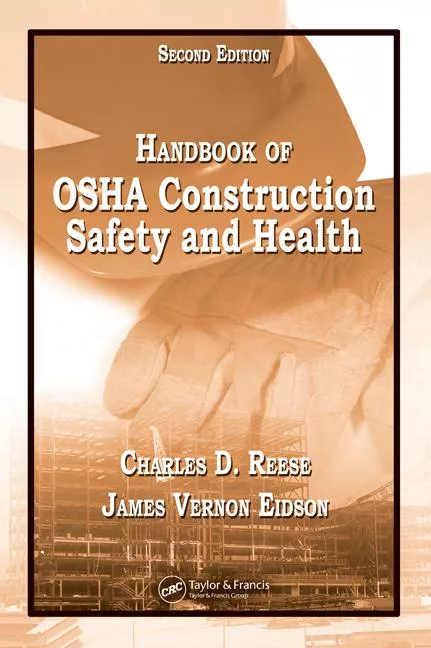
    Handbook of OSHA Construction Safety and Health, Second Edition

See More Products
×

Become a Leader in Safety Culture

Build your knowledge with ISHN, covering key safety, health and industrial hygiene news, products, and trends.

JOIN TODAY
  • RESOURCES
    • Advertise
    • Contact Us
    • Directories
    • Manufacturing Division
    • Store
    • Want More
  • SIGN UP TODAY
    • Create Account
    • eMagazine
    • Newsletters
    • Customer Service
    • Manage Preferences
  • SERVICES
    • Marketing Services
    • Reprints
    • Market Research
    • List Rental
    • Survey/Respondent Access
  • STAY CONNECTED
    • LinkedIn
    • Facebook
    • YouTube
    • X (Twitter)
  • PRIVACY
    • PRIVACY POLICY
    • TERMS & CONDITIONS
    • DO NOT SELL MY PERSONAL INFORMATION
    • PRIVACY REQUEST
    • ACCESSIBILITY

Copyright ©2026. All Rights Reserved BNP Media, Inc. and BNP Media II, LLC.

Design, CMS, Hosting & Web Development :: ePublishing