Jump in, the water's fine
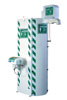
Everyone agrees that emergency showers and eyewash stations provide essential first-aid in the event of an accident involving chemicals. But simply installing the equipment doesn't guarantee it will be effective.
Let’s assume your shower delivers an adequate flow of water for the recommended minimum period — the ANSI Z 358.1 2004 standard specifies 20 gallons a minute for at least 15 minutes. Your shower has been positioned for easy access, staff members are trained and the unit is regularly tested and serviced.
So what else should you consider? One thing above all others could determine whether or not your shower is used properly in an emergency — and that’s the temperature of the water.
Are you meeting the standard?
Providing tempered water should not be an afterthought but a key consideration when specifying a shower or eye/facewash. The ANSI standard recommends that water delivered from an emergency safety shower should be at a temperature between 60° and 100° F (16° and 38°C).
Imagine standing under a shower where the water is 40°F or below. You simply wouldn’t do it. If the cold water didn’t immediately put you into shock, you’d still be unable to endure the recommended 15 minutes. And the colder the water, the worse it would get.
Air temperature plays a huge role in maintaining safe water temperatures. Even indoors, in a warehouse, for example, the air temperature may be within the statu- tory limits, but the temperature of the water supply may be considerably lower. At the other extreme, in hot climates, the sun can heat up stored water in tank showers or in supply pipes. The result is the same — ineffective use of the shower or eyebath.
Heating up
In cold and temperate climates, some form of heating is required to maintain the appropriate water temperature. Selecting a system can be difficult because of inconsistencies in the way manufacturers describe their products. Some manufacturers use the term ‘heated’ to simply mean protected against frost damage. Many plumbed-in models sold for outdoor use fall into this category. While they are fitted with immersion or trace heating elements to prevent the water from freezing, they do not guarantee that the water will also be tepid. Before purchasing a system, make sure it raises the temperature high enough to provide both frost protection and tepid water.
In-line heaters can be used to produce tepid water on mains-fed showers by instantly heating the water as it flows along the pipe. They can be retro-fitted to existing shower systems or may be seen as an alternative where site conditions prevent the use of larger tank showers. Because the heater required to accommodate ANSI recommended flow rates can be as much as 90kW, the impracticalities of such a system mean it is not widely used.
Purpose-designed temperature-controlled showers are generally the most practical and the most costeffective. Water is heated in a storage tank to about 140º F (60º C), and mixed with a cold supply from the mains through a high-flow-rate, thermostatically- controlled valve. This provides water at the shower head between 75º and 95ºF (24 to 35ºC). For particularly cold climates, this type of shower is often supplied with an insulated enclosure to offer victims a safe refuge until help arrives.
Some temperature-controlled showers have additional outlets from the tank to feed hot water to other showers. If you need to supply hot water to more than one shower, this could be a cost-effective option worth considering.
Tank showers can also provide tepid water, but in this case, the water is supplied from a tank fitted with an immersion heater. Connection to the mains water supply is purely for topping up the tank and not for mixing. As with the plumbed-in showers, it is important to differentiate between heating for frost protection and heating to produce tepid water.
Tank showers range in size from relatively small units that guarantee an adequate flow for several minutes to much larger units with sufficient capacity to deliver tepid water for the ANSI recommended 15 minutes, even if the mains supply is cut. Choosing the right size tank depends on site conditions, ambient temperature variations throughout the year, integrity of the mains supply and potential threats of disruption. For optimum security and independence, the larger tank showers offer the best solution. Smaller capacity units can be considered where there is no problem with water pressure or flow rates and the mains supply is reliable.
Cooling down
In hot climates, solar radiation will quickly raise the temperature of water in storage tanks and pipes to a level sufficiently dangerous to make the shower unusable. A variety of techniques are used to minimize this problem including extra insulation and reflective sun shields.
If these measures are not sufficient, it may be necessary to add a cooling system. When purchasing a cooling system, you should consider cost, reliability and energy efficiency. Depending on the shower’s location, the cooling system may also need to be suitable for use in hazardous areas, a factor which will significantly increase the cost.
Re-circulating chiller systems have proven particularly successful from both a technical and financial perspective. The unit attaches to the side of the tank and can be supplied as part of a new installation or retrofitted to existing showers. At night, water in the tank circulates through the chiller unit where it is cooled by the lower ambient temperature. During the day, insulation around the tank prevents the temperature of the cooled water from rising above the recommended safe limit.
Options include models rated for use in hazardous or non-hazardous areas. The simplicity of the design ensures reliable operation with minimum maintenance, a factor which is particularly important in remote locations. In addition to integral units, the design has been adapted for stand-alone chillers which sit on the floor alongside the shower or eye/face wash.
Choose equipment that meets your site requirements
Providing tepid water is an important way to help accident victims remain under a safety shower long enough to ensure effective decontamination. Manufacturers offer a range of options for controlling water temperature for different site requirements and environmental conditions. The next time you review your safety showers or eye/facewash equipment, make sure you include tepid water on your checklist.
Looking for a reprint of this article?
From high-res PDFs to custom plaques, order your copy today!