ISHN logo
search
cart
facebook twitter linkedin youtube
  • Sign In
  • Create Account
  • Sign Out
  • My Account
ISHN logo
  • NEWS
    • Today's News
    • Global Safety News
    • Government Regulations
  • PRODUCTS
    • Product Innovations
    • Featured Products
  • TOPICS
    • Environmental Health and Safety
    • Facility Safety
    • Workplace Health
    • Occupational Safety
    • PPE
    • More Topics
  • CONSTRUCTION
  • TECHNOLOGY
  • COLUMNS
    • Best Practices
    • Dave Johnson: What’s going on
    • Editorial Comments
    • Leading Safety
  • MULTIMEDIA
    • ISHN Podcast
    • Videos
    • Cold Stress Education Quiz
    • Webinars
    • White Papers
  • MORE
    • Buyer's Guide
    • Newsletters
    • Convention Companion
    • Polls
    • Events
    • ISHN Store
    • Sponsor Insights
  • EMAGAZINE
    • eMagazine
    • Archived Issues
    • Contact
    • Advertise
  • JOIN TODAY!

Facility safety: Warning signals
By Thomas Burnham Ph.D.
October 2, 2007


Warehouses and loading bays are busy places, with forklift drivers and trucks constantly coming and going. Within the worksite, people move amongst the fray, going from one building to another. To help increase safety, warning light systems can be used to prevent vehicle collisions and vehicle-pedestrian accidents at industrial sites. The variety and functionality of these systems has expanded in recent years.

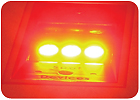
Flush lights — In-pavement lights completely flush to surrounding ground are a relatively new development. These lights emit exceptionally bright light very close to the ground, so they are visible from driving height at a great distance.

Forklifts or equipment can drive over fully flush lights without a disruptive bump. They are useful in industrial settings where forklifts interact with other traffic or pedestrians. And they are not prone to abuse by snowplows, so they are valuable for outdoor use in snowy climates.

Warehouse forklifts — As many as 25 percent of forklift truck accidents are caused not by the driver but by controllable environmental factors.1 One way to improve the safety environment is to make sure forklift drivers receive ample warning of potential conflicts.

When a forklift is fully loaded, the drivers’ forward vision is blocked, so forklifts typically travel in reverse. Drivers must crane around to look behind the vehicle as it travels, resulting in a limited field of vision. Forklift drivers are required to honk when approaching intersections. However, the safety value of honking relies on other drivers (or pedestrians) to listen and behave defensively.

An in-ground warning light system can provide a driver with across-the-path notification of other approaching drivers, giving them time to slow, or stop, their forklift before entering the intersection. A “stop bar” of lights unmistakably indicates that it is unsafe to cross an intersection or pass through a doorway.

Trucking bays — Often, forklifts, pedestrians and cars use the area where trucks approach loading bays for inter-building traffic. Flashing activated beacons in conjunction with signs can provide general warnings about the area — for example, “Slow when flashing; trucks may pull out.”

However, in-pavement lights provide a more explicit demarcation of a dangerous area. For example, when trucks are pulling out, a cross street can be “blocked” with a line of red warning lights. Similarly, a line of lights across an entrance/exit to a warehouse can be activated when dangers are present on the other side.

Pedestrian crossings — Pedestrian walkways alongside busy traffic zones can be laterally demarcated with a line of in-pavement lights that become activated when walkways are in use. Similarly, pedestrian crosswalks between buildings within a facility can be treated with traffic-facing, in-pavement lights that are either pushbutton or detector activated. Flashing lights provide an unambiguous warning that pedestrians are present.

Flash patterns — The MUTCD (Manual on Uniform Traffic Control Devices) provides the Federal Highway Administration’s guidelines for in-pavement lights. Guidelines address device height (a maximum of .75 inches), layout in the roadway for crosswalks (a minimum of one per lane), and flash patterns.

In section 4L.02 of the MUTCD 2003 edition, guidelines specify that lights should flash between 50 and 60 times per minute, or approximately once per second. According to the MUTCD guideline, flash patterns should not be between 5 and 30 flashes per second, as flash patterns in this frequency range can cause seizures.

Activation mechanisms — Simple and durable, pushbuttons work well when a walking employee is seeking to activate warning lights. Automatic detectors are commonly used when vehicles such as trucks or forklifts must activate systems. In warehouse aisles — with constrained traffic flows and nearby mounting structures — microwave detectors are common. For roadway applications, wired loop detectors work well. Finally, when the goal is to detect a person or vehicle entering or exiting a region or building, infrared break-beam activation can prove effective and reliable.

Share This Story

Looking for a reprint of this article?
From high-res PDFs to custom plaques, order your copy today!

Thomas Burnham, Ph.D. is the vice president of marketing for Spot Devices, Inc. The company is located in Sparks, Nevada. Thomas can be reached at thomasb@spotdevices.com or at (888) 520-0008 x 8354.

Recommended Content

JOIN TODAY
to unlock your recommendations.

Already have an account? Sign In

  • forklift safety

    Exploring the latest technologies in forklift safety

    With more staff and more stock in warehousing now more...
    Facility Safety
    By: Josh Cramer
  • welding

    All about welder’s flash or arc eye

    A flash burn is a painful inflammation of the cornea,...
    Environmental Health and Safety
  • dangerous jobs

    The 10 most dangerous jobs in the U.S.

    On-the-job deaths have been rising — hitting the highest...
    Government Safety Regulations
    By: Benita Mehta
Manage My Account
  • eMagazine Subscriptions
  • ISHN Newsletter & Other Newsletter Alerts
  • Online Registration
  • Manage My Preferences
  • Subscription Customer Service

More Videos

Sponsored Content

Sponsored Content is a special paid section where industry companies provide high quality, objective, non-commercial content around topics of interest to the ISHN audience. All Sponsored Content is supplied by the advertising company and any opinions expressed in this article are those of the author and not necessarily reflect the views of ISHN or its parent company, BNP Media. Interested in participating in our Sponsored Content section? Contact your local rep!

close
  • man wearing the the Sundström SR200 Full Face Mask Respirator
    Sponsored byOHD

    5 Fit Testing Mistakes That Could Cost You

  • This image shows Magid AcuSpex polarized blue mirrored safety glasses.
    Sponsored byMagid Glove and Safety

    Construction PPE Guide: What Crews Need for Each Task

  • lone worker in confined space
    Sponsored byAlphasense Ltd.

    GET THE LEAD OUT of your Safety Oxygen Sensors!

Popular Stories

SpaceX 7 launch

OSHA Investigating Fatal Fall at SpaceX Starbase

Automated loading dock equipment

After March 2026 Rivian Death, Safety Managers Reassess Loading Dock Systems Under OSHA's Warehouse Emphasis Program

psychology in the workplace

Most Workplaces Measure Psychological Safety, Ignoring Psychosocial Risks

top 10 most dangerous jobs

Poll

Seasonal Readiness

With the federal heat stress prevention rule on the horizon, which area of your safety program needs the most attention?
View Results Poll Archive

Products

Surviving an OSHA Audit A Management Guide, 2nd Edition

Surviving an OSHA Audit A Management Guide, 2nd Edition

See More Products

ISHN Podcasts

Related Articles

  • Facility safety technologies now take workplace violence into account

    See More
  • Clarion Safety Systems announces launch of new facility safety sign product line

    See More
  • Grainger adds the PS DOORS Ladder Safety Gate to its facility safety and management product roster

    See More

Related Products

See More Products
  • 3E

    Safety Professional's Reference and Study Guide, Third Edition

  • 9780367861148.jpg

    LEAD Safety A Practical Handbook for Frontline Supervisors and Safety Practitioners

  • download (1).jpg

    Safety Rebels Real-World Transformations in Health and Safety

See More Products
×

Become a Leader in Safety Culture

Build your knowledge with ISHN, covering key safety, health and industrial hygiene news, products, and trends.

JOIN TODAY
  • RESOURCES
    • Advertise
    • Contact Us
    • Directories
    • Manufacturing Division
    • Store
    • Want More
  • SIGN UP TODAY
    • Create Account
    • eMagazine
    • Newsletters
    • Customer Service
    • Manage Preferences
  • SERVICES
    • Marketing Services
    • Reprints
    • Market Research
    • List Rental
    • Survey/Respondent Access
  • STAY CONNECTED
    • LinkedIn
    • Facebook
    • YouTube
    • X (Twitter)
  • PRIVACY
    • PRIVACY POLICY
    • TERMS & CONDITIONS
    • DO NOT SELL MY PERSONAL INFORMATION
    • PRIVACY REQUEST
    • ACCESSIBILITY

Copyright ©2026. All Rights Reserved BNP Media, Inc. and BNP Media II, LLC.

Design, CMS, Hosting & Web Development :: ePublishing
