Hearing protection
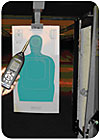
Proper selection of sound level meter and microphone is key to measuring discharge events.
Use of a portable sound level meter (SLM) is often considered a relatively affordable means of accurately measuring the rapid change in sound pressure level that occurs when firing a gun.
However, many SLMs do not have sufficient detection capabilities to accurately capture the extremely fast rise times and peak pressure levels that occur (otherwise known as “impulse noise†events), and thus will wildly underestimate the rapid change in sound pressure level that is created when the bullet leaves the barrel at or near supersonic speeds. This inability to measure correctly is caused by two separate areas of limitation in the instrument system’s performance: one is the sensor (microphone); the other is in the electronic circuits, which must quantify the sensor signal and accurately assign the proper values in the accepted engineering units (decibels, or dB) of sound pressure level (SPL) measurement.
High peak pressure levels
Most commercially available SLMs use a 1/2-inch diameter microphone, which provides an accurately detectable measurement range that is most suited to the types of continuous noise typically encountered in the workplace (occupational exposure) or in residential environments (ambient or environmental noise). They typically measure a wide range of SPLs from around 30 dB up to around 140 dB. Herein lies the primary limitation of common SLMs — they are incapable of measuring the very high sound pressure peaks that are generated by small arms and other types of gunfire.The 1/2-inch diameter microphone is, in essence, too sensitive to handle high peak pressure levels, thus they can output too much signal and overload the detector circuits. And, at the very highest pressure levels, the microphone diaphragm itself is deflected beyond its normal mechanical limits, resulting in distortion and measurement inaccuracy. By decreasing the diameter of the microphone to 1/4-inch, the amount of electrical signal generated by these high sound pressure events is decreased significantly. The 1/4-inch microphone output signal is about one-fourth of that of a similarly constructed 1/2-inch microphone.
On the other hand, even with a microphone that has been constructed to accurately output an electrical signal proportional to the very high amplitude of the sound pressure event generated by a gunshot, the output signal must then be able to be accurately processed by the SLM’s circuits for the measurement to be reliable and repeatable. The speed at which the circuits respond to this rapid change in amplitude signal is key to achieving accuracy.
Sound level meters have been developed primarily to measure relatively constant noise sources, i.e. the sound pressures are always varying, but at relatively slow rates of change and over fairly moderate changes in pressure (think of continuous machinery noise or an aircraft passing overhead). The instruments perform an “integration†of the varying levels such that an average SPL (Leq, for “Equivalent Levelâ€) can be calculated for a given noise environment. The resulting average level is a very good indicator of the relative “loudness†of a sound or noise, but cannot provide an accurate measurement of a very “sharp†high sound pressure event, one in which the ambient pressure goes from low background levels to an extremely high level pressure pulse of extremely short duration. A different detection scheme must be employed.
Peak detector
In addition to the “integrating†detectors for continuous noise, advanced SLMs have something called a “peak detector,†which is engineered to respond extremely quickly to rapid changes in the microphone’s output signal. The peak detector is separate from, and operates in parallel to, the integrating noise detector and can more accurately capture extremely short duration transients of sound pressure level. (The speed at which the detector can respond is called the “rise time†of the detector.)However, all peak detectors are not created equal. While commercial instruments will conform to ANSI and/or ISO measurement accuracy standard for peak detection, the standards themselves allow enough tolerance in the rise time performance specification as to make some instruments less suitable for accurately measuring gunfire noise. These instruments are intended more for measuring “impulsive†noise environments in the workplace, such as a stamping press or other cyclical noise sources. They meet the technical requirement of the standards, but the standards were not designed for measuring extreme noise events like a gunshot.
Thus, when selecting instruments to measure gunfire, the actual rise time response of the peak detector is extremely important; the faster the rise time, the better the detector. Rise times are measured in microseconds (1/1,000,000 sec.); the smaller the number, the faster the rise time, and the better the performance.
Accuracy “typesâ€
Another aspect to system performance relates to the performance of both the circuitry and the sensor (microphone). This has to do with the ability of the system to accurately quantify the frequency of the sound (pitch) in addition to the amplitude (loudness) of the sound or noise. Generally, the more precisely you wish to measure the sound pressure level over the complete audible frequency range (20Hz-20kHz, or 20-20,000 cycles per second), the more care that must be given to the design and construction of the microphone and instrument, and faster (more expensive) processors must be used.However, this high level of performance is not necessary for common industrial exposure measurements. Thus, in the interest of providing instrument accuracies suitable for different applications without over-specifying, the ANSI and ISO standards provide measurement tolerances that allow instruments to be classified into accuracy “Types.â€
- Type 0 instruments are the most accurate but are expensive, and intended primarily for standards laboratory use.
- Type 1 instruments are capable of measuring over the entire frequency range at a lower cost.
- Type 2 instruments, while costing even less, often cannot measure sound above 10kHz (the bottom 50 percent of the audible range of frequencies), and thus, perform poorly when measuring noise events that contain significant high frequency content such as small caliber arms fire. These instruments will not accurately quantify the entire sound spectrum emitted by the shot.
Know the limitations
In summary, the proper selection of the sound level meter and microphone is fundamental to producing accurate and repeatable results when measuring discharge events, and there are tangible differences in how various instruments will perform when measuring gunfire noise. This is easily demonstrated by placing different instruments side by side when performing the measurement — differences in the reported maximum or “peak†sound pressure level can vary by as much as 30 or 40 decibels or more.Remembering that the decibel scale is logarithmic — and thus a measurement variation of 40dB actually represents a difference in sound pressure at a ratio of 100:1 — it is critical that one understands the limitations of instruments that were not intended for performing this kind of measurement.
The primary performance characteristics that must be considered in instrument selection include:
- Microphone performance (specifically, the maximum peak pressure level that can be measured — 1/4-inch diameter microphones are best suited to this task).
- Peak detector must be present and able to measure extremely short duration sound pressure pulses. (The ideal design has a peak detector response time as close as possible to 0 microseconds; realistically, response below 30 microseconds is good.)
- The instrument should be classified as a Type 1 SLM and thus be able to measure all audible frequencies accurately.
Links
Looking for a reprint of this article?
From high-res PDFs to custom plaques, order your copy today!


