Keeping an eye on noise exposure
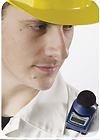
Excessive noise exposure is a major source of workplace injuries in many industrialized countries. Noise is such a pervasive hazard that many of us become “used to” high levels, and we forget they can potentially impair our hearing. If not identified and controlled as soon as possible, this can lead to social difficulties later in life.
It is generally recognized that hearing loss risk is a function of the absolute noise level and the duration of the exposure. Almost all countries have established permissible noise limits in order to minimize workers’ hearing loss claims.
In the U.S., OSHA Noise at Work legislation contained in CFR 1910-95 requires the collection of noise exposure results with a view to complying with the 90 dB, eight-hour permitted exposure limit and with the action level at 85 dB for eight hours for workers in a hearing conservation program. This is in addition to international and U.S. recommendations from other organizations, such as ACGIH and NIOSH. U.S. legislation calls for the average noise level to be measured with a 5 dB exchange rate, while European and other countries have chosen to measure with the 3 dB exchange rate. There is also a limit to the single highest peak noise level allowed.
Since noise exposure is a function of noise level and exposure time, you might expect that a simple investigation with a hand-held sound level meter is all you need to make an assessment. But it may not always be that easy.
Measurement methods
In the early 20th century, when most workers stood by the side of a conveyor belt and performed the same task over and over again, a hand-held sound meter would probably be an adequate solution. If noise levels are steady in nature, you can perform simple eyeball-averaging; a rough estimate of the time spent performing each task will quickly give a result for the contribution of each separate task. When noise levels are varying or random in nature, you can measure the average noise level with an integrating sound level meter that will produce a time average result in a relatively short period of time.
A measurement of five to ten minutes in such circumstances is often enough to provide a high level of confidence that the true situation has been identified. This method relies on the supervisor using his or her eyes and ears to watch what is happening and to listen for significant high noise levels to make sure they are included in the average value. The drawback is that it ties the supervisor down to actually carry out the survey and it is difficult to do anything else while this is going on. To survey a large factory with many locations and sources of noise can be extremely time-consuming if all the measurements have to be made by hand.
Over the last 30 years, the preferred way to collect noise exposure data for individual workers has been to have them wear the noise meter and go about their normal routine as much as possible. This frees up the supervisor to get on with other tasks, rather than just standing there holding the noise meter. Some form of built-in time averaging must be provided so that the meter can correctly assess the changes in noise exposure. Other factors also become more important now, such as the physical design of the instrument. Over the years, this form of “personal noise monitoring” has developed into a format where the worker wears the main part of the meter on a belt with the microphone at the end of a cable. This method has proven acceptable in most situations but runs the risk of introducing some problems of its own.
Downsizing designs
From the worker’s point of view, the size of the noise meter, or personal noise dosimeter as it is more often called, was of primary concern. When sound level meters typically weighed a few pounds, it was not convenient to have this much weight fixed to a worker’s belt. This lead to the miniaturization of the electronics needed to carry out this task to minimize intrusion on the wearer. Noise dosimeters in the 1970s were designed to be a little larger than the size of a packet of cigarettes and weighed about 8 to 10 oz. In order to minimize the weight of the dosimeter, they were often designed to only show the absolute minimum amount of information, such as the noise dose as a percentage of an allowed limit.
One of the biggest concerns for supervisors was the robustness of the microphone on the end of the cable worn close to the worker’s shoulder. Unless the cable was correctly positioned, there was always the possibility that it might get caught when the worker bent over a machine and pulled out. Alternatively, the cable could be cut and the microphone signal removed completely. In heavy industries, many users have reported 20 to 30 percent replacement rates for the microphone assemblies because of such accidents. Not only is there a cost associated with replacing the microphone but usually the whole day’s measurements would be lost, too.
From the worker’s perspective, size and weight are the key factors for a body-worn instrument. A personal noise dosimeter needs to be as small and as inconspicuous as possible so the worker forgets it is there and just goes about their normal work routine. One way this has become possible is by designing the microphone into the body of the dosimeter itself. This has lead to a reduction in weight down to as little as a couple of ounces and a size that is only a few inches in dimension.
Small but mighty
You might expect that reducing the size and weight of the instrument would cause loss of valuable measurement data. Careful design and use of the latest digital signal processing (DSP) technology ensures that all of the noise readings currently in wide use are still available in badge style dosimeters being introduced to the industrial hygiene market. Not only do the small badge dosimeters collect noise with the overall run data, but they also log the minute-by-minute changing noise levels that provide valuable time history information. Additionally, a display enables the key noise exposure parameters to be viewed directly on the badge dosimeter at the end of the run without having to rely on other equipment or a computer.
Recordkeeping is an important part of industrial hygiene monitoring and being able to download run results to a computer is considered to be a “must-have” in the 21st century. Comprehensive software packages provide a database approach to recordkeeping, and allow the supervisor to show time history charts and to make simple reports for a worker’s personnel file.
Micro wearable noise dosimeters are likely to become more popular for both supervisors and workers due to their small size and powerful capabilities just like their regular bigger brothers.
Looking for a reprint of this article?
From high-res PDFs to custom plaques, order your copy today!