ISHN logo
search
cart
facebook twitter linkedin youtube
  • Sign In
  • Create Account
  • Sign Out
  • My Account
ISHN logo
  • NEWS
    • Today's News
    • Global Safety News
    • Government Regulations
  • PRODUCTS
    • Product Innovations
    • Featured Products
  • TOPICS
    • Environmental Health and Safety
    • Facility Safety
    • Workplace Health
    • Occupational Safety
    • PPE
    • More Topics
  • CONSTRUCTION
  • TECHNOLOGY
  • COLUMNS
    • Best Practices
    • Dave Johnson: What’s going on
    • Editorial Comments
    • Leading Safety
  • MULTIMEDIA
    • ISHN Podcast
    • Videos
    • Cold Stress Education Quiz
    • Webinars
    • White Papers
  • MORE
    • Buyer's Guide
    • Newsletters
    • Convention Companion
    • Polls
    • Events
    • ISHN Store
    • Sponsor Insights
  • EMAGAZINE
    • eMagazine
    • Archived Issues
    • Contact
    • Advertise
  • JOIN TODAY!
Today's Safety News

OSHA announces new ergo plan: Guidelines favored over rules

April 5, 2002
OSHA today unveiled its long-delayed plan for attacking ergonomics-related problems in the workplace, describing a four-prong strategy:

1) Guidelines - OSHA will start work immediately on voluntary guidelines targeted at specific industries and specific tasks. Officials will study injury and illness rates for various industries, including construction, agriculture and maritime, to decide which ones could benefit from such guidelines. You can expect to see these documents begin to come out of the agency by the end of the year.

Guidelines will help employers spot ergo hazards and set up feasible means of controlling them. Targeted ergo guidelines were written by OSHA for the meatpacking industry in 1990.

Failure to implement these new guidelines will not be interpreted by OSHA as a violation of an employer's general duty to provide a workplace free from serious hazards.

Employers with ergo hazards who effectively put these guidelines into practice or use other effective measures will likely escape penalties issued using the General Duty clause of the OSH Act.

OSHA says it will not focus its enforcement efforts on employers who have implemented effective ergo programs or who are making good-faith efforts to reduce ergo hazards.

2) Enforcement - Bad actors beware: OSHA plans to go after industries with serious ergonomics problems with special ergo inspection teams that will work closely with Labor Department attorneys and experts to prosecute violators under the General Duty clause.

The General Duty clause of the 1970 Occupational Safety and Health Act broadly requires employers to provide workplaces safe from recognized serious hazards, including ergo hazards. OSHA and Labor Department attorneys have successfully used this general mandate to penalize employers for serious ergo problems in cases involving a nursing home, Beverly Enterprises, and a food processor, Pepperidge Farm.

If General Duty clause citations are not warranted following an inspection, OSHA might issue hazard alert letters to employers with less serious ergo problems. OSHA will conduct follow-up inspections or investigations within 12 months of certain employers who receive these ergonomic hazard alert letters.

OSHA will conduct specialized training for designated personnel on ergo hazards and methods of controlling them, and plans to appoint ten regional coordinators to be involved in enforcement and outreach.

A National Emphasis Program will focus on the nursing home industry to guide inspections of nursing homes and to specifically zero in on ergonomic hazards related to patient lifting.

3) Assistance - OSHA will use a special Web site (www.osha.gov/ergonomics/index.html) and training grants to give employers tools to identify and control ergo hazards. A special effort will be aimed at Hispanics and immigrant workers, since many work in industries with high ergonomic-related hazard rates, and press investigations in the past year have criticized OSHA for ignoring these workers.

4) Research - OSHA is forming a national advisory committee to identify areas where more ergonomics research is needed.

Why no standard?

OSHA's new plan comes more than a year after Congress torpedoed an ergo rule released in the waning days of the Clinton administration. Agency officials contend there are numerous reasons why guidelines are preferable to doing a rule at this time:

  • There are a variety of different hazards and combinations of different hazards to be addressed;
  • Exposure to the hazards is not readily measured in some cases;
  • The exposure-response relationship is not well understood;
  • Cost and feasibility of abatement measures may be uncertain and may be very high in some cases; and
  • It is very difficult, except in the most general terms, to prescribe remedies for abating such hazards in a single rule.

"Thousands of employers are already working to reduce ergonomic risks without government mandates. We want to work with them to continuously improve workplace safety and health. We will go after the bad actors who refuse to take care of their workers," said OSHA chief John Henshaw.

"This plan is a major improvement over the rejected old rule because it will prevent ergonomics injuries before they occur and reach a much larger number of at-risk workers," Labor Secretary Elaine Chao said in a prepared statement.

Not good enough

Union leaders and liberal Democrats wasted no time condemning what one labor safety official called "largely a non-existent plan that raises more questions than it answers." Other critics labeled it hollow and worthless.

"The administration handed a win to big business at the expense of millions of average workers who risk workplace injuries every single day," said Sen. Edward M. Kennedy, D-Mass., chairman of the Senate Health, Education, Labor and Pensions Committee.

Watch for supporters of a federal ergo standard to take their case to Congress, and also try to pass state ergo laws to stir up demand for a consensus national standard.

Labor Secretary Chao is scheduled to explain OSHA's new ergo plan to Sen. Kennedy's senate committee on April 18th.

Share This Story

Looking for a reprint of this article?
From high-res PDFs to custom plaques, order your copy today!

Recommended Content

JOIN TODAY
to unlock your recommendations.

Already have an account? Sign In

  • forklift safety

    Exploring the latest technologies in forklift safety

    With more staff and more stock in warehousing now more...
    Workplace Training Strategies
    By: Josh Cramer
  • welding

    All about welder’s flash or arc eye

    A flash burn is a painful inflammation of the cornea,...
    Environmental Health and Safety
  • dangerous jobs

    The 10 most dangerous jobs in the U.S.

    On-the-job deaths have been rising — hitting the highest...
    Construction Industry Safety and Health
    By: Benita Mehta
Manage My Account
  • eMagazine Subscriptions
  • ISHN Newsletter & Other Newsletter Alerts
  • Online Registration
  • Manage My Preferences
  • Subscription Customer Service

More Videos

Sponsored Content

Sponsored Content is a special paid section where industry companies provide high quality, objective, non-commercial content around topics of interest to the ISHN audience. All Sponsored Content is supplied by the advertising company and any opinions expressed in this article are those of the author and not necessarily reflect the views of ISHN or its parent company, BNP Media. Interested in participating in our Sponsored Content section? Contact your local rep!

close
  • man wearing the the Sundström SR200 Full Face Mask Respirator
    Sponsored byOHD

    5 Fit Testing Mistakes That Could Cost You

  • This image shows Magid AcuSpex polarized blue mirrored safety glasses.
    Sponsored byMagid Glove and Safety

    Construction PPE Guide: What Crews Need for Each Task

  • lone worker in confined space
    Sponsored byAlphasense Ltd.

    GET THE LEAD OUT of your Safety Oxygen Sensors!

Popular Stories

SpaceX 7 launch

OSHA Investigating Fatal Fall at SpaceX Starbase

Automated loading dock equipment

After March 2026 Rivian Death, Safety Managers Reassess Loading Dock Systems Under OSHA's Warehouse Emphasis Program

psychology in the workplace

Most Workplaces Measure Psychological Safety, Ignoring Psychosocial Risks

top 10 most dangerous jobs

Poll

Seasonal Readiness

With the federal heat stress prevention rule on the horizon, which area of your safety program needs the most attention?
View Results Poll Archive

Products

Surviving an OSHA Audit A Management Guide, 2nd Edition

Surviving an OSHA Audit A Management Guide, 2nd Edition

See More Products

ISHN Podcasts

Related Articles

  • White House DOL clouds.jpg

    OSHA Announces New Standards Priorities

    See More
  • OSHA announces new online Outreach Training Program providers

    See More
  • OSHA announces new isocyanates NEP

    See More

Related Products

See More Products
  • 111894948X.jpg

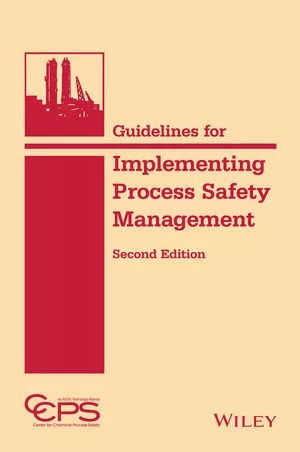
    Guidelines for Implementing Process Safety Management, 2nd Edition

  • 1119010160.jpg

    Guidelines for Combustible Dust Hazard Analysis

See More Products

Events

View AllSubmit An Event
  • December 16, 2016

    ASSE to host virtual symposium on new OSHA Walking-Working Standard

    The American Society of Safety Engineers is offering a virtual symposium to help occupational safety and health professionals better understand the sweeping changes OSHA recently made to its final rule on Walking-Working Surfaces and Personal Fall Protection standards in relation to slip, trip and fall hazards.
View AllSubmit An Event

Related Directories

  • New Pig

    The world leader in absorbent products, New Pig provides innovative products to help maintain cleaner, safer, more productive work environments.
×

Become a Leader in Safety Culture

Build your knowledge with ISHN, covering key safety, health and industrial hygiene news, products, and trends.

JOIN TODAY
  • RESOURCES
    • Advertise
    • Contact Us
    • Directories
    • Manufacturing Division
    • Store
    • Want More
  • SIGN UP TODAY
    • Create Account
    • eMagazine
    • Newsletters
    • Customer Service
    • Manage Preferences
  • SERVICES
    • Marketing Services
    • Reprints
    • Market Research
    • List Rental
    • Survey/Respondent Access
  • STAY CONNECTED
    • LinkedIn
    • Facebook
    • YouTube
    • X (Twitter)
  • PRIVACY
    • PRIVACY POLICY
    • TERMS & CONDITIONS
    • DO NOT SELL MY PERSONAL INFORMATION
    • PRIVACY REQUEST
    • ACCESSIBILITY

Copyright ©2026. All Rights Reserved BNP Media, Inc. and BNP Media II, LLC.

Design, CMS, Hosting & Web Development :: ePublishing