ISHN logo
search
cart
facebook twitter linkedin youtube
  • Sign In
  • Create Account
  • Sign Out
  • My Account
ISHN logo
  • NEWS
    • Today's News
    • Global Safety News
    • Government Regulations
  • PRODUCTS
    • Product Innovations
    • Featured Products
  • TOPICS
    • Environmental Health and Safety
    • Facility Safety
    • Workplace Health
    • Occupational Safety
    • PPE
    • More Topics
  • CONSTRUCTION
  • TECHNOLOGY
  • COLUMNS
    • Best Practices
    • Dave Johnson: What’s going on
    • Editorial Comments
    • Leading Safety
  • MULTIMEDIA
    • ISHN Podcast
    • Videos
    • Cold Stress Education Quiz
    • Webinars
    • White Papers
  • MORE
    • Buyer's Guide
    • Newsletters
    • Convention Companion
    • Polls
    • Events
    • ISHN Store
    • Sponsor Insights
  • EMAGAZINE
    • eMagazine
    • Archived Issues
    • Contact
    • Advertise
  • JOIN TODAY!

Preventing musculoskleletal disorders

May 5, 2000
Here are some tips from OSHA on how to reduce work-related musculoskeletal disorders:

  • Look at injury and illness records to find jobs where problems have occurred.
  • Talk with workers to identify specific tasks that contribute to pain and lost workdays.
  • Ask workers what changes they think will make a difference.
  • Encourage workers to report symptoms and establish a medical management system to detect problems early.
  • Find ways to reduce repeated motions, forceful hand exertions, prolonged bending or working above shoulder height.
  • Reduce or eliminate vibration and sharp edges or handles that dig into the skin.
  • Rely on equipment - not backs - for heavy or repetitive lifting.
  • Simple solutions often work best. Workplace changes to reduce pain and cut the risk of disability need not cost a fortune. For example, you can offer workers involved in intensive keyboarding more frequent short breaks to rest muscles, or vary tasks of assembly line workers to avoid repeated stress for the same muscles.


Invisible threats?

Consider these hidden risk factors There is increasing evidence that psychosocial factors related to the job and work environment play a role in developing work-related musculoskeletal disorders of the upper extremity and back, according to NIOSH researchers. A NIOSH review of studies suggest that these factors are associated with various ergo-related disorders:

  • Perceptions of intensified workload (time pressure, work volume and work pressure)
  • Monotonous work (being bored most of the time)
  • Limited job control (little autonomy)
  • Low job clarity (uncertainty about job expectations or job future)
  • Low social support (relations with supervisors and coworkers)

Because some of these factors are seemingly unrelated to physical demands, and anumber of studies have found associations even after adjusting for physical demands, the effects of these factors on MSDs may be, in part or entirely, independent of physical factors, according to NIOSH researchers.

It is also evident that these associations are not limited to particular types of jobs such as VDT work, or work environments such as offices, according to NIOSH. They seem to be found in a variety of work situations, according to researchers. This suggests that psychosocial factors may represent generalized risk factors for work-related MSDs.

NIOSH concludes that until most workplace and individual variables can be measured with more comparable techniques, it will be hard to determine precisely their relative impact on MSDs.

Calculate the correct height for your seat

If you have a nice chair to use while you work but you find that it tires you to sit on it, you may not be using it to its best advantage. To minimize fatigue you should sit at the correct seat height. So how do you determine this?

The most important factor is the relation of the seat height to the work level. Work level is not necessarily just the height of the desk or other work surface; it incorporates the entire distance from the floor to where the hands are doing an assigned task. For example, the work level for a lab technician may be the level where the hands are working at the microscope, not the height of the bench the instrument is resting on.

A basic formula to determine the correct seat height is the real work level (measuring from the floor to the height of the task) minus 12 inches. The resulting measurement is the correct seat height and should be the midpoint of the seat-height adjustment range of your chair.

For example: 38 in. (work level from floor to task height) -12 in. = 26 in. (mid-point of a seat-height adjustment range of 23.5 in.-28.5 in.)

This formula works for about 90 percent of workers. Most chair companies offer chairs with a seat-height adjustment range of five to six inches, though some have chairs with ranges of seven or even 10 inches.

For the 10 percent of workers whose body type makes a different seat height necessary, choose a chair company that constructs modular chairs. The seat height can be changed on the job site by simply adding or removing adapter tubes between the pneumatic cylinder and the base. Other options such as an adjustable foot ring, tilting seat and/or backrest assemblies, or a shallow ergonomic seat can be added to make a chair fit properly.

Finally, move around periodically. Ergonomists tell us that changing positions, even walking around your chair or work area, can ease muscle tension and minimize fatigue.

By Edward A. Metzger, vice president of sales & marketing, BioFit Engineered Products, Waterville, OH.; (419) 823-1089; fax: (419) 823-1342.

Share This Story

Looking for a reprint of this article?
From high-res PDFs to custom plaques, order your copy today!

Recommended Content

JOIN TODAY
to unlock your recommendations.

Already have an account? Sign In

  • forklift safety

    Exploring the latest technologies in forklift safety

    With more staff and more stock in warehousing now more...
    Facility Safety
    By: Josh Cramer
  • welding

    All about welder’s flash or arc eye

    A flash burn is a painful inflammation of the cornea,...
    Environmental Health and Safety
  • dangerous jobs

    The 10 most dangerous jobs in the U.S.

    On-the-job deaths have been rising — hitting the highest...
    Construction Industry Safety and Health
    By: Benita Mehta
Manage My Account
  • eMagazine Subscriptions
  • ISHN Newsletter & Other Newsletter Alerts
  • Online Registration
  • Manage My Preferences
  • Subscription Customer Service

More Videos

Sponsored Content

Sponsored Content is a special paid section where industry companies provide high quality, objective, non-commercial content around topics of interest to the ISHN audience. All Sponsored Content is supplied by the advertising company and any opinions expressed in this article are those of the author and not necessarily reflect the views of ISHN or its parent company, BNP Media. Interested in participating in our Sponsored Content section? Contact your local rep!

close
  • man wearing the the Sundström SR200 Full Face Mask Respirator
    Sponsored byOHD

    5 Fit Testing Mistakes That Could Cost You

  • This image shows Magid AcuSpex polarized blue mirrored safety glasses.
    Sponsored byMagid Glove and Safety

    Construction PPE Guide: What Crews Need for Each Task

  • lone worker in confined space
    Sponsored byAlphasense Ltd.

    GET THE LEAD OUT of your Safety Oxygen Sensors!

Popular Stories

SpaceX 7 launch

OSHA Investigating Fatal Fall at SpaceX Starbase

Automated loading dock equipment

After March 2026 Rivian Death, Safety Managers Reassess Loading Dock Systems Under OSHA's Warehouse Emphasis Program

psychology in the workplace

Most Workplaces Measure Psychological Safety, Ignoring Psychosocial Risks

top 10 most dangerous jobs

Poll

Seasonal Readiness

With the federal heat stress prevention rule on the horizon, which area of your safety program needs the most attention?
View Results Poll Archive

Products

Surviving an OSHA Audit A Management Guide, 2nd Edition

Surviving an OSHA Audit A Management Guide, 2nd Edition

See More Products

ISHN Podcasts

Related Articles

  • New rules require parity in treatment of mental health & substance use disorders (2/2)

    See More
  • Preventing MSDs in the workplace

    See More
  • Four tips to prevent & reduce  musculoskeletal disorders

    Four tips to prevent & reduce musculoskeletal disorders

    See More

Related Products

See More Products
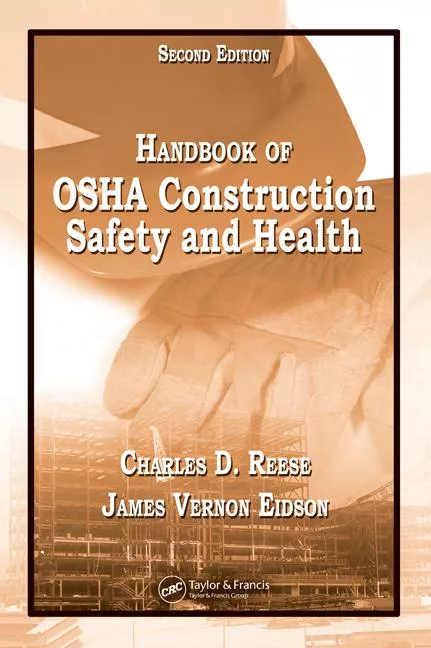
  • 9780849365461.jpg

    Handbook of OSHA Construction Safety and Health, Second Edition

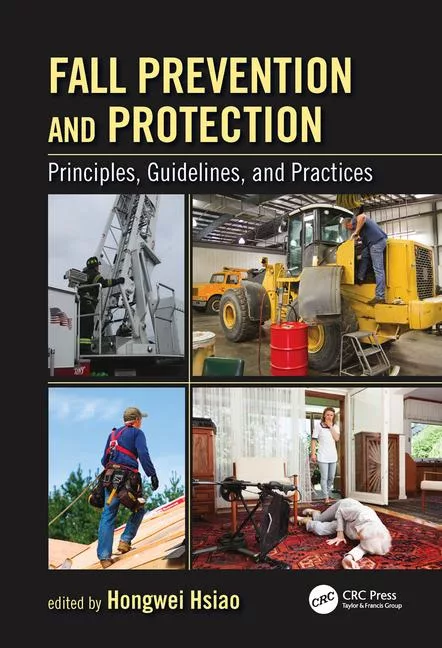
  • 9781482217148.jpg

    Fall Prevention and Protection: Principles, Guidelines, and Practices

See More Products

Related Directories

  • Crisis Prevention Institute

    CPI equips organizations with training and resources on preventing and de-escalating difficult behavior.
×

Become a Leader in Safety Culture

Build your knowledge with ISHN, covering key safety, health and industrial hygiene news, products, and trends.

JOIN TODAY
  • RESOURCES
    • Advertise
    • Contact Us
    • Directories
    • Manufacturing Division
    • Store
    • Want More
  • SIGN UP TODAY
    • Create Account
    • eMagazine
    • Newsletters
    • Customer Service
    • Manage Preferences
  • SERVICES
    • Marketing Services
    • Reprints
    • Market Research
    • List Rental
    • Survey/Respondent Access
  • STAY CONNECTED
    • LinkedIn
    • Facebook
    • YouTube
    • X (Twitter)
  • PRIVACY
    • PRIVACY POLICY
    • TERMS & CONDITIONS
    • DO NOT SELL MY PERSONAL INFORMATION
    • PRIVACY REQUEST
    • ACCESSIBILITY

Copyright ©2026. All Rights Reserved BNP Media, Inc. and BNP Media II, LLC.

Design, CMS, Hosting & Web Development :: ePublishing