January is National Radon Action Month, and the U.S. Environmental Protection Agency (EPA) is encouraging Americans around the country to test their homes for radon, the second leading cause of lung cancer.
“Radon exposure is one of the most important public health issues affecting Americans today,” said EPA Administrator Andrew Wheeler.
Over the 10 years from 2008 to 2017, the U.S. had an annual average of 1,344,100 fires, according to Fire in the United States 2008-2017, the 20th edition of the statistical overview of fires in the U.S. issued by the U.S. Fire Administration (USFA).
Those million-plus fires resulted in 3,190 civilian deaths, 16,225 civilian injuries and $14.7 billion in direct property loss each year. The figures in the report represent an increase in 10-year trends for fire-related deaths and dollar loss, even as 10-year trends for fires and fire-related injuries have decreased.
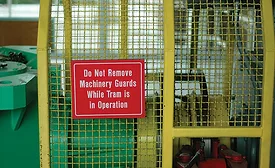
OSHA has issued an updated National Emphasis Program (NEP) that signifies the agency’s intent to focus inspections on identifying amputation hazards in manufacturing industry facilities. The NEP, which was first issued in 2015, specifically targets industrial and manufacturing workplaces where employees are injured by unguarded or improperly guarded machinery and equipment.
This article highlights six key misconceptions about machine safeguarding. ANSI / ISO 12100:2012 Safety of machinery – General principles for design – Risk assessment and risk reduction is the primary reference.
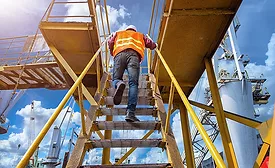
Fall protection has been the number one most frequently cited OSHA violation for several years now, which means, worksites simply are not understanding the need to keep employees upright. Employers continue to take significant unnecessary “risk” when it comes to workplace slips, trips and falls by not taking the appropriate measures in evaluating their worksites.
When it comes to accidents, manufacturing ranks second highest of all industries. That comes despite OSHA regulations and American National Standards Institute (ANSI) standards. A key culprit is unguarded hazardous machinery.
This is a voluntary consensus standard. It uses recognized management system principles in order to be compatible with quality and environmental management system standards such as ISO 9001, ISO 14001 and ISO 45001.
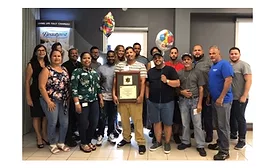
A small mattress manufacturing operation in Puerto Rico has succeeded in updating and improving work practices, improving machine guarding, increasing employee participation in safety and health activities, and improving the safety and health management system already in place at the site with help from Puerto Rico Consultation Services, which performs local assessments and consults as part of federal OSHA’s On-Site Consultation Program.
Machine guarding solutions, a chemical tank cover and work boots for women in the trades were the top occupational safety and health products featured this week on ISHN.com.
As defined by OSHA, combustible dust is “a solid material composed of distinct particles or pieces, regardless of size, shape or chemical composition, which can present a fire or deflagration hazard when suspended in air or some other oxidizing medium over a range of concentrations.”
 RSS
RSS