Machine risk assessments vs. safeguarding assessments
Securing your workplace
When it comes to accidents, manufacturing ranks second highest of all industries. That comes despite OSHA regulations and American National Standards Institute (ANSI) standards. A key culprit is unguarded hazardous machinery.
Year after year, OSHA issues thousands of citations and levies millions of dollars in fines for machine safeguarding violations in an attempt to prevent injuries and save lives OSHA 1910.212(a)(1) is the most common section citation, whereby “one or more methods of machine guarding shall be provided to protect the operator and other employees in the machine area from hazards” followed by OSHA 1910.212(a)(3)(ii) whereby “the point of operation of machines whose operation exposes an employee to injury shall be guarded.
Why the disregard?
Why is this so? Often facility safety managers are lulled into a false sense of security because a serious accident has not yet occurred or because accidents are rare in their facility. Other managers might wrongly suppose that their newly purchased machinery arrives fully compliant, not realizing that OEMs are typically concerned with new machinery price competitiveness, not necessarily guarding compliance. Still other managers may wrongly assume that older machines are “grandfathered in” before OSHA was formed.
For whatever reason, approximately half of industrial machinery has not been properly safeguarded.
That is the bad news.
The good news is there is a way to determine compliance through an assessment of the machinery on the plant floor, as outlined by ANSI B11.0. There are two types of assessments that reign supreme: the Risk Assessment and the Safeguarding Assessment. This article will address both methods and how they help an organization better protect the people operating the machines and reduce the risk at the facility.
Risk assessments should be conducted annually, including whenever a new machine is installed or a major change to an existing machine or production line has taken place. Additionally, in an ideal world, a pre- and post-assessment would be done to verify that the hazards identified in the assessment were properly mitigated.
Risk assessment
What a risk assessment is comprised of is outlined in ANSI B11 Series Standards for Industrial Machinery, ANSI/RIA R15.06-2012 Safety Standards for Industrial Robots, and the National Fire Protection Association (NFPA) 79-2015 Electrical Standard for Industrial Machinery.
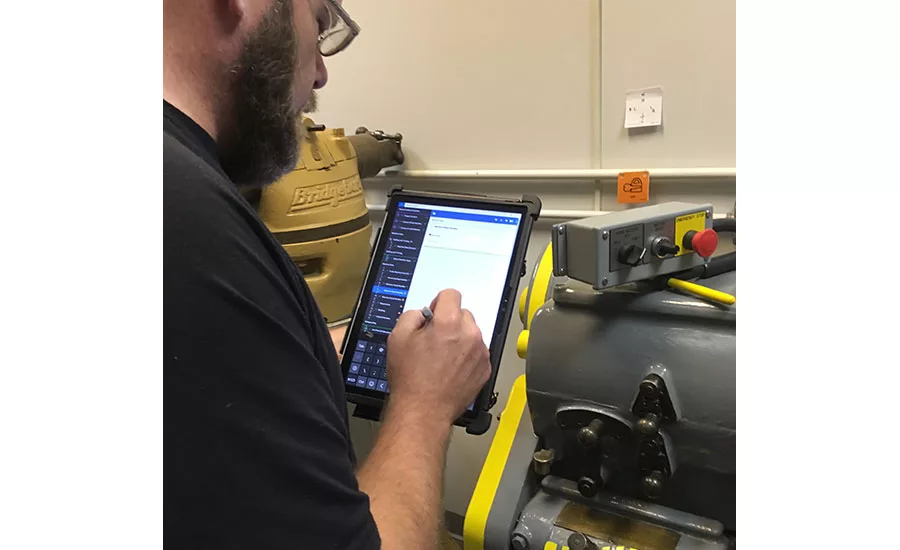
The overarching goal of a task-based risk assessment is to identify hazards associated with machinery or robots. This requires an on-site visit by a risk assessment professional who audits and assigns each machine a risk rating based on three considerations: Severity of Injury, Exposure Frequency, and Avoidance Likelihood, which produces a Risk Level. Today’s risk assessment specialists use software-based tools that can make the process quicker than working through a pen-and-paper risk assessment form.
In advance of the facility visit and based upon project scope, the risk assessment specialist will need to review a comprehensive machine list and potentially other documentation such as: corporate safety standards, lockout/tagout (LOTO) procedures, electrical and mechanical drawings, floor-plan layout and equipment manuals.
The scope of assessing a piece of machinery for risk begins with reviewing its operational states with functionality tests performed to help identify potential hazards during machine start-up, cycle, and stopping. The risk assessment specialist may perform a Stop-Time Measurement (STM) test to determine the machine’s reaction time after receiving a stop signal to ensure proper safety distance of safeguarding devices. The specialist will also establish if a passerby or other employees in the area could be hurt if an incident occurs, in addition to the operator.
Along with assessing the production risks of the machine, the risk assessment specialist must analyze the tasks performed by the machine operator as they relate to interacting with the machine, loading and unloading materials, planned and unplanned maintenance methods, frequency of tool changes, and general housekeeping.
During the risk assessment, the specialist will photograph machines and generate a final hazard report documenting their assessment findings and risk levels. The hazardous findings of each machine are broken down into the following ranked classifications:
- Critical: There is an imminent life-threatening or dismemberment hazard and immediate action is needed to reduce risk and improve operator safety
- Mandatory: There is an imminent hazard that creates potential for injury and action is required to reduce risk, improve operator safety and to comply with OSHA/ANSI standards
- Compliant: There is not a recognized hazard that creates potential for injury and no action is required.
Safeguarding assessment
While a risk assessment helps to identify a problem, it does not provide specific safety solutions nor cost estimates. For that, a safeguarding assessment is needed.
During the safeguarding assessment, a specialist will visit the site and conduct an intensive audit of each machine and identify compliance in five guarding areas: safeguards, controls, disconnects, starters and covers. The safeguarding specialist may request copies of electrical, pneumatic or hydraulic schematics, operator manuals and ask for control panel access so that engineers can review the control circuit for electrical compatibility of any proposed safeguarding solutions and to verify reliability of the control circuit to determine the interfacing requirements of suggested equipment. Then the safeguarding specialist will focus on risk reduction using this basic methodology:
- Eliminate Access — A good safeguarding system eliminates the possibility of the operator or other workers placing parts of their bodies near hazardous moving parts.
- Reduction in Exposure — A machine safeguard should not be able to be removed, bypassed or tampered with by the operator. To minimize risk exposure, all guards and devices must be securely mounted at the point-of-operation and durable enough to withstand industrial environments, vandalism and heavy usage.
- Create No New Hazards — A safeguard defeats its own purpose if it creates a hazard of its own such as a shear point, a jagged edge, or an unfinished surface which can cause a laceration. The edges of guards, for instance, should be rolled or bolted in such a way that they eliminate sharp edges.
- Create No Interference — Any safeguard which impedes a worker from performing a job quickly and comfortably might soon be overridden or disregarded. Proper safeguarding can actually enhance efficiency since it can relieve the worker’s apprehensions about injury.
- Allow Safe Lubrication — Locating oil reservoirs outside the guard, with a line leading to the lubrication point, will reduce the need for the worker to enter the hazardous area.
- Administrative Controls — Without administrative oversight and supervisory control, a machine safeguarding program will fail. Training is key to establishing a safety culture. Operators need to trained to follow the Standard Operating Procedures provided by the machine manufacturer in order to reduce hazards and related risks.
Uncovering gaps in protection
Unlike a risk assessment, a safeguarding assessment recognizes both the problem and the solution. A final compliance report and safeguarding project proposal is issued to facility management which identifies deficiencies or gaps where each machine is not in compliance with current or specified regulations and standards. When not in compliance, the proposal offers standard and customized safeguarding solutions, along with associated costs and timelines to help bring machines into compliance and reduce risk. Each proposed solution is carefully weighed against factors such as risk-reduction benefit, productivity, technological feasibility, economic impact, and maintainability.
In this way, a machine safeguarding assessment follows the OSHA/ANSI approach to controlling machine hazards: eliminate the hazard by design; or control the hazard by guarding, posted warnings, personal protective equipment, and employee training.
Risk reduction strategies
When evaluating risk reduction solutions to address identified hazards, consider each machine and its unique risks. Three basic methods are available.
- Eliminating or reducing risks to a “tolerable” level by installing a new, inherently safe machine. Please note that what constitutes “tolerable” to one company is not necessarily tolerable to another.
- Installing the necessary safeguarding equipment on an existing machine to minimize risks that cannot be eliminated. Fixed enclosing guards, protective devices such as light curtains, palm buttons or presence sensing mats, and training on the safe working methods of the machine are all necessary to reduce injury risks.
- Changing the production process to eliminate the hazard. Perhaps the operator performs actions that increase his exposure to serious hazards? Or recent changes upstream have created a more dangerous environment? Even a small change in procedures can make for a safer, more efficient operation.
Conclusion
Both risk assessments and/or the safeguarding assessments are critical first steps in any machine or robot safeguarding project as outlined in ANSI B11 Series Standards for Metalworking, OSHA 1910.212 General Requirements, ANSI/RIA R15.06-2012 Safety Standards for Industrial Robots and NFPA 79. These standards pave the way for risk-reduction measures that are both effective and economical. Machine risk assessments provide a comprehensive hazard analysis with a risk ranking; machine safeguarding assessments identify safeguarding solutions and provide cost estimates for implementation. Which one is right for an organization depends upon the specific needs of the organization, the organization’s objectives, desired outputs and risk levels.
Looking for a reprint of this article?
From high-res PDFs to custom plaques, order your copy today!