Winter weather advisory: Costly slips, trips and falls can be prevented
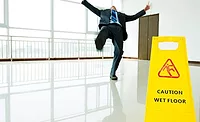
Slips, trips and falls in the workplace continue to be the cause of many workplace injuries and illnesses. With winter weather creating more possibilities for slippery surfaces, the American Society of Safety Engineers (ASSE) offers tips on how to prevent slips, trips and falls at work.
According to the U.S. Bureau of Labor Statistics, in 2007, floors, walkways and ground surfaces were the source of 20 percent of all days away from work cases, an increase of seven percent from 2006. In addition, in 2008, the number of fatal falls on the same level, to a floor, walkway or an object, increased from the year before to a total of 84 deaths.
Also, according to the 2009 Liberty Mutual Workplace Safety Index, in the U.S. disabling workplace injuries from same-level falls had a direct cost of $6.2 billion in workers compensation costs in 2007, ranking second to overexertion as a leading cause of disabling injury. The index also noted that from 1998 – 2007, falls on the same level increased by 36.7 percent.
According to ASSE’s Professional Safety Journal article “Slips, Trips & Falls in Construction & Mining: Causes & Controls,” four factors can contribute to slip, trip and fall hazards: 1) workers; 2) machines/equipment; 3) work environments; and 4) management. Workers may be prone to slip, trip and fall hazards by not properly using equipment, fatigue, risk-taking behavior and/or inadequate training. Some machine factors that contribute to slip, trip and fall hazards include improperly designed machines, missing components or machines that are not maintained properly. Environmental factors include wintery conditions such as snow, ice, wind and other factors such as poor lighting. The article also notes that management has the ability to control worker, machine and environment factors through proper planning, monitoring and corrective action.
The following are some basic suggested tips from ASSE aimed at helping prevent slips, trips and falls at work:
According to the U.S. Bureau of Labor Statistics, in 2007, floors, walkways and ground surfaces were the source of 20 percent of all days away from work cases, an increase of seven percent from 2006. In addition, in 2008, the number of fatal falls on the same level, to a floor, walkway or an object, increased from the year before to a total of 84 deaths.
Also, according to the 2009 Liberty Mutual Workplace Safety Index, in the U.S. disabling workplace injuries from same-level falls had a direct cost of $6.2 billion in workers compensation costs in 2007, ranking second to overexertion as a leading cause of disabling injury. The index also noted that from 1998 – 2007, falls on the same level increased by 36.7 percent.
According to ASSE’s Professional Safety Journal article “Slips, Trips & Falls in Construction & Mining: Causes & Controls,” four factors can contribute to slip, trip and fall hazards: 1) workers; 2) machines/equipment; 3) work environments; and 4) management. Workers may be prone to slip, trip and fall hazards by not properly using equipment, fatigue, risk-taking behavior and/or inadequate training. Some machine factors that contribute to slip, trip and fall hazards include improperly designed machines, missing components or machines that are not maintained properly. Environmental factors include wintery conditions such as snow, ice, wind and other factors such as poor lighting. The article also notes that management has the ability to control worker, machine and environment factors through proper planning, monitoring and corrective action.
The following are some basic suggested tips from ASSE aimed at helping prevent slips, trips and falls at work:
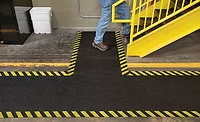
- Remove slip, trip, and fall hazards from the work area, especially in high-trafficked areas. Even though workers may be moving at a reasonable pace and keeping their eyes on where they are going, predictable surfaces with good traction help prevent slips, trips and falls.
- Establish a no-running policy. Though in some industries staff may need to work at a quick pace, such as the retail, hospitality and restaurant industry, making sure that workers do not run can prevent injuries and illnesses due to slips and falls.
- Make sure workers wear proper footwear with good traction that is kept in good repair. Take a look at the soles of shoes regularly to check for excessive wear. Slip-resistant footwear should be considered where necessary, such as footwear with spiked or studded soles that can improve traction on ice.
- Cleaning procedures for floors are essential to good slip resistance. Make sure that all walking surfaces are kept free of spills, water, oil and any other substances that may affect the traction of the surface.
- Report any spills and provide adequate signage regarding hazards such as spills, uneven surfaces, debris, icy sidewalks, smooth concrete and other hazards. Also ensure that your company has a process that documents incidents and reports slip and fall hazards.
- Make sure that staff is trained on how to properly clean/remove slip, trip and fall hazards. Also ensure that staff and management are trained in slip, trip and fall prevention. Workers should resume work only after a hazard has been removed or resolved.
- Make sure all areas have adequate lighting to illuminate any potential hazards.
- To prevent surface water accumulation in areas that can lead to slips, trips and falls, ensure that there are adequate drainage systems and pumps in place.
- Be aware of the floor types in your company to help determine the degree of hazards for slips, trips and falls.
Looking for a reprint of this article?
From high-res PDFs to custom plaques, order your copy today!