ISHN logo
search
cart
facebook twitter linkedin youtube
  • Sign In
  • Create Account
  • Sign Out
  • My Account
ISHN logo
  • NEWS
    • Today's News
    • Global Safety News
    • Government Regulations
  • PRODUCTS
    • Product Innovations
    • Featured Products
  • TOPICS
    • Environmental Health and Safety
    • Facility Safety
    • Workplace Health
    • Occupational Safety
    • PPE
    • More Topics
  • CONSTRUCTION
  • TECHNOLOGY
  • COLUMNS
    • Best Practices
    • Dave Johnson: What’s going on
    • Editorial Comments
    • Leading Safety
  • MULTIMEDIA
    • ISHN Podcast
    • Videos
    • Cold Stress Education Quiz
    • Webinars
    • White Papers
  • MORE
    • Buyer's Guide
    • Newsletters
    • Convention Companion
    • Polls
    • Events
    • ISHN Store
    • Sponsor Insights
  • EMAGAZINE
    • eMagazine
    • Archived Issues
    • Contact
    • Advertise
  • JOIN TODAY!
Today's Safety NewsGovernment Safety RegulationsEnvironmental Health and SafetyConstruction Industry Safety and Health

U.S. DOL Blog post

“It Took About 5 Years to Kill Him, and We Got to Watch”
By Thomas Perez
silica exposure
March 25, 2016

When he was a kid, Tom Ward thought his dad was Superman, especially because he worked with his hands. When I sat down with Tom a few weeks ago, he talked about how heroic and invincible his father seemed, about his athleticism and his work ethic. But years of working as a sandblaster had taken their toll. They turned out to be this Superman’s kryptonite.

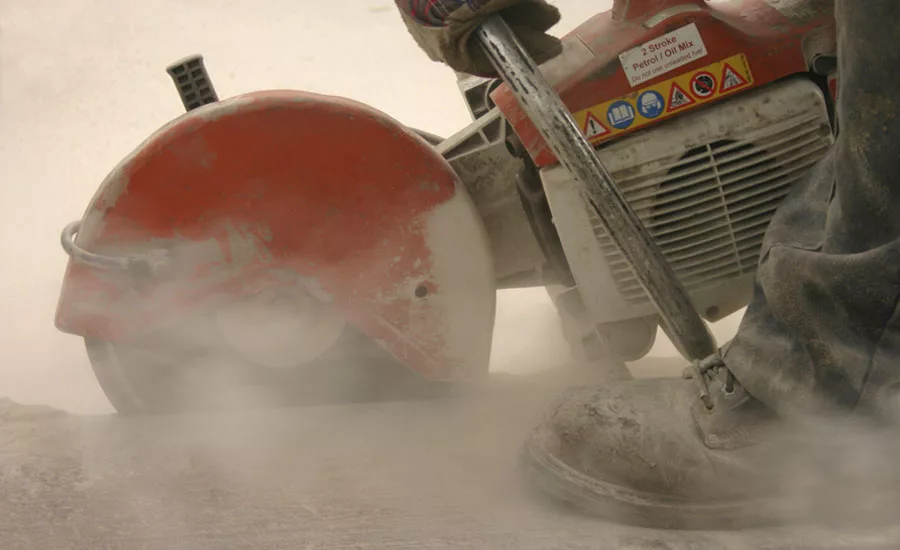
When he was just 34 years old, Tom’s father was diagnosed with silicosis, a progressive, incurable disease afflicting workers who drill, cut, crush or grind materials like concrete and stone. The disease suffocated him, and he literally worked until he dropped.

Decades later, Tom still gets choked up talking about the day his dad fell to the floor and cried, saying he just couldn’t work anymore. “It took about 5 years to kill him,” Tom says, “and we got to watch.” And it wasn’t just a personal tragedy for Tom, his mother and his sisters; it was a financial crisis, too. They lost everything.

Inspired by his dad’s memory, today Tom works as a masonry trainer for the Bricklayers and Allied Craftworkers in Michigan. He’s teaching many of the safety measures that could have saved his father’s life. And he believes we need a better, updated safety standard that protects people who work around silica dust.

Final silica rule released

So on behalf of Tom and his family – and the 2.3 million hardworking people exposed to silica in their workplaces – that’s exactly what we’re doing. Today, Tom joined me as the Labor Department’s Occupational Safety and Health Administration announced a final silica rule that will save more than 600 lives a year and protect the health of thousands of others.

This step is a long time coming. Awareness of the dangers of inhaling dust is almost as old as civilization itself – it goes back to stone-cutting in ancient Greece and Rome. And we’ve known how to prevent silicosis for 80 years since my predecessor, Labor Secretary Frances Perkins, convened a panel of experts to study this issue in the mid-1930s. Throughout recent years, the body of scientific knowledge has expanded – and we know now that breathing in these tiny dust particles can cause lung cancer, emphysema, kidney disease and other diseases. We’ve had a silica standard since the early 1970s, but the overwhelming evidence is that it’s no longer up to the task – in fact, it was out of date from the moment it went into effect.

Now finally, we’re mustering the will to do what needs to be done. At long last, we’re rising to the challenge and taking the bold action this problem demands.

Half the current limit

The new rule will substantially reduce the permissible exposure limit, setting it at 50 micrograms per cubic meter of air – that’s half the current limit for general industry and five times more stringent than the current exposure limit forconstruction. In most cases, this can be achieved using common-sense controls – like wetting down the dust or improving ventilation – to limit exposure. As Tom Ward says: “Turn the water on, turn the vac on.” In fact, some of the necessary equipment can be bought at a well-stocked hardware store.

The rule provides flexibility to employers, giving them room for creativity and options for different ways to achieve compliance. We were very careful to make sure this wasn’t a one-size-fits-all approach.

We also engaged businesses and other stakeholders throughout the process, soliciting their input and incorporating their recommendations. There was a robust comment period, as well as 14 days of public hearings. The final rule contains many changes and improvements from the proposal that we issued in September 2013. Every step of the way, we approached this rulemaking with a keen ear and an open mind. We’ve built a big table and invited everyone to pull up a chair. OSHA also will be all in when it comes to providing technical expertise and compliance assistance to employers.

"The right side of history"

As always when we take action to raise labor standards, we can expect to hear from plenty of “calamity howlers” – people who will hyperbolically claim that a stronger silica standard will devastate industry and kill jobs. But these kinds of claims never are borne out. The sky-is-falling crowd never finds itself on the right side of history. We can’t be sucked into a false choice between occupational safety on the one hand and a sound bottom line on the other hand. Responsible employers tell me all the time that the two go hand-in-hand.

The cost of doing nothing on silica is unacceptably high. It comes in the form of a slow and painful death for workers like Tom Ward’s father. That’s why we’ve worked so hard and so thoroughly to complete this rule. The tough men and women who work with steel, brick and stone – who build our homes, operate our foundries and maintain our roads – deserve nothing less than the best possible protection. Today, we protect their right – one of our most basic rights of all – to come home safe and sound after a hard day’s work.

Follow Secretary Perez on Twitter and Instagram as @LaborSec.

KEYWORDS: occupational diseases occupational exposure OSHA standards rulemaking silicosis

Share This Story

Looking for a reprint of this article?
From high-res PDFs to custom plaques, order your copy today!

Perez is U.S. Secretary of Labor.

Recommended Content

JOIN TODAY
to unlock your recommendations.

Already have an account? Sign In

  • forklift safety

    Exploring the latest technologies in forklift safety

    With more staff and more stock in warehousing now more...
    Facility Safety
    By: Josh Cramer
  • welding

    All about welder’s flash or arc eye

    A flash burn is a painful inflammation of the cornea,...
    Environmental Health and Safety
  • dangerous jobs

    The 10 most dangerous jobs in the U.S.

    On-the-job deaths have been rising — hitting the highest...
    Occupational Safety
    By: Benita Mehta
Manage My Account
  • eMagazine Subscriptions
  • ISHN Newsletter & Other Newsletter Alerts
  • Online Registration
  • Manage My Preferences
  • Subscription Customer Service

More Videos

Sponsored Content

Sponsored Content is a special paid section where industry companies provide high quality, objective, non-commercial content around topics of interest to the ISHN audience. All Sponsored Content is supplied by the advertising company and any opinions expressed in this article are those of the author and not necessarily reflect the views of ISHN or its parent company, BNP Media. Interested in participating in our Sponsored Content section? Contact your local rep!

close
  • man wearing the the Sundström SR200 Full Face Mask Respirator
    Sponsored byOHD

    5 Fit Testing Mistakes That Could Cost You

  • This image shows Magid AcuSpex polarized blue mirrored safety glasses.
    Sponsored byMagid Glove and Safety

    Construction PPE Guide: What Crews Need for Each Task

  • lone worker in confined space
    Sponsored byAlphasense Ltd.

    GET THE LEAD OUT of your Safety Oxygen Sensors!

Popular Stories

SpaceX 7 launch

OSHA Investigating Fatal Fall at SpaceX Starbase

Worker Impairment

How to Tell When a Co-Worker is Impaired? A Safety Pro’s Challenge

Automated loading dock equipment

After March 2026 Rivian Death, Safety Managers Reassess Loading Dock Systems Under OSHA's Warehouse Emphasis Program

top 10 most dangerous jobs

Poll

Seasonal Readiness

With the federal heat stress prevention rule on the horizon, which area of your safety program needs the most attention?
View Results Poll Archive

Products

Surviving an OSHA Audit A Management Guide, 2nd Edition

Surviving an OSHA Audit A Management Guide, 2nd Edition

See More Products

ISHN Podcasts

Related Articles

  • How to quit smoking: Watch hard-to-watch CDC PSAs

    See More
  • Would you like me to watch out for your safety off the job?

    See More
  • Trends to watch in 2012

    See More

Related Products

See More Products
  • 1119906652.webp

    Alive and Well at the End of the Day: The Supervisor's Guide to Managing Safety in Operations, 2E

  • Top Ten Pitfalls in OSHA Recordkeeping and How to Avoid Them

See More Products

Related Directories

  • WatchGas Detection

    Founded in 2018 in Rotterdam, WatchGas manufactures the SST Range of portable gas detectors, including multi-gas and single-gas devices. Unlike others, we focus on compliance, ensuring reliable, cost-effective solutions without hidden fees. With global offices and distributors, WatchGas is your trusted partner for safe, compliant gas detection worldwide.
×

Become a Leader in Safety Culture

Build your knowledge with ISHN, covering key safety, health and industrial hygiene news, products, and trends.

JOIN TODAY
  • RESOURCES
    • Advertise
    • Contact Us
    • Directories
    • Manufacturing Division
    • Store
    • Want More
  • SIGN UP TODAY
    • Create Account
    • eMagazine
    • Newsletters
    • Customer Service
    • Manage Preferences
  • SERVICES
    • Marketing Services
    • Reprints
    • Market Research
    • List Rental
    • Survey/Respondent Access
  • STAY CONNECTED
    • LinkedIn
    • Facebook
    • YouTube
    • X (Twitter)
  • PRIVACY
    • PRIVACY POLICY
    • TERMS & CONDITIONS
    • DO NOT SELL MY PERSONAL INFORMATION
    • PRIVACY REQUEST
    • ACCESSIBILITY

Copyright ©2026. All Rights Reserved BNP Media, Inc. and BNP Media II, LLC.

Design, CMS, Hosting & Web Development :: ePublishing