How to protect remote lone workers
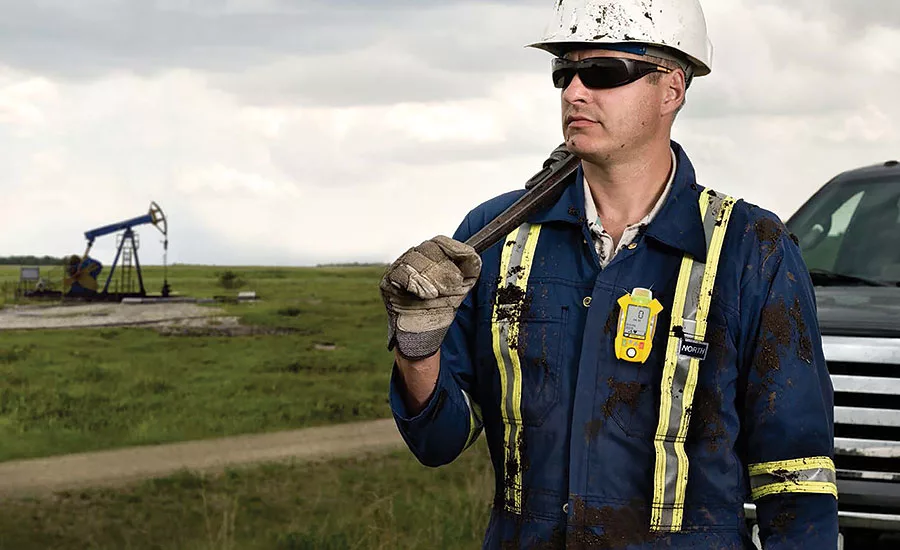
How can you build a culture of safety for remote workers? How do you protect your lone workers?
Remote risks
Remote workers often go where the work requires them to go. They’re exposed to heat stress, slips and falls, electrocution and toxic or flammable gases. Their work is often physically demanding, increasing risks of exhaustion, heart attacks, seizures and other physiological emergencies.
This profile is common in oil and gas, telecommunications, utilities, construction companies and industrial contractors, to name a few industries.
Oil & gas
Working remotely is a daily occurrence for thousands of workers in the oil and gas industry. Company vehicles can break down, be driven in an unsafe manner or take inconsistent or inefficient routes to a destination. It’s not uncommon to be out of cellular coverage, making check-in / check-out procedures less reliable.
Radios and cell phones often depend on the quality of the cellular network or the geographic terrain of a distant area. For many high risk environments, remote workers will also carry a portable gas detector. In the past, when there was a gas release or man down alarm, they were often the only ones who knew about it. It might be days or weeks before it’s reported, if at all. And if a remote worker loses consciousness from a gas exposure or other safety incident, it could be hours before anyone realizes that worker is in distress, at which point the search to even figure out where the worker is located begins.
Current options
Manual check in, check out procedures are a necessity, but are tedious and labor intensive. Equipping workers with GPS tracking devices or panic buttons can help, but are of little value if no one is watching or the worker is incapacitated. Improved vehicle telemetry better monitors fleet operation and location, but is useless once the operator transitions to a worksite. None of these options offer the peace of mind that employees at more traditional workplaces enjoy, knowing their fellow employees always have their back.
Connectivity
Traditional tools of the remote worker have been used as separate components. This lack of integration fails to leverage the power of the system components. But when all devices are connected, can enable the connected worker.
With the application of next-generation Industrial Internet of Things (IIoT) technology, remote workers never need to be truly “alone.” Recent solutions leverage wearable devices on the worker, and connectivity through wireless, cellular or even satellite communications, to sophisticated cloud-based software, provide critical information about the worker in real time.
Managers can locate workers on demand, check near real-time status of gas detection and other safety equipment, receive automatic alerts of gas alarms and man-down incidents, perform site check-in/check-out, send two-way text messages, and track vehicle maintenance, fuel usage and driving habits. Conveying safety and location data from remote workers to safety managers via GPS in real or near-real time increases both the safety and productivity of workers in distant locations.
If you are concerned mostly about worker safety, you can use a portable gas monitor paired with a smart phone app. This lightweight and unobtrusive app runs in the background, pushing data such as bump and calibration records, gas readings, location, man down and panic alarms to cloud-based monitoring software. Modern IIoT devices have size and battery performance characteristics on par with their non-connected equivalents, and the smart phone is rapidly becoming a critical productivity tool, particularly for the remote work force. For those needing rugged or intrinsically safe smart phones, a number of good options are available.
If you want status information on the vehicle in addition to the worker, or are looking for satellite connectivity for austere locations, the same wireless gas detectors can be paired to a broadband modem installed in the vehicle. A dual mode modem uses cellular when available, and automatically switches to satellite transmission when the cellular signal is out of range. Cloud-based software provides the same worker safety and productivity benefits; it also adds functionality around the vehicle such as telemetry, journey management, driver scorecards, preventive maintenance and theft prevention
Key features and benefits
Enhanced safety and situational awareness
•Real time notification of man down, panic alarms and other gas events
•Rapid routing of first responders thanks to GPS location information
•Vehicle health status, performance and driver scorecards
Greater productivity around people and asset management
•Real time compliance through visibility into bump/calibration completion, gas event reporting
•Automation of check-in / check-out procedures
•Journey management, theft prevention and asset recovery
These benefits can be realized from anywhere, thanks to cloud-based one-stop management dashboards, accessible from any computer or mobile device with an internet connection, delivering near real-time safety and operational intelligence in the form of visibility, alerts, analytics and asset management information to managers enterprise-wide.
Potential life-saver
With nearly 100 percent on-demand data availability, even to the most far-flung points of an enterprise, you have a potential life-saving tool for remote workers in distress.
At the functional level, the system delivers the real-time visibility of remote lone workers that can enable you to, first and foremost, improve worker safety — as well as to ensure regulatory compliance, manage costs and assets, and protect the company reputation.
More than that, the solution provides you with invaluable peace of mind that you wouldn’t otherwise have. Companies have always had a responsibility to look after the safety and well-being of all their employees. Now, with the smart application of IIoT and cloud-based technology, remote workers are in touch, in sight, and in compliance --and can focus on their work knowing that someone always has their back.
|
Lone workers by the numbers • 53 million - Total number of lone workers in the U.S. Canada and Europe
• 1.3 billion – mobile workers
• 15% - percentage of Source: Berg Insight; International Data Corporation |
|
Greater visibility into the status of remote workers • Enhances the personal safety risk of the worker • Reduces the manual time — and cost — required for tracking lone workers, verifying their compliance with procedures and equipment • Enables companies to better monitor assets • Lessens the risk to a company’s reputation from a lone worker incident |
Looking for a reprint of this article?
From high-res PDFs to custom plaques, order your copy today!