ISHN logo
search
cart
facebook twitter linkedin youtube
  • Sign In
  • Create Account
  • Sign Out
  • My Account
ISHN logo
  • NEWS
    • Today's News
    • Global Safety News
    • Government Regulations
  • PRODUCTS
    • Product Innovations
    • Featured Products
  • TOPICS
    • Environmental Health and Safety
    • Facility Safety
    • Workplace Health
    • Occupational Safety
    • PPE
    • More Topics
  • CONSTRUCTION
  • TECHNOLOGY
  • COLUMNS
    • Best Practices
    • Dave Johnson: What’s going on
    • Editorial Comments
    • Leading Safety
  • MULTIMEDIA
    • ISHN Podcast
    • Videos
    • Cold Stress Education Quiz
    • Webinars
    • White Papers
  • MORE
    • Buyer's Guide
    • Newsletters
    • Convention Companion
    • Polls
    • Events
    • ISHN Store
    • Sponsor Insights
  • EMAGAZINE
    • eMagazine
    • Archived Issues
    • Contact
    • Advertise
  • JOIN TODAY!
Today's Safety NewsEnvironmental Health and SafetyColumnsSafety Industry White PapersWorkplace Training Strategies

Working without support: How to transition from ‘going it alone’

By Dr. John Kello
0617_pg16_C3_pic.jpg
June 1, 2017

Some of us are blessed to step into an EHS role where “the table is set.” Top management daily walks the talk, and supports and publicly acknowledges our efforts. We operate in a Positive Safety Culture.

That’s some of us. For others… not so much.

What if our role is to manage safety in an environment where much needs to be done, and there is little tangible support?

Personal attributes of safety pros make “walking alone” more likely to be successful – optimism, resilience, self-confidence, high initiative, to name a few. But building a Positive Safety Culture in an organization that is not strongly and visibly supportive from the top is a challenge, let’s be clear.

Borrowing liberally from the work of John Kotter, Harvard Business School guru, here are ways to build support for safety efforts when the environment is, at least initially, not supportive.

Act with (preemptive) urgency

Safety efforts always get a shot in the arm when, sadly, we have had an accident or worse, a run of accidents, or much worse, a fatality. Certain airlines (which shall remain nameless) were not interested in CRM (crew resource management) training until they hit their own patch of “bad luck”… after which they became strong advocates. The trick is to create a legitimate sense of urgency preemptively, in the absence of accidents as triggering events. I recommend identifying “missed opportunities” (i.e., safety hazards that we need to correct, deficits in our safety training, near misses we need to learn from), benchmarking what others are doing with visible, positive results, and developing plans to be best-in-show, rather than trying to catch up with safety once we are in the hot seat.

Broaden your base

Don’t be a “one-man band.”  Energize and deputize others. A meaningful and representative safety team, with visibility and clout, is a start. If the boss can be on-boarded, so much the better. The boss is usually the pathway to the resources needed to mount and support an effective safety effort. I like the image of “putting him/her at the head of the parade… and gently pushing from the back.” As in, “What a great plan, boss – you were right about this all along....”

But if you are quite sure that you are in fact working without support from your boss and other leadership folks, you can at least build and energize an active safety committee that produces visible results. Such a safety coalition can serve as a “substitute for leadership.” And, if you are able to carefully get the attention of leaders above the boss, sometimes the boss begins to “get it.”

Develop and communicate your vision

Effective change efforts require a more or less clear and energizing image of the “future state.” What will our Positive Safety Culture look like when we “get there”? What will we see that is different from today? How will our safety meetings function? How will we learn from near misses? Will associates have the skill and confidence they need to coach each other? An inspiring vision is not just “nice words on the wall.” It is a critical element of every successful major transformation, including building a Positive Safety Culture.

Safety pros have not always been the best at “marketing their message.” Too often they have operated in a silo, in a compliance-driven, reactive mode. Not all are expert at getting the word out about the value they provide to their organization as a critical business partner. A good idea for EHS folks is to take advantage of every available opportunity (and create some if they don’t exist) to tell the story. Get in front of your leadership, as well as the associates out there where the work gets done. Help them be continuously aware and mindful as they work.

Identify steps towards the vision

Again, with the support that can be generated by the engagement of a vibrant and motivated safety committee, let folks know what their specific role is in driving us towards our vision of a Positive Safety Culture. What are their “marching orders”? What can they do now to make a positive difference?

Reinforce the right behavior

Identify and celebrate successes. Obviously, the standard lagging indicators (no reportables for X period of time, incident rate less than Y, etc.) are going to be tracked. Beyond those metrics, though, identify leading indicators such as results of plant audit/walk-throughs, near-miss discussions, evaluation of safety meetings, anecdotal “moment of truth” accounts of coaching interactions, etc. as positive steps toward the Positive Safety Culture. When you see those steps, give the positive feedback.

Don’t let up

Once things are moving in the right direction, the issue becomes maintaining momentum and sustaining the effort. Keep it fresh and in front of the organization. Vary the format (and leadership) of safety meetings. Change safety signage. In general, be the champion and drive it relentlessly, again with a broad base of support.

Make it stick

Even an energized effort can run down over time. Sometimes the champions get reassigned. But a true Positive Safety Culture takes on a life of its own. In the same way that some organizations are known for quality, or customer service, or innovation, your company can become known for its positive culture of safety (as indeed some best-in-show companies are).

None of the foregoing should be taken as a claim that it is easy to transition from going it alone to generating the support needed to create a sustained Positive Safety Culture.  But these seven recommendations do at least give a general roadmap for getting there.

KEYWORDS: culture of safety safety management

Share This Story

Looking for a reprint of this article?
From high-res PDFs to custom plaques, order your copy today!

Dr. John Kello, professor of industrial-organizational psychology at Davidson College, and president of the organization development consulting firm J.E. Kello & Associates, Inc. John’s work centers on the implementation of the “High-Performance Organization” model in a variety of work settings. He can be reached at (704) 894-2024; jokello@davidson.edu.

Recommended Content

JOIN TODAY
to unlock your recommendations.

Already have an account? Sign In

  • forklift safety

    Exploring the latest technologies in forklift safety

    With more staff and more stock in warehousing now more...
    Workplace Training Strategies
    By: Josh Cramer
  • welding

    All about welder’s flash or arc eye

    A flash burn is a painful inflammation of the cornea,...
    Environmental Health and Safety
  • dangerous jobs

    The 10 most dangerous jobs in the U.S.

    On-the-job deaths have been rising — hitting the highest...
    Occupational Safety
    By: Benita Mehta
Manage My Account
  • eMagazine Subscriptions
  • ISHN Newsletter & Other Newsletter Alerts
  • Online Registration
  • Manage My Preferences
  • Subscription Customer Service

More Videos

Sponsored Content

Sponsored Content is a special paid section where industry companies provide high quality, objective, non-commercial content around topics of interest to the ISHN audience. All Sponsored Content is supplied by the advertising company and any opinions expressed in this article are those of the author and not necessarily reflect the views of ISHN or its parent company, BNP Media. Interested in participating in our Sponsored Content section? Contact your local rep!

close
  • man wearing the the Sundström SR200 Full Face Mask Respirator
    Sponsored byOHD

    5 Fit Testing Mistakes That Could Cost You

  • This image shows Magid AcuSpex polarized blue mirrored safety glasses.
    Sponsored byMagid Glove and Safety

    Construction PPE Guide: What Crews Need for Each Task

  • lone worker in confined space
    Sponsored byAlphasense Ltd.

    GET THE LEAD OUT of your Safety Oxygen Sensors!

Popular Stories

SpaceX 7 launch

OSHA Investigating Fatal Fall at SpaceX Starbase

Worker Impairment

How to Tell When a Co-Worker is Impaired? A Safety Pro’s Challenge

Automated loading dock equipment

After March 2026 Rivian Death, Safety Managers Reassess Loading Dock Systems Under OSHA's Warehouse Emphasis Program

top 10 most dangerous jobs

Poll

Seasonal Readiness

With the federal heat stress prevention rule on the horizon, which area of your safety program needs the most attention?
View Results Poll Archive

Products

Surviving an OSHA Audit A Management Guide, 2nd Edition

Surviving an OSHA Audit A Management Guide, 2nd Edition

See More Products

ISHN Podcasts

Related Articles

  • Time to transition to safer chemicals

    See More
  • F3-IndSci-mainImage.jpg

    Working alone, together: How to solve problems your lone workers may encounter

    See More
  • Going from bad to good… even great: 10 strategies for a surge in safety performance

    See More

Related Products

See More Products
  • Top Ten Pitfalls in OSHA Recordkeeping and How to Avoid Them

  • 111885960X.jpg

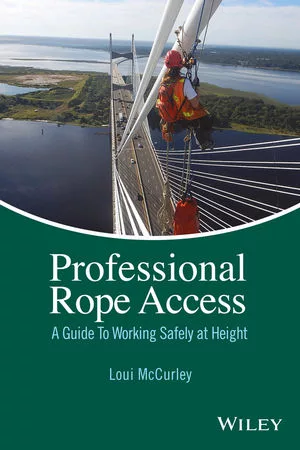
    Professional Rope Access: A Guide To Working Safely at Height

See More Products

Related Directories

  • SafetyLine Lone Worker

    SafetyLine Lone Worker helps companies monitor the status of workers who are remote, alone, or working in hazardous situations. We are an automated check-in monitoring and emergency notification service. SafetyLine uses its communications infrastructure to ensure that workers have comprehensive monitoring, 24/7, without the need for costly monitoring centers.
×

Become a Leader in Safety Culture

Build your knowledge with ISHN, covering key safety, health and industrial hygiene news, products, and trends.

JOIN TODAY
  • RESOURCES
    • Advertise
    • Contact Us
    • Directories
    • Manufacturing Division
    • Store
    • Want More
  • SIGN UP TODAY
    • Create Account
    • eMagazine
    • Newsletters
    • Customer Service
    • Manage Preferences
  • SERVICES
    • Marketing Services
    • Reprints
    • Market Research
    • List Rental
    • Survey/Respondent Access
  • STAY CONNECTED
    • LinkedIn
    • Facebook
    • YouTube
    • X (Twitter)
  • PRIVACY
    • PRIVACY POLICY
    • TERMS & CONDITIONS
    • DO NOT SELL MY PERSONAL INFORMATION
    • PRIVACY REQUEST
    • ACCESSIBILITY

Copyright ©2026. All Rights Reserved BNP Media, Inc. and BNP Media II, LLC.

Design, CMS, Hosting & Web Development :: ePublishing