How to structure an electrical PPE program
Wired for safety
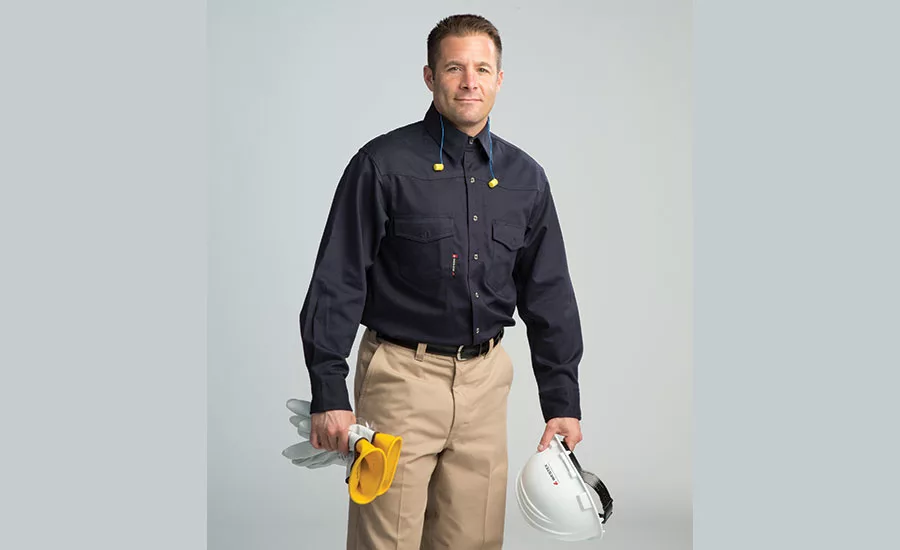
By its directive, the electrical safety standard, NFPA 70E®, emphasizes safety programs that reduce or eliminate electrical hazards. The standard calls upon employers, contractors and employees to work together and, through an expanded risk assessment, clearly define a means by which compliance can be achieved for the protection of all involved.
The hierarchy of risk controls is a key part of developing this plan, and while the first priority is hazard elimination, the hierarchy encourages a holistic approach to developing safety practices and procedures. As a final layer of defense, arc-rated personal protective equipment (PPE) is the foundational safeguard underpinning the hierarchy, with its ability to provide bodily protection should an arc flash incident arise.
When considering the optimal PPE program within the context of your risk assessment, there are a number of factors to take into account. Financial and practical considerations all come into play when developing or re-evaluating a PPE program designed to provide the best possible protection for those in the electrical industry. Many will turn to surface-level elements, such as investment costs or what has been historically used, to help make this important decision.
In fact, the myriad of components to consider can often distract or detract from the core elements safety managers should take into account. Especially through the lens of the recently updated NFPA 70E standard, the direction your PPE program takes can contribute to your overall ability to meet consensus standards. Especially when evaluating your own risk assessment, it is important to consider these three elements when shaping your PPE program.
1. Accounting for human error is now a matter of compliance
Taking effect September 2017, the 2018 edition of NFPA 70E includes an added emphasis on human error in Article 110, which expands the role which PPE can play in protecting your workforce.
Workers and employers are now specifically directed to account for human error while on the job — analyzing how human error can impact safety protocol. Through the lens of people, process, work environment and equipment, a comprehensive protection plan will account for human error precursors, as outlined in the Informational Annex Q, Table Q. Precursors are broken out into four distinct categories: task demands, work environment, individual capabilities and human nature. Catastrophic burn injury consequences resulting from many of these precursors could be substantially lessened by intentionally selecting a PPE program that protects a worker from Category 1 and Category 2 hazards, at a minimum.
2. De-energizing a system is still energized work
NFPA 70E continues to reinforce the idea that working on a de-energized system is the clearest path towards hazard elimination. Energized work is only an option when it is infeasible, not inconvenient, to de-energize, or when de-energizing creates additional hazards and risks. While de-energized work is substantially safer for electrical workers, the process of de-energizing a system is itself energized work — meaning appropriate protections and precautions are needed in order to safely verify the absence of voltage.
Regardless of whether you work on an energized or de-energized system, the need for proper arc-rated PPE is present. In both cases, there is an element of energized work, which mandates PPE use under NFPA 70E.
3. Eliminating hazards does not do away with the need for PPE
As directed by the hierarchy of risk controls, it is important to recognize the part each control plays in providing for the safety of electrical workers. The hierarchy works together as a unit to meet the needs of your risk assessment, and as it suggests, should be used in total. So, while your plan should work to eliminate hazards, it is still important to include all elements of the hierarchy. PPE, as the final control, can help close the risk gap and mitigate the potential for injury or loss of life presented by arc flash incidents when all other precautions fail.
A common thread among these three considerations is the need for consistent, unobtrusive protection — an area where daily wear PPE excels. When considering PPE within a safety plan, you can opt for either daily wear PPE, which provides flame resistant, arc-rated protection within the everyday garments worn, or task-based PPE, which is donned to perform a certain task.
While task-based PPE may seem more sensible, daily wear PPE providing Category 1 and 2 protection helps address the inconsistencies of its task-based counterpart in a number of ways. Task-based PPE can be easily foiled by human error and site-risk desensitization, is subject to worker complacency, and may impact job site efficiencies. This type of protection is only as impactful as the worker’s ability to consistently and correctly identify on-the-job hazards.
Delivering full-time protection for lower energy Category 1 and 2 tasks, daily wear PPE helps to address and reduce the pitfalls of task-based PPE in a way that enhances worker comfort on the job. While it may be more of an investment initially, the practical considerations of daily wear far outweigh the investment. Workers are consistently protected throughout their day with minimal additional arc flash hazard assessment, and daily wear PPE allows for the comfort and functionality of non-FR garments backed by the protection of AR/FR fabrics.
Daily wear PPE offers a clear and streamlined answer in accounting for the final layer of defense PPE can provide. Especially given the NFPA 70E compliance conversations surrounding risk assessment and human error, daily wear PPE can only enhance your program with vital and proven protection without impacting a worker’s ability to do his or her job well.
Looking for a reprint of this article?
From high-res PDFs to custom plaques, order your copy today!