ISHN logo
search
cart
facebook twitter linkedin youtube
  • Sign In
  • Create Account
  • Sign Out
  • My Account
ISHN logo
  • NEWS
    • Today's News
    • Global Safety News
    • Government Regulations
  • PRODUCTS
    • Product Innovations
    • Featured Products
  • TOPICS
    • Environmental Health and Safety
    • Facility Safety
    • Workplace Health
    • Occupational Safety
    • PPE
    • More Topics
  • CONSTRUCTION
  • TECHNOLOGY
  • COLUMNS
    • Best Practices
    • Dave Johnson: What’s going on
    • Editorial Comments
    • Leading Safety
  • MULTIMEDIA
    • ISHN Podcast
    • Videos
    • Cold Stress Education Quiz
    • Webinars
    • White Papers
  • MORE
    • Buyer's Guide
    • Newsletters
    • Convention Companion
    • Polls
    • Events
    • ISHN Store
    • Sponsor Insights
  • EMAGAZINE
    • eMagazine
    • Archived Issues
    • Contact
    • Advertise
  • JOIN TODAY!
Today's Safety NewsGovernment Safety RegulationsOccupational SafetyEnvironmental Health and SafetyWorkplace Training Strategies

2019 top standards- Critical OSHA standards

OSHA confined space general industry standard

29 CFR 1910.146: OSHA Confined Space Standard – General Industry
OSHA  Confined Space Standard
January 3, 2019

Date adopted: January 14, 1993

Back story

In January, 1993, OSHA promulgated a standard that requires employers to protect employees assigned to enter Permit-Required Confined Spaces from these hazards. Subsequent revisions clarified several provisions of the rule and revised the "Atmospheric Monitoring" section of non-mandatory Appendix E, "Sewer System Entry."

Scope

The standard applies to all general industry places of employment, including agricultural services, manufacturing, transportation and utilities, wholesale trade, food stores, hotels and other lodging, health services, museums, botanical gardens and zoos. 

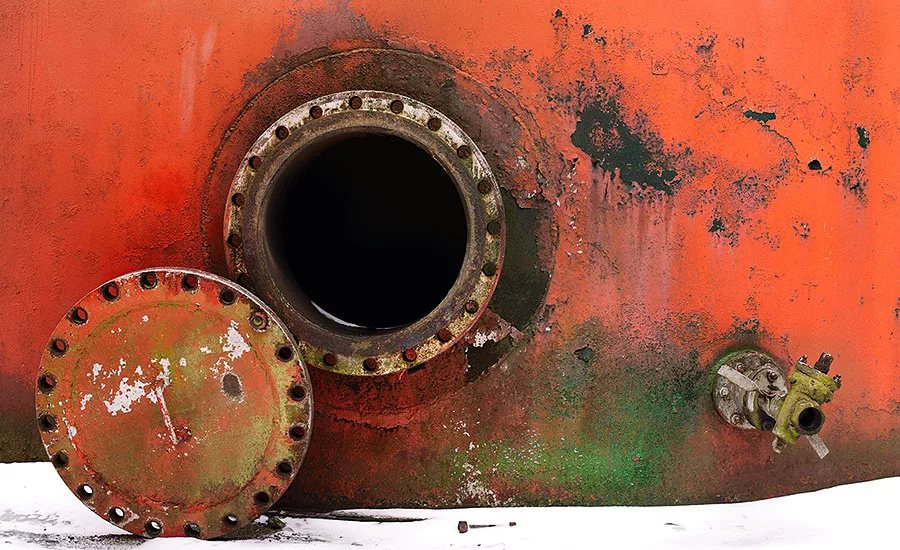
Confined spaces are large enough for workers to enter and perform certain jobs but have limited or restricted means for entry or exit and are not designed for continuous occupancy. Confined spaces include, but are not limited to, tanks, vessels, silos, storage bins, hoppers, vaults, pits, manholes, tunnels, equipment housings, ductwork, pipelines, etc. 

“Permit-required confined spaces" have the potential to contain a hazardous atmosphere; contain material that has the potential to engulf an entrant; or have walls that converge inward or floors that slope downward and taper into a smaller area which could trap or asphyxiate an entrant.

Key hazards

A 1998 incident at Union Carbide Corporation's Taft/Star Manufacturing Plant in Hahnville, Louisiana vividly demonstrated the potential dangers of confined spaces. One worker was killed and another seriously injured when they were asphyxiated by nitrogen. The incident occurred inside a temporary enclosure the workers had erected over the end of large open gas pipe, where they were conducting a black light inspection. The workers were not aware that the pipe was being purged with nitrogen, creating an oxygen-deficient atmosphere.

Key provisions

  • Confined spaces that contain or have the potential to contain a serious atmospheric hazard should be classified as permit-required confined spaces, tested prior to entry and continually monitored.
  • If a workplace contains permit spaces, the employer must inform exposed employees of their existence, location and the hazards they pose. This can be done by posting danger signs such as “DANGER—PERMIT-REQUIRED CONFINED SPACE—AUTHORIZED ENTRANTS ONLY” or using an equally effective means.
  • Any employer who allows employee entry into a permit space must develop and implement a written program to prevent unauthorized entry; identify and evaluate permit space hazards before allowing employee entry; test atmospheric conditions in the permit space before entry operations and monitor the space during entry and establish and implement the means, procedures and practices to eliminate or control hazards necessary for safe permit space entry operations.
  • Controlling hazards can include: specifying acceptable entry conditions; isolating the permit space; providing barriers; verifying acceptable entry conditions; and purging, making inert, flushing or ventilating the permit space. In addition to personal protective equipment, other equipment that employees may require for safe entry into a permit space includes: testing, monitoring, ventilating, communications and lighting equipment; barriers and shields; ladders; and retrieval devices.
  • If hazardous conditions are detected during entry, employees must immediately leave the space. The employer must evaluate the space to determine the cause of the hazardous atmosphere and modify the program as necessary.
  • Before the initial work assignment begins, the employer must provide proper training for all workers who are required to work in permit spaces
  • Employers must provide rescue service personnel with personal protective and rescue equipment, including respirators, and training in how to use it. Rescue service personnel also must receive the authorized entrants training and be trained to perform assigned rescue duties and be trained in first aid and CPR.
  • Authorized entrants who enter a permit space must wear a chest or full body harness with a retrieval line attached to the center of their backs near shoulder level or above their heads. 

Compliance assistance

  • “Permit-Required Confined Spaces in General Industry” – an OSHA Quick Card.
  • OSHA’s “Confined or Enclosed Spaces and Other Dangerous Atmospheres.”
  • OSHA’s “Confined Spaces Advisor.”
KEYWORDS: confined space OSHA standards working conditions

Share This Story

Looking for a reprint of this article?
From high-res PDFs to custom plaques, order your copy today!

Recommended Content

JOIN TODAY
to unlock your recommendations.

Already have an account? Sign In

  • forklift safety

    Exploring the latest technologies in forklift safety

    With more staff and more stock in warehousing now more...
    Facility Safety
    By: Josh Cramer
  • welding

    All about welder’s flash or arc eye

    A flash burn is a painful inflammation of the cornea,...
    Environmental Health and Safety
  • dangerous jobs

    The 10 most dangerous jobs in the U.S.

    On-the-job deaths have been rising — hitting the highest...
    Government Safety Regulations
    By: Benita Mehta
Manage My Account
  • eMagazine Subscriptions
  • ISHN Newsletter & Other Newsletter Alerts
  • Online Registration
  • Manage My Preferences
  • Subscription Customer Service

More Videos

Sponsored Content

Sponsored Content is a special paid section where industry companies provide high quality, objective, non-commercial content around topics of interest to the ISHN audience. All Sponsored Content is supplied by the advertising company and any opinions expressed in this article are those of the author and not necessarily reflect the views of ISHN or its parent company, BNP Media. Interested in participating in our Sponsored Content section? Contact your local rep!

close
  • man wearing the the Sundström SR200 Full Face Mask Respirator
    Sponsored byOHD

    5 Fit Testing Mistakes That Could Cost You

  • This image shows Magid AcuSpex polarized blue mirrored safety glasses.
    Sponsored byMagid Glove and Safety

    Construction PPE Guide: What Crews Need for Each Task

  • lone worker in confined space
    Sponsored byAlphasense Ltd.

    GET THE LEAD OUT of your Safety Oxygen Sensors!

Popular Stories

SpaceX 7 launch

OSHA Investigating Fatal Fall at SpaceX Starbase

Automated loading dock equipment

After March 2026 Rivian Death, Safety Managers Reassess Loading Dock Systems Under OSHA's Warehouse Emphasis Program

chemical safety

It Was Just Sugar: Catastrophic Safety Failures in Louisville

top 10 most dangerous jobs

Poll

Seasonal Readiness

With the federal heat stress prevention rule on the horizon, which area of your safety program needs the most attention?
View Results Poll Archive

Products

Surviving an OSHA Audit A Management Guide, 2nd Edition

Surviving an OSHA Audit A Management Guide, 2nd Edition

See More Products

ISHN Podcasts

Related Articles

  • Contractors beware: OSHA's general industry confined space standard may apply to you

    See More
  • OSHA Confined Space standard

    OSHA confined space construction standard

    See More
  • OSHA’s construction confined space standard

    See More
×

Become a Leader in Safety Culture

Build your knowledge with ISHN, covering key safety, health and industrial hygiene news, products, and trends.

JOIN TODAY
  • RESOURCES
    • Advertise
    • Contact Us
    • Directories
    • Manufacturing Division
    • Store
    • Want More
  • SIGN UP TODAY
    • Create Account
    • eMagazine
    • Newsletters
    • Customer Service
    • Manage Preferences
  • SERVICES
    • Marketing Services
    • Reprints
    • Market Research
    • List Rental
    • Survey/Respondent Access
  • STAY CONNECTED
    • LinkedIn
    • Facebook
    • YouTube
    • X (Twitter)
  • PRIVACY
    • PRIVACY POLICY
    • TERMS & CONDITIONS
    • DO NOT SELL MY PERSONAL INFORMATION
    • PRIVACY REQUEST
    • ACCESSIBILITY

Copyright ©2026. All Rights Reserved BNP Media, Inc. and BNP Media II, LLC.

Design, CMS, Hosting & Web Development :: ePublishing