ISHN logo
search
cart
facebook twitter linkedin youtube
  • Sign In
  • Create Account
  • Sign Out
  • My Account
ISHN logo
  • NEWS
    • Today's News
    • Global Safety News
    • Government Regulations
  • PRODUCTS
    • Product Innovations
    • Featured Products
  • TOPICS
    • Environmental Health and Safety
    • Facility Safety
    • Workplace Health
    • Occupational Safety
    • PPE
    • More Topics
  • CONSTRUCTION
  • TECHNOLOGY
  • COLUMNS
    • Best Practices
    • Dave Johnson: What’s going on
    • Editorial Comments
    • Leading Safety
  • MULTIMEDIA
    • ISHN Podcast
    • Videos
    • Cold Stress Education Quiz
    • Webinars
    • White Papers
  • MORE
    • Buyer's Guide
    • Newsletters
    • Convention Companion
    • Polls
    • Events
    • ISHN Store
    • Sponsor Insights
  • EMAGAZINE
    • eMagazine
    • Archived Issues
    • Contact
    • Advertise
  • JOIN TODAY!
Government Safety RegulationsEnvironmental Health and SafetyPPERisk ManagementConstruction Industry Safety and HealthOil and Gas Industry Safety & Health

Invest in slips & falls protection

Safety footwear and fall protection protect truckers from specific hazards
By Jane Jazrawy
Invest in truck driver slips & falls protection
June 19, 2019

Trucking can be a hazardous profession for drivers – and that’s before the driver has even set foot in the cab or put the vehicle in gear. For good reason -- fleets focus much of their attention on minimizing risks on the road, but there are also risks when a driver is on his or her feet as well, due to the risk of a fall.

 In fact, slips, trips and falls may be the industry’s most overlooked and underappreciated threat to drivers’ health and wellbeing. Before developing an online course on fall protection, we looked at how big the issue was – and it’s big. The Bureau of Labor Statistics’ data for 2017 show that 27 percent of injuries in the truck transportation industry came from slips, trips and falls, versus just 17 percent from injuries sustained in a collision or other motor-vehicle related incidents.

Fleet managers who want to keep their drivers safe by reducing lost-time accidents and injuries (not to mention reducing injury claims) have an opportunity to make a significant difference. Most injuries can be prevented with a little investment in your drivers along with following common-sense practices.

Select quality footwear

Invest in feet. Don’t underestimate the value of your drivers’ feet. They use their feet every day to climb in and out of cabs, walk around shipping yards, and kick things out of the way. They need the best protection possible, and that does not come with cowboy boots, rubber overshoes or flipflops!

If you are not providing a shoe allowance for your drivers, consider it. It encourages drivers to invest in steel-toed, ANSI-certified safety shoes to protect their feet.

Don’t jump

Jumping is for trampolines. Some drivers have the bad habit of jumping from the backs of trailers, loading docks and their cabs. It may seem like a short distance, but every time you jump down from even a short height, your body has to absorb the impact of the landing. The higher up you are, the higher the impact, with your joints and lower back taking the most punishment. As drivers age, those jolts to the joints will catch up to them – if they don’t immediately injure themselves by landing the wrong way.

But it’s not just about bad habits – if your equipment isn’t properly maintained and repaired, these slips and falls can occur because of missing or damaged steps and hand-holds. Check that drivers are both reporting these defects and getting a proper response from the shop.

Of course, the alternative to jumping is to climb using three points of contact (two hands and one foot or one hand and two feet). It may take a couple of seconds longer, but it’s worth it in the long run when compared to the cost and time lost from injuries. But when drivers are carrying tools or a phone, it may be a nuisance to have both hands free.

Find safety vests that have pockets to add that extra layer of convenience, and provide them to drivers as part of their personal protective equipment. It’s easy to encourage people to use pockets – but they have to be available!

Be aware of your surroundings

Wearing a good pair of safety shoes with proper treads is essential, but so is your awareness of conditions. If the temperature is cold or it’s raining, watch your step on metal surfaces such as cab steps or metal docks. If the temperature is hovering around freezing and there is snow on the ground, check for ice under the snow as well.

Drivers should also watch for other slippery substances on steps and docks, such as oil and grease. Remember that these substances might also be on your footwear as well as the surface you’re walking on. For fleet managers, having a policy about keeping your site clean and clear of fuel or oil spills is essential. Everyone needs to understand and follow it.

Do they know how to use it?

Equipment such as a ladder or a fall arrest harness that is used incorrectly, worn, or in need of repair can be as much a threat as a patch of ice or an oil spill on a metal step.

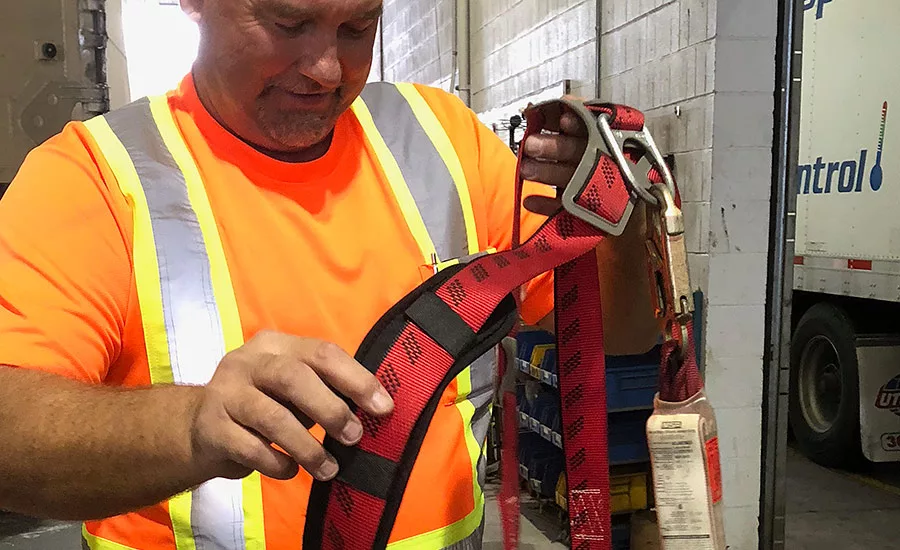
Fall arrest harnesses, for example, have to be inspected and worn correctly. An improperly worn harness not only won’t protect you, it can actually cause injury in the case of a fall. Train drivers on how to use them. Ask drivers to demonstrate that they can inspect and don the harness properly with a qualified trainer who can give them feedback.

To truly have a partnership with your drivers in keeping them safe, think about two things: how have you educated drivers on how to reduce the risk, and more importantly, what investments have you made to help drivers avoid injury?

KEYWORDS: Fall Protection fleet management safety footwear slips, trips and falls trucking industry

Share This Story

Looking for a reprint of this article?
From high-res PDFs to custom plaques, order your copy today!

Jane Jazrawy is CEO of CarriersEdge. a leading provider of online driver training for the trucking industry. www.carriersedge.com.

Recommended Content

JOIN TODAY
to unlock your recommendations.

Already have an account? Sign In

  • forklift safety

    Exploring the latest technologies in forklift safety

    With more staff and more stock in warehousing now more...
    Facility Safety
    By: Josh Cramer
  • welding

    All about welder’s flash or arc eye

    A flash burn is a painful inflammation of the cornea,...
    Environmental Health and Safety
  • dangerous jobs

    The 10 most dangerous jobs in the U.S.

    On-the-job deaths have been rising — hitting the highest...
    Construction Industry Safety and Health
    By: Benita Mehta
Manage My Account
  • eMagazine Subscriptions
  • ISHN Newsletter & Other Newsletter Alerts
  • Online Registration
  • Manage My Preferences
  • Subscription Customer Service

More Videos

Sponsored Content

Sponsored Content is a special paid section where industry companies provide high quality, objective, non-commercial content around topics of interest to the ISHN audience. All Sponsored Content is supplied by the advertising company and any opinions expressed in this article are those of the author and not necessarily reflect the views of ISHN or its parent company, BNP Media. Interested in participating in our Sponsored Content section? Contact your local rep!

close
  • man wearing the the Sundström SR200 Full Face Mask Respirator
    Sponsored byOHD

    5 Fit Testing Mistakes That Could Cost You

  • This image shows Magid AcuSpex polarized blue mirrored safety glasses.
    Sponsored byMagid Glove and Safety

    Construction PPE Guide: What Crews Need for Each Task

  • lone worker in confined space
    Sponsored byAlphasense Ltd.

    GET THE LEAD OUT of your Safety Oxygen Sensors!

Popular Stories

SpaceX 7 launch

OSHA Investigating Fatal Fall at SpaceX Starbase

dust explosion

Tennessee OSHA Issues Record $3.1M Fine After Deadly Explosion at Munitions Plant

roofing dangerous jobs Getty.jpg

OSHA Finds Florida Roofing Company Willfully Exposed Workers to Safety Hazards After Worker’s Fatal Fall

top 10 most dangerous jobs

Poll

Seasonal Readiness

With the federal heat stress prevention rule on the horizon, which area of your safety program needs the most attention?
View Results Poll Archive

Products

Surviving an OSHA Audit A Management Guide, 2nd Edition

Surviving an OSHA Audit A Management Guide, 2nd Edition

See More Products

ISHN Podcasts

Related Articles

  • OSHA steps in to stop slips and falls

    See More
  • Invest in FR clothing for maximum protection

    See More
  • coronavirus

    Experts: U.S. must invest in public health to combat coronavirus outbreak

    See More

Related Products

See More Products
  • 9781482217148.jpg

    Fall Prevention and Protection: Principles, Guidelines, and Practices

See More Products
×

Become a Leader in Safety Culture

Build your knowledge with ISHN, covering key safety, health and industrial hygiene news, products, and trends.

JOIN TODAY
  • RESOURCES
    • Advertise
    • Contact Us
    • Directories
    • Manufacturing Division
    • Store
    • Want More
  • SIGN UP TODAY
    • Create Account
    • eMagazine
    • Newsletters
    • Customer Service
    • Manage Preferences
  • SERVICES
    • Marketing Services
    • Reprints
    • Market Research
    • List Rental
    • Survey/Respondent Access
  • STAY CONNECTED
    • LinkedIn
    • Facebook
    • YouTube
    • X (Twitter)
  • PRIVACY
    • PRIVACY POLICY
    • TERMS & CONDITIONS
    • DO NOT SELL MY PERSONAL INFORMATION
    • PRIVACY REQUEST
    • ACCESSIBILITY

Copyright ©2026. All Rights Reserved BNP Media, Inc. and BNP Media II, LLC.

Design, CMS, Hosting & Web Development :: ePublishing