PPE designed to help workers stay productive year-round
Keep your Cool
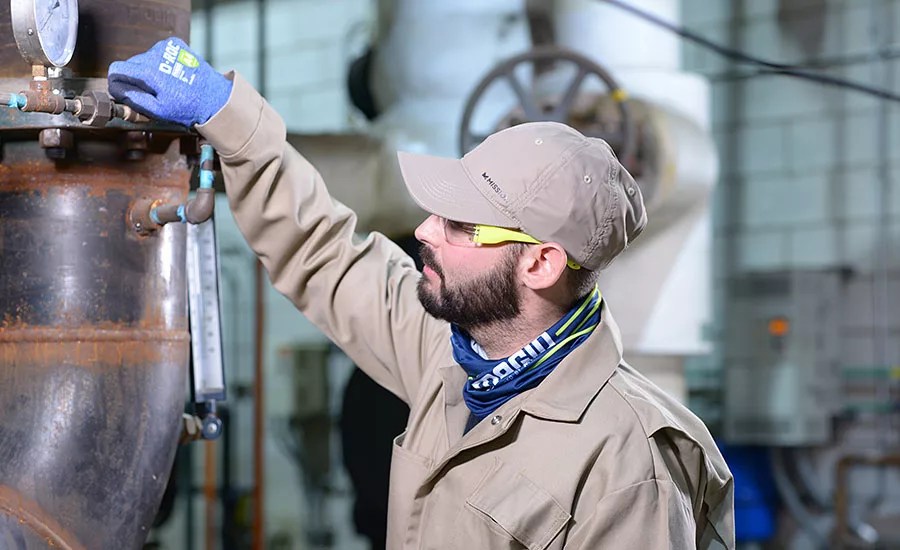
Summer may be officially over, but for many of us, the heat’s still on! In fact, just this July, the National Oceanic and Atmospheric Administration (NOAA) issued a La Niña Watch.1 That means it’s likely that much of the country may see above average or significantly above average temperatures well into fall. And whether your team is toiling in the outdoor heat or inside a hot facility, it’s better for your workers and better for your production to help everyone stay cool.
Cooler workers are more productive
It’s no secret that high temperatures can make people feel sluggish and less able to work efficiently. But recent research has documented exactly how much heat affects production. A 2014 study at the University of California at Berkeley found that hot environments can decrease productivity by up to 24%. Add in the cumulative effects of one hot day after another, and you could be getting significantly less done on the job site than you expected. Overheating can even affect how well we think, as one group of researchers2 found that college students taking a math test on a 90 degree day had an 11% lower likelihood of passing compared to students taking the same test on a 72 degree day. This is bad news for dangerous jobs that require people to think through risks and safety protocols when it may easily be 90 degrees or hotter!
Keeping workers hydrated on hot days can help the situation, as can frequent breaks and heat acclimation.3 But these measures alone are no guarantee of protection from heat illness or of good productivity. So what’s a safety manager to do to keep employees safe and productive? Key factors include providing PPE that releases heat and materials that apply cold.
Cut-resistant PPE
Generally speaking, PPE made with lighter materials is going to be cooler. But light material hasn’t always provided the protection you need for the job. Fortunately, recent advances in material construction and technology have created gloves and sleeves with higher cut levels that are so light, some safety managers have worried that their people won’t believe they’ll be protected.
How does it work? New yarn cores that are lighter than the traditional steel, fiberglass, and basalt are providing cut resistance up to ANSI Cut Level A6 with higher levels on the way. For extreme cut resistance needs in industries like glass and metal manufacturing, new yarn wrapping technology provides cut resistance up to A9 in a fabric that’s lighter than ever before.
Coreless yarn with technology that actually makes gloves and sleeves that feel cool to the touch is also available in cut levels as high as A4. This new technology provides an additional benefit for workers who are prone to contact dermatitis — an irritating skin condition that’s sometimes triggered by breakage in yarn core fibers.
Better airflow
For jobs that require heavier PPE like clothing to shield workers from flame or arc flash hazards, you can help to release heat using vented coveralls with knit panels strategically placed at the back, the underarms, and down the insides of the legs to help reduce the wearer’s core temperature. For more intense exposure like forge work that involves sparks or radiant heat, you can try single-sided cooling. This might include welding jackets with protective fronts and sleeves and a mesh back, or aluminized chaps that protect the front of the lower body but allow the backs of the legs to breathe.
Cooler impact protection
By its nature, impact protection tends to be thick and heavy, making it difficult to create gloves and sleeves that help workers stay cool. Older glove designs featured a thick polymer slab of TPR that covered the entire back of the hand, trapping heat and moisture. Newer designs provide flex points and venting systems that still protect the hands without covering the entire glove surface. These systems allow moisture and heat to escape, keeping hands and arms cooler.
For lighter duty jobs like maintenance, light construction, or I&E that involve the risk of minor cuts or bumps to the hand, the very newest designs in impact-resistant PPE provide a nice middle ground in protection. These new gloves and sleeves include a much lighter layer of TPR that provides just enough protection without the bulk that can make other impact gloves less comfortable.
Body-cooling PPE
When you’re working in an especially hot environment, simply minimizing heat and moisture caused by PPE may not be enough to avoid the risk of heat illness. In these cases, you may need to actively cool people down by adding body cooling PPE. New technologies in cooling fabrics have changed the game in body cooling, bringing about a new era in preventing industrial heat illness.
Whereas old materials started out cool, but petered out in well under a half hour, new materials cool down to 30 degrees below normal body temperature and remain cool for as long as two full hours. They accomplish this through new fabric weave technology that harnesses the power of evaporation rather than using chemical coatings that can feel slimy to the touch. The refreshing and energizing power of these cooling fabrics can’t be overstated, and best of all, they can be activated with any temperature of water and reactivated again and again through the day.
Perhaps the most important thing to remember when trying to protect workers in the heat is that there’s no one magic bullet. Heat illness is one hundred percent preventable, but the secret is to attack the problem on multiple levels — hydration, heat acclimation, finding the lightest PPE technologies, body cooling, and properly training your workers to recognize the signs of heat illness. As technologies improve and industries pay more attention to heat safety, be sure your workers aren’t being left behind. Choose the latest and greatest in PPE design and technology to keep them cool, comfortable, and safe from heat illness.
References:
2. https://journals.plos.org/plosmedicine/article?id=10.1371/journal.pmed.1002605
3. https://www.magidglove.com/safety-matters/heat-illness-prevention-guide.aspx
4. https://www.magidglove.com/safety-matters/summer-of-heat-illness-prevention.aspx
Looking for a reprint of this article?
From high-res PDFs to custom plaques, order your copy today!


