ISHN logo
search
cart
facebook twitter linkedin youtube
  • Sign In
  • Create Account
  • Sign Out
  • My Account
ISHN logo
  • NEWS
    • Today's News
    • Global Safety News
    • Government Regulations
  • PRODUCTS
    • Product Innovations
    • Featured Products
  • TOPICS
    • Environmental Health and Safety
    • Facility Safety
    • Workplace Health
    • Occupational Safety
    • PPE
    • More Topics
  • CONSTRUCTION
  • TECHNOLOGY
  • COLUMNS
    • Best Practices
    • Dave Johnson: What’s going on
    • Editorial Comments
    • Leading Safety
  • MULTIMEDIA
    • ISHN Podcast
    • Videos
    • Cold Stress Education Quiz
    • Webinars
    • White Papers
  • MORE
    • Buyer's Guide
    • Newsletters
    • Convention Companion
    • Polls
    • Events
    • ISHN Store
    • Sponsor Insights
  • EMAGAZINE
    • eMagazine
    • Archived Issues
    • Contact
    • Advertise
  • JOIN TODAY!
Government Safety RegulationsEnvironmental Health and SafetySustainability in Health and SafetyWorkplace Health

Wildfire smoke shows need for urgent action on worker protections, says National COSH
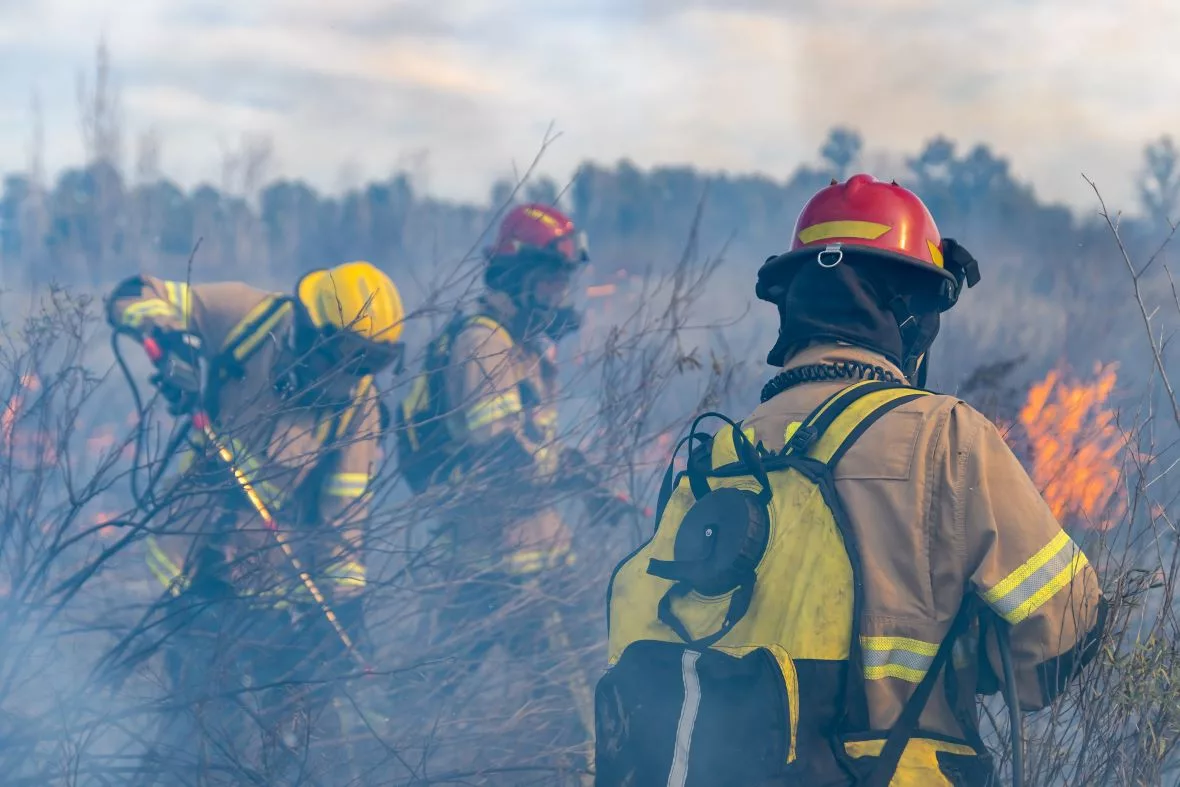
Wildfires
Cristian Martin / iStock / Getty Images Plus


June 8, 2023

The wildfire smoke spreading across the United States and Canada shows the need for urgent action to protect workers from the ongoing effects of climate change, say leaders of the National Council of Occupational Safety and Health (National COSH).


“This is not a one-time crisis,” said Marcy Goldstein-Gelb, co-executive director of National COSH. “Dangerous pollution in the air we breathe will be a fact of life for years to come, because climate change has greatly increased the occurrence of wildfires and other extreme weather events.”


“Right now, only two of 50 states – California and Oregon – have specific safety rules which protect workers from wildfire smoke,” said Goldstein-Gelb. “We urgently need nationwide, federal standards to protect workers from smoke, heat stress and extreme weather events. Paid sick leave, a basic and humane standard for all workers, is more important than ever at a time when daily life and work activities are exposing hundreds of millions of people to the risk of respiratory and cardiovascular diseases.”  


The state of Washington has proposed safety standards for wildfire smoke; these regulations must be finalized and implemented as soon as possible, with the strongest possible standards to protect workers. 


What you can do now to stay safe at work:

In the absence of state and federal standards, workers can take action now with their employers, to reduce the risks from wildfire smoke and other extreme weather events. 

National COSH and safety experts recommend the following steps: 

  • Monitor the EPA’s Air Quality Index (AQI) at AirNow.gov, to learn current conditions in your workplace and community.

    • An AQI of 100 or greater means risks for sensitive groups, including children, the elderly and anyone with a pre-existing respiratory or cardiovascular condition.

    • An AQI of 151 or greater means breathing outdoor air is dangerous for everyone. 

  • When the AQI shows risks for you and your co-workers, advocate with your employer for proper protections

    • Reduce, relocate or reschedule work

    • Reschedule strenuous work – such as heavy lifting or long assignments outdoors – for a different time when air quality is less dangerous

    • For those who must continue to work in health care, transportation, essential retail and other settings, employers must provide masks and respirators, along with training for proper fitting and use. 

    • Monitor workers for symptoms of exposure.

    • Ensure paid sick time to any workers experiencing symptoms, which may include eye, nose, and throat irritation, coughing, runny nose, headache, fatigue, difficulty breathing, chest pain, increased heart rate and exacerbation of asthma.

    • For those working indoors, employers must ensure that ventilation systems  and air filters are maintained to remove smoke particulates.Central air conditioning systems should be equipped with air filters with at least a Minimum Efficiency Reporting Value (MERV) of 13 or above (MERV-13). 


Workers with access to a union or worker center can advocate together for needed protections, said Goldstein-Gelb – and all workers have the right to a safe workplace. 

“Employers have a legal and ethical obligation to provide a workplace free from recognized hazards,” said Goldstein-Gelb. “When the sky is turning orange with wildfire smoke, that’s a hazard we all can recognize.”


Resources for workers:

  • EPA Air Quality Index: AirGov.Now

  • Smoke and Air Quality Health Advisory Information for Workers, from the New York Committee for Occupational Safety and Health (NYCOSH) 

  • CalOSHA regulations on Protection from Wildfire Smoke

KEYWORDS: air quality Environmental Protection Agency (EPA) National Council of Occupational Safety and Health (National COSH) ventilation wildfires

Share This Story

Looking for a reprint of this article?
From high-res PDFs to custom plaques, order your copy today!

Recommended Content

JOIN TODAY
to unlock your recommendations.

Already have an account? Sign In

  • forklift safety

    Exploring the latest technologies in forklift safety

    With more staff and more stock in warehousing now more...
    Workplace Training Strategies
    By: Josh Cramer
  • welding

    All about welder’s flash or arc eye

    A flash burn is a painful inflammation of the cornea,...
    Environmental Health and Safety
  • dangerous jobs

    The 10 most dangerous jobs in the U.S.

    On-the-job deaths have been rising — hitting the highest...
    Transportation Safety
    By: Benita Mehta
Manage My Account
  • eMagazine Subscriptions
  • ISHN Newsletter & Other Newsletter Alerts
  • Online Registration
  • Manage My Preferences
  • Subscription Customer Service

More Videos

Sponsored Content

Sponsored Content is a special paid section where industry companies provide high quality, objective, non-commercial content around topics of interest to the ISHN audience. All Sponsored Content is supplied by the advertising company and any opinions expressed in this article are those of the author and not necessarily reflect the views of ISHN or its parent company, BNP Media. Interested in participating in our Sponsored Content section? Contact your local rep!

close
  • man wearing the the Sundström SR200 Full Face Mask Respirator
    Sponsored byOHD

    5 Fit Testing Mistakes That Could Cost You

  • This image shows Magid AcuSpex polarized blue mirrored safety glasses.
    Sponsored byMagid Glove and Safety

    Construction PPE Guide: What Crews Need for Each Task

  • lone worker in confined space
    Sponsored byAlphasense Ltd.

    GET THE LEAD OUT of your Safety Oxygen Sensors!

Popular Stories

SpaceX 7 launch

OSHA Investigating Fatal Fall at SpaceX Starbase

Automated loading dock equipment

After March 2026 Rivian Death, Safety Managers Reassess Loading Dock Systems Under OSHA's Warehouse Emphasis Program

psychology in the workplace

Most Workplaces Measure Psychological Safety, Ignoring Psychosocial Risks

top 10 most dangerous jobs

Poll

Seasonal Readiness

With the federal heat stress prevention rule on the horizon, which area of your safety program needs the most attention?
View Results Poll Archive

Products

Surviving an OSHA Audit A Management Guide, 2nd Edition

Surviving an OSHA Audit A Management Guide, 2nd Edition

See More Products

ISHN Podcasts

Related Articles

  • Anti-reg environment to blame for fertilizer plant explosion, says National COSH

    See More
  • Public workers are protected by state and federal whistleblower laws, says National COSH

    See More
  • Texas safety culture puts profits above safety, says National COSH

    See More

Related Directories

  • National Fire Protection Assn. (NFPA)

    Known as the trusted source of safety knowledge, the National Fire Protection Association (NFPA) has been helping to solve some of the planet’s toughest safety problems for more than 125 years. To remain relevant for over a century as a knowledge and information organization, we’ve continually evolved our scope of expertise—from fire prevention, wildfire preparedness, and electrical safety to hazardous materials, community risk reduction, and public safety.
  • SafetyLine Lone Worker

    SafetyLine Lone Worker helps companies monitor the status of workers who are remote, alone, or working in hazardous situations. We are an automated check-in monitoring and emergency notification service. SafetyLine uses its communications infrastructure to ensure that workers have comprehensive monitoring, 24/7, without the need for costly monitoring centers.
×

Become a Leader in Safety Culture

Build your knowledge with ISHN, covering key safety, health and industrial hygiene news, products, and trends.

JOIN TODAY
  • RESOURCES
    • Advertise
    • Contact Us
    • Directories
    • Manufacturing Division
    • Store
    • Want More
  • SIGN UP TODAY
    • Create Account
    • eMagazine
    • Newsletters
    • Customer Service
    • Manage Preferences
  • SERVICES
    • Marketing Services
    • Reprints
    • Market Research
    • List Rental
    • Survey/Respondent Access
  • STAY CONNECTED
    • LinkedIn
    • Facebook
    • YouTube
    • X (Twitter)
  • PRIVACY
    • PRIVACY POLICY
    • TERMS & CONDITIONS
    • DO NOT SELL MY PERSONAL INFORMATION
    • PRIVACY REQUEST
    • ACCESSIBILITY

Copyright ©2026. All Rights Reserved BNP Media, Inc. and BNP Media II, LLC.

Design, CMS, Hosting & Web Development :: ePublishing