ASSP Safety: Why Do 60-70% of AI Projects Fail?
Credit: Benita Mehta
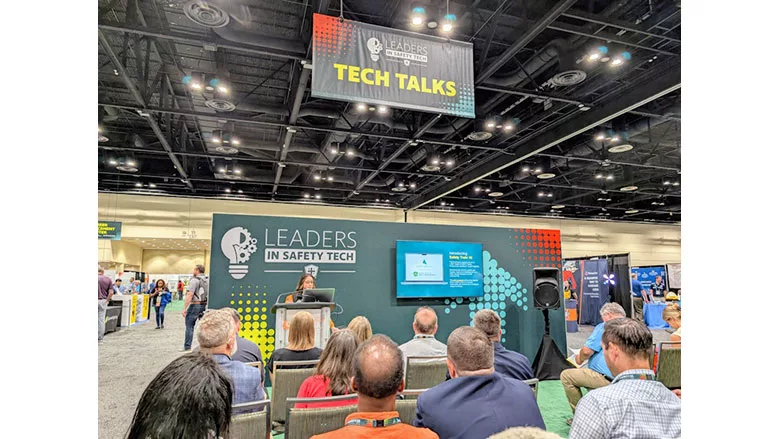
Orlando — Uncertainty about using artificial intelligence for workplace safety and health tasks has turned into something of a sprint to deploy AI, as seen on the expo floor with AI vendors and standing-room-only AI education sessions at the annual meeting of the American Society of Safety Professionals.
But AI experts are quick to caution go slow, and only when you’re ready. Most AI projects — 60-70% — fail, according to several conference speakers.
Stephen Ojji, a consultant who works with Veriforce, a company that focuses on contractor safety, compliance, and workforce qualification, says too many companies are caught up in the hype. It’s the same kind of stampede to buy that followed the introduction of the iPhone, iPad and other tech tools.
“The hype is normal,” says Ojji. This is the tech age. There are a lot of companies, a lot of money being invested, a lot of claims and a lot of competition, he says.
Ojji says too many buyers don’t do their homework. “Most people are just pulling the train. They’re caught up in the hype and not studying the technology. There’s a feeling everybody is using AI and we can’t be left behind. Leaders are saying, ‘Why are we not doing AI? We’ve got to do it’.”
Moving too fast with data collection can result in garbage in, garbage out, Ojji says. And poor results damage the credibility of would-be early adopters, making it harder to get future money for AI adoption.
And watch what happens next: The failures lead to the next phase in the hype cycle, the backlash—- what one speaker at the conference called “the trough of disillusionment.”
Looking for a reprint of this article?
From high-res PDFs to custom plaques, order your copy today!