ISHN logo
search
cart
facebook twitter linkedin youtube
  • Sign In
  • Create Account
  • Sign Out
  • My Account
ISHN logo
  • NEWS
    • Today's News
    • Global Safety News
    • Government Regulations
  • PRODUCTS
    • Product Innovations
    • Featured Products
  • TOPICS
    • Environmental Health and Safety
    • Facility Safety
    • Workplace Health
    • Occupational Safety
    • PPE
    • More Topics
  • CONSTRUCTION
  • TECHNOLOGY
  • COLUMNS
    • Best Practices
    • Dave Johnson: What’s going on
    • Editorial Comments
    • Leading Safety
  • MULTIMEDIA
    • ISHN Podcast
    • Videos
    • Cold Stress Education Quiz
    • Webinars
    • White Papers
  • MORE
    • Buyer's Guide
    • Newsletters
    • Convention Companion
    • Polls
    • Events
    • ISHN Store
    • Sponsor Insights
  • EMAGAZINE
    • eMagazine
    • Archived Issues
    • Contact
    • Advertise
  • JOIN TODAY!
Psychology in the Workplace

What's the level of trust in your workplace?

By E. Scott Geller
May 12, 2000
No way," workers sometimes tell me when I introduce the observation and feedback process. They don’t like the idea of a coworker watching them and tallying safe and at-risk behaviors for a feedback session. Managers and safety directors sometimes will agree with the basics of the process, but then say, "Our plant is not ready for such a process."

Why the resistance?

It all comes down to one word - trust. A behavior-based observation and feedback process won’t succeed without a high degree of trust. First you must believe that the process is valid, a good tool for improving safety. Then you need confidence in your coworkers, that they will know how to observe and give feedback correctly. Beyond ability, you must trust that the person observing and recording your behaviors doesn’t have a hidden agenda. This is called trusting the intentions of an observer, and it’s critical. So, too, is trusting the intentions of your company’s managers who are responsible for bringing the process into your workplace.

How do you know if your organization is ready to trust the behavior-based process? If coworkers will trust each other as coaches? And if enough confidence exists between management and the workforce? I hope this article gives you a better understanding of the feelings that go into trust. You’ll also come away with a tool for measuring trust in your organization.

Defining trust

"Confidence in the integrity, ability, character, and truth of a person or thing" is the first definition of "trust" given in the 1991 The American Heritage Dictionary. This definition refers to behavior (as in "ability") as well as internal or person-based dimensions (as in "integrity" and "character"). These are the characteristics that my colleagues and I measure to assess trust between people in a work culture, using a survey based on research by John Cook and Toby Wall, as reported in the Journal of Occupational Psychology (1980, 53, 39-52). The survey distinguishes between intentions and ability. In other words, you can be confident that a person means well, but you might doubt his or her ability to complete the intended task. In this case, you trust the individual’s intentions but you’re not so sure that things will work out as planned. You lack confidence in the person’s ability to make good on his or her promise.

This is a common perception of workplace safety efforts. Well-intentioned managers or safety leaders can talk about missions, goals, or policies that employees view as idealistic or unrealistic. And when punishments or rewards are not carried out consistently and fairly, employees don’t trust the abilities of those running the program. The reverse also happens. Employees might have faith in the ability of others, but mistrust their intentions. When a policy change is sprung on workers without warning or rationale, they might suspect management’s intentions. They might believe managers have the intellect and skills to make things happen, but will they do the right thing? "Do they really have our welfare in mind?" suspicious minds ask.

For instance, what if management sets up a safety incentive program that offers everyone a prize if no one gets hurt for six months? Employees feel pressure not to report an injury. If they do, everyone loses their reward. So what’s management’s true agenda? Is it to keep the numbers down, or to keep employees from being hurt?

The same issues of trust play out every day between coworkers. You might have confidence in a coworker’s ability to perform a job safely and competently, but you might not want to confide in that person. "My partner might use the information against me to get the promotion before me," could be your thought. Similarly, you might trust the intentions of a coworker ("He would never take advantage of me") but lack confidence in his ability ("I’m sure he’ll try his best, but he just doesn’t have enough experience").

Measuring trust

As you can see, there are four dimensions to trust: faith in the intentions and in the ability of either coworkers or managers. These four dimensions were used by Cook and Wall in 1980 to develop a questionnaire asking for responses to 12 statements in order to assess "interpersonal trust at work."

The instructions for this survey tool and the actual items are listed to the left. The researchers originally gave this survey to employees by reading them each item and asking them to indicate on a seven-point scale their degree of agreement with a particular statement. My colleagues and I include these 12 statements on a questionnaire along with many others to draw conclusions about a work culture. We ask respondents to give their opinions on a five-point scale.

Except for statements #2 and #12, the higher scale value equates with greater interpersonal trust. Statements #2 and #12 are negatively phrased, and need to be reverse scored. By totaling the scores for all 12 statements (with #2 and #12 reverse scored) you have an estimate of an individual’s perception of interpersonal trust in his or her work culture. You can obtain an overall trust index by calculating the mean survey score from many respondents.

There is nothing special or magical about the wording of these statements. Feel free to re-word statements if different language fits better with your culture. And you can add or substitute new statements. One more point: This scale was developed to measure interpersonal trust from the viewpoint of an hourly worker. With only slight adjustments, the scale can also estimate interpersonal trust from a manager’s perspective.

Once you arrive at an estimate of the level of trust in your workplace, the question becomes: How can we increase it? After all, safety improvement depends on a sense of interdependence among coworkers and managers. Everyone must look out for the safety of everyone else. This means trusting each others’ intentions and abilities to do the right thing.

Stay tuned, because increasing trust is the theme of my article next month.

Share This Story

Looking for a reprint of this article?
From high-res PDFs to custom plaques, order your copy today!

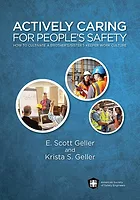
E. Scott Geller, Ph.D., is Alumni Distinguished Professor, Center for Applied Behavior Systems, Virginia Tech, and senior partner with Safety Performance Solutions, Blacksburg, VA. For more information visit www.safetyperformance.com. "Actively Caring for People's Safety: How to cultivate a brother’s/sister’s keeper work culture," co-authored by Scott’s daughter Krista, was recently published by ASSE. Scott’s 15-minute TEDX talk on You Tube can be accessed at: https://www.youtube.com/watch?v=7sxpKhIbr0E


Recommended Content

JOIN TODAY
to unlock your recommendations.

Already have an account? Sign In

  • forklift safety

    Exploring the latest technologies in forklift safety

    With more staff and more stock in warehousing now more...
    Facility Safety
    By: Josh Cramer
  • welding

    All about welder’s flash or arc eye

    A flash burn is a painful inflammation of the cornea,...
    Environmental Health and Safety
  • dangerous jobs

    The 10 most dangerous jobs in the U.S.

    On-the-job deaths have been rising — hitting the highest...
    Occupational Safety
    By: Benita Mehta
Manage My Account
  • eMagazine Subscriptions
  • ISHN Newsletter & Other Newsletter Alerts
  • Online Registration
  • Manage My Preferences
  • Subscription Customer Service

More Videos

Sponsored Content

Sponsored Content is a special paid section where industry companies provide high quality, objective, non-commercial content around topics of interest to the ISHN audience. All Sponsored Content is supplied by the advertising company and any opinions expressed in this article are those of the author and not necessarily reflect the views of ISHN or its parent company, BNP Media. Interested in participating in our Sponsored Content section? Contact your local rep!

close
  • man wearing the the Sundström SR200 Full Face Mask Respirator
    Sponsored byOHD

    5 Fit Testing Mistakes That Could Cost You

  • This image shows Magid AcuSpex polarized blue mirrored safety glasses.
    Sponsored byMagid Glove and Safety

    Construction PPE Guide: What Crews Need for Each Task

  • lone worker in confined space
    Sponsored byAlphasense Ltd.

    GET THE LEAD OUT of your Safety Oxygen Sensors!

Popular Stories

SpaceX 7 launch

OSHA Investigating Fatal Fall at SpaceX Starbase

Worker Impairment

How to Tell When a Co-Worker is Impaired? A Safety Pro’s Challenge

Automated loading dock equipment

After March 2026 Rivian Death, Safety Managers Reassess Loading Dock Systems Under OSHA's Warehouse Emphasis Program

top 10 most dangerous jobs

Poll

Seasonal Readiness

With the federal heat stress prevention rule on the horizon, which area of your safety program needs the most attention?
View Results Poll Archive

Products

Surviving an OSHA Audit A Management Guide, 2nd Edition

Surviving an OSHA Audit A Management Guide, 2nd Edition

See More Products

ISHN Podcasts

Related Articles

  • ASSE

    Hot off the ASSE press: Actively Caring for People’s Safety

    See More
  • Actively Caring for People’s Safety

    4 STEPS to cultivating a brother’s/sister’s keeper culture

    See More
  • actively caring for people, behavior-based safety

    Actively caring for people’s safety

    See More

Related Products

See More Products
  • Top Ten Pitfalls in OSHA Recordkeeping and How to Avoid Them

See More Products

Related Directories

  • MSA - The Safety Co.

    WE KNOW WHAT'S AT STAKE. Unpredictable work environments are often part of the job. That's why it's critically important to have the right safety equipment at the moment it matters most. MSA's complete lines of safety solutions help protect those workers at the heart of your operation.
×

Become a Leader in Safety Culture

Build your knowledge with ISHN, covering key safety, health and industrial hygiene news, products, and trends.

JOIN TODAY
  • RESOURCES
    • Advertise
    • Contact Us
    • Directories
    • Manufacturing Division
    • Store
    • Want More
  • SIGN UP TODAY
    • Create Account
    • eMagazine
    • Newsletters
    • Customer Service
    • Manage Preferences
  • SERVICES
    • Marketing Services
    • Reprints
    • Market Research
    • List Rental
    • Survey/Respondent Access
  • STAY CONNECTED
    • LinkedIn
    • Facebook
    • YouTube
    • X (Twitter)
  • PRIVACY
    • PRIVACY POLICY
    • TERMS & CONDITIONS
    • DO NOT SELL MY PERSONAL INFORMATION
    • PRIVACY REQUEST
    • ACCESSIBILITY

Copyright ©2026. All Rights Reserved BNP Media, Inc. and BNP Media II, LLC.

Design, CMS, Hosting & Web Development :: ePublishing