ISHN logo
search
cart
facebook twitter linkedin youtube
  • Sign In
  • Create Account
  • Sign Out
  • My Account
ISHN logo
  • NEWS
    • Today's News
    • Global Safety News
    • Government Regulations
  • PRODUCTS
    • Product Innovations
    • Featured Products
  • TOPICS
    • Environmental Health and Safety
    • Facility Safety
    • Workplace Health
    • Occupational Safety
    • PPE
    • More Topics
  • CONSTRUCTION
  • TECHNOLOGY
  • COLUMNS
    • Best Practices
    • Dave Johnson: What’s going on
    • Editorial Comments
    • Leading Safety
  • MULTIMEDIA
    • ISHN Podcast
    • Videos
    • Cold Stress Education Quiz
    • Webinars
    • White Papers
  • MORE
    • Buyer's Guide
    • Newsletters
    • Convention Companion
    • Polls
    • Events
    • ISHN Store
    • Sponsor Insights
  • EMAGAZINE
    • eMagazine
    • Archived Issues
    • Contact
    • Advertise
  • JOIN TODAY!
Today's Safety News

Los Alamos safety record

January 14, 2005
Last summer, Los Alamos National Laboratory Director Pete Nanos suspended operations because he confessed little confidence the lab had sufficiently identified and addressed safety risks and potential vulnerabilities. Critics argued that the laboratory's safety record was good enough and questioned Nanos's decision.

Now the health, safety and radiation-protection division leader at Los Alamos National Laboratory has weighed in with his opinion, written in the Santa Fe New Mexican. "The laboratory's safety record is not good enough," says Lee McAtee.

"Our safety record is not too bad by most comparisons but, at the same time, we would be hard pressed to claim that it is best in class. The bottom line is clear: The laboratory collectively, and all employees individually, must redouble our efforts to embrace a safety mindset, reduce safety incidents and strive for a level of best-in-class safety record that is immune to debate," he says.

At the end of 2003, the Department of Energy-wide average recordable injury rate was 1.8 cases per 100 full-time employees, compared to Los Alamos's current rate of 2.5, says McAtee. By comparison, Brookhaven National Laboratory and Lawrence Berkeley National Laboratory had injury rates of 1.5 and 1.2, respectively.

In reality, Los Alamos probably performs slightly better than average, because it includes in its rates those of subcontractors, which tend to have higher injury rates due to the nature of their work, he explained

But the lab's safety performance is far from best in class, the safety chief believes.

As long as the injury rate remains above zero, there's room for improvement, and it's time well spent to identify and address risks and potential vulnerabilities, he says.

Plus, as a nuclear laboratory, Los Alamos bears an "enormous public trust," says McAtee. "Society tends to tolerate accidents resulting from familiar causes such as construction or driving; at the same time, society is intolerant of accidents at a place such as Los Alamos, where the hazards are unfamiliar and potentially catastrophic. The public holds Los Alamos to a higher standard of safety and it's our job to meet that standard."

The lab's top safety officer finds recent statistical trends troubling. The laboratory's injury rate improved dramatically between 1996 (6.0 injury rate) and 2001 (1.5 injury rate), but over the past few years the rate of improvement "has not just stagnated but actually reversed," he notes.

"This stagnation and decline is inconsistent with the continuing performance improvement achieved by both private industry and the DOE throughout the same time period. A hallmark of all best-in-class companies is continual improvement in the safety arena, which means pushing beyond the status quo to eliminate all accidents," says McAtee.

Plus, since the beginning of 2003, the lab has had several serious injuries and/or near misses. Two of these events permanently maimed the workers involved and four could have been lethal. "This history of serious injury and/or near-miss events is not indicative of best-in-class safety performance," says the safety boss.

"Slightly better than average is not good enough for an institution bearing a huge public trust and shouldering a vital national-security mission. We content ourselves with nothing less than best-in-class scientific research. Why would we settle for anything less in safety when the stakes — the health and lives of our employees — matter even more?"

Share This Story

Looking for a reprint of this article?
From high-res PDFs to custom plaques, order your copy today!

Recommended Content

JOIN TODAY
to unlock your recommendations.

Already have an account? Sign In

  • forklift safety

    Exploring the latest technologies in forklift safety

    With more staff and more stock in warehousing now more...
    Facility Safety
    By: Josh Cramer
  • welding

    All about welder’s flash or arc eye

    A flash burn is a painful inflammation of the cornea,...
    Environmental Health and Safety
  • dangerous jobs

    The 10 most dangerous jobs in the U.S.

    On-the-job deaths have been rising — hitting the highest...
    Construction Industry Safety and Health
    By: Benita Mehta
Manage My Account
  • eMagazine Subscriptions
  • ISHN Newsletter & Other Newsletter Alerts
  • Online Registration
  • Manage My Preferences
  • Subscription Customer Service

More Videos

Sponsored Content

Sponsored Content is a special paid section where industry companies provide high quality, objective, non-commercial content around topics of interest to the ISHN audience. All Sponsored Content is supplied by the advertising company and any opinions expressed in this article are those of the author and not necessarily reflect the views of ISHN or its parent company, BNP Media. Interested in participating in our Sponsored Content section? Contact your local rep!

close
  • man wearing the the Sundström SR200 Full Face Mask Respirator
    Sponsored byOHD

    5 Fit Testing Mistakes That Could Cost You

  • This image shows Magid AcuSpex polarized blue mirrored safety glasses.
    Sponsored byMagid Glove and Safety

    Construction PPE Guide: What Crews Need for Each Task

  • lone worker in confined space
    Sponsored byAlphasense Ltd.

    GET THE LEAD OUT of your Safety Oxygen Sensors!

Popular Stories

SpaceX 7 launch

OSHA Investigating Fatal Fall at SpaceX Starbase

Worker Impairment

How to Tell When a Co-Worker is Impaired? A Safety Pro’s Challenge

psychology in the workplace

Most Workplaces Measure Psychological Safety, Ignoring Psychosocial Risks

top 10 most dangerous jobs

Poll

Seasonal Readiness

With the federal heat stress prevention rule on the horizon, which area of your safety program needs the most attention?
View Results Poll Archive

Products

Surviving an OSHA Audit A Management Guide, 2nd Edition

Surviving an OSHA Audit A Management Guide, 2nd Edition

See More Products

ISHN Podcasts

Related Articles

  • Los Alamos safety culture lacks accountability

    See More
  • Wide-World-of-Safety-Podcast-MAIN-780x439.png

    PODCAST | Workplace safety at Los Alamos: Home of the atomic bomb

    See More
  • award winners

    Cority client Los Alamos National Laboratory wins 2019 International EHS Innovation Award

    See More

Related Products

See More Products
  • 9780367861148.jpg

    LEAD Safety A Practical Handbook for Frontline Supervisors and Safety Practitioners

  • download (1).jpg

    Safety Rebels Real-World Transformations in Health and Safety

  • safety law.jpg

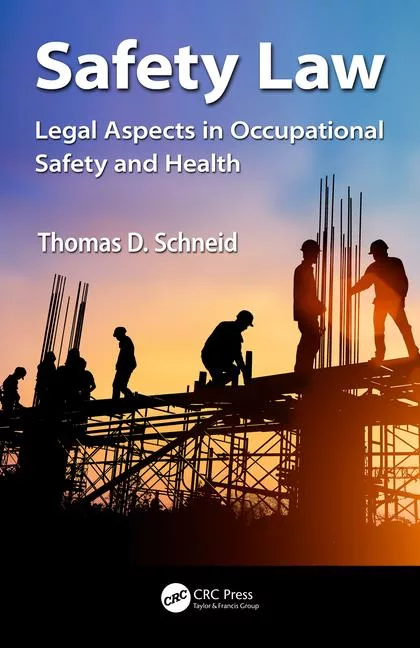
    Safety Law: Legal Aspects in Occupational Safety and Health

See More Products

Events

View AllSubmit An Event
  • March 18, 2015

    What makes a great safety leader?

    The American Society of Safety Engineers (ASSE) invites safety professionals to register to learn how Paul O’Neill, the former chairman of Alcoa, transformed a company with an average safety record into one of the safest manufacturers in the world, all while quintupling its market capitalization.
View AllSubmit An Event

Related Directories

  • PK Safety

    After 75+ years in the safety business, we understand the importance of staying safe in your work and home environments. We’ve vetted thousands of safety equipment and products including gas detectors, confined space gear, fall protection and respirators. We are also a Factory Authorized Service Center for gas monitors with factory trained certified technicians in house.
×

Become a Leader in Safety Culture

Build your knowledge with ISHN, covering key safety, health and industrial hygiene news, products, and trends.

JOIN TODAY
  • RESOURCES
    • Advertise
    • Contact Us
    • Directories
    • Manufacturing Division
    • Store
    • Want More
  • SIGN UP TODAY
    • Create Account
    • eMagazine
    • Newsletters
    • Customer Service
    • Manage Preferences
  • SERVICES
    • Marketing Services
    • Reprints
    • Market Research
    • List Rental
    • Survey/Respondent Access
  • STAY CONNECTED
    • LinkedIn
    • Facebook
    • YouTube
    • X (Twitter)
  • PRIVACY
    • PRIVACY POLICY
    • TERMS & CONDITIONS
    • DO NOT SELL MY PERSONAL INFORMATION
    • PRIVACY REQUEST
    • ACCESSIBILITY

Copyright ©2026. All Rights Reserved BNP Media, Inc. and BNP Media II, LLC.

Design, CMS, Hosting & Web Development :: ePublishing