ISHN logo
search
cart
facebook twitter linkedin youtube
  • Sign In
  • Create Account
  • Sign Out
  • My Account
ISHN logo
  • NEWS
    • Today's News
    • Global Safety News
    • Government Regulations
  • PRODUCTS
    • Product Innovations
    • Featured Products
  • TOPICS
    • Environmental Health and Safety
    • Facility Safety
    • Workplace Health
    • Occupational Safety
    • PPE
    • More Topics
  • CONSTRUCTION
  • TECHNOLOGY
  • COLUMNS
    • Best Practices
    • Dave Johnson: What’s going on
    • Editorial Comments
    • Leading Safety
  • MULTIMEDIA
    • ISHN Podcast
    • Videos
    • Cold Stress Education Quiz
    • Webinars
    • White Papers
  • MORE
    • Buyer's Guide
    • Newsletters
    • Convention Companion
    • Polls
    • Events
    • ISHN Store
    • Sponsor Insights
  • EMAGAZINE
    • eMagazine
    • Archived Issues
    • Contact
    • Advertise
  • JOIN TODAY!
Today's Safety NewsWorkplace Safety CultureWorkplace Training Strategies Psychology in the Workplace

Five crucial conversations corrupt safety

By Joseph Grenny
October 1, 2010


In the U.S., many of the most obvious workplace threats have been reduced or eliminated, making American workers far safer. Time lost due to workplace injuries dropped a whopping 54.9 percent between 1991 and 2008. These improvements were seen across all industries, geographic regions and companies of various sizes.1

Still, despite this positive trend, there is evidence these improvements are beginning to stall.2 In 2007, more than 5,600 people were killed on the job and more than four million were injured.3 What’s more, these injuries cost firms more than $48.6 billion.4

The vast majority of the gains in workplace safety can be attributed to improvements in equipment, policies, systems and training.5 But these formal tools often fail to address informal, cultural challenges. We have conducted interviews and surveys among more than 1,500 employees from 20 firms, and our research reveals that the ugly secret behind most workplace injuries is that someone is aware of a threat well in advance, but is either unwilling or unable to speak up.
 

"Don't go there" conversations

Specifically, we uncovered five crucial conversations that exist in most organizations that are politically incorrect or uncomfortable to surface. Ninety-three percent of employees say their workgroup is currently at risk from one or more of these five “accidents waiting to happen.”

The five conversations that undermine workplace safety are:

“Get It Done.” Unsafe practices that are justified by tight timelines. According to the study, 78 percent of respondents see their coworkers take unsafe shortcuts.

“Unapproachable Incompetence.” Unsafe practices that stem from skill deficits that can’t be discussed. Sixty five percent of respondents see their coworkers create unsafe conditions due to incompetence.

“Just this Once.” Unsafe practices that are justified as exceptions to the rule. Fifty-five percent of our survey respondents see their coworkers make unsafe exceptions in an attempt to correct mistakes or salvage opportunities.

“This Is Overboard.” Unsafe practices that bypass precautions considered excessive. According to the study, 66 percent of respondents see their coworkers violating safety precautions they’ve discounted.

“Are You a Team Player?” Unsafe practices that are justified for the good of the team, company, or customer. According to the survey, 63 percent of respondents see their coworkers violating safety precautions “for the good of the team, company, or customer.”

These five unmentionables account for a vast number of accidents waiting to happen. In fact, when employees saw one of these five threats, only one in four spoke up and said or did anything to prevent the accident from occurring.

Notice none of these conversations are actually beyond discussion. There is always a minority, ranging from 25 to 28 percent, who speak up effectively and address the unsafe situation. These few individuals have an amazing impact: 63 percent of the time they create a safer situation.

An individual with the skills to speak up in crucial moments essentially motivates the other person to behave differently based on the natural consequences of his or her behavior - in this case putting others at risk. So the problem is not that speaking up doesn’t work, it’s that speaking up doesn’t happen.
 

What leaders can do

So what will it take to move an entire organization from risky silence to a culture of candor and accountability?

Below are best practices safety directors and leaders can follow to both address these crucial conversations when they face them, as well as build system-wide organizational competence at resolving them.

Bang the drum. Leaders should not expect to improve their organization’s competence at these five crucial conversations without first making them visible. Sharing the data in this article is a great way to draw attention to the crucial nature of these issues and start a dialogue around how to build a culture of accountability.

Baseline and measure regularly. Leaders who are serious about building accountability regularly survey how well people are doing at addressing these kinds of crucial issues.

Invest in skills. Most safety managers and front-line employees lack the confidence to address these politically sensitive issues because they don’t know how to lead such risky discussions. Research shows a handful of people in your organization are already speaking up and preventing accidents from occurring around them. Training the silent majority in this same skill set is a powerful way to ensure the culture changes to one where everyone speaks up.

Hold senior management accountable. Investing in employee competence is necessary but insufficient. Holding sponsors, managers and executives accountable for responding to and welcoming these crucial conversations is the other half of the formula.

Reward. Finally, executives should highlight and reward people who take a risk and raise these crucial conversations on the job. They key to getting hundreds of people to speak up is to publicly reward the first one who does.
 

Unintended collusion

A culture of silence has created an unintentional collusion that contributes to four million injuries every year. The future of safety cannot be secured without a deep change in people’s ability to step up to and hold necessary crucial conversations. It is a change in behavior that will create a safer and more productive workplace.
 

References

1 Workers Compensation Claim Frequency Continues Its Decline in 2008, Tony DiDonato, Matt Crotts, and Melissa Brown, NCCI Research Brief, July 2009.

2 DiDonato et al, p. 1.

3 Bureau of Labor Statistics, US Department of Labor, July 2009.

4 2008 Workplace Safety Index, Liberty Mutual Research Institute for Safety, 2008.

5 The Need for New Paradigms in Safety Engineering, Nancy Leveson, in Safety-Critical Systems edited by C Dale and T Anderson. Springer Verlag 2009.

KEYWORDS: culture management

Share This Story

Looking for a reprint of this article?
From high-res PDFs to custom plaques, order your copy today!

Joseph Grenny is the coauthor of the New York Times bestsellers “Crucial Conversations, Crucial Confrontations,” and “Influencer”. David Maxfield is the coauthor of the bestseller, “Influencer”. Both are sought-after speakers and consultants forf VitalSmarts, an innovator in corporate training and organizational performance: www.vitalsmarts.com/safety. For related information on how to master crucial conversations, visit our blog at www.crucialskills.com.

Recommended Content

JOIN TODAY
to unlock your recommendations.

Already have an account? Sign In

  • forklift safety

    Exploring the latest technologies in forklift safety

    With more staff and more stock in warehousing now more...
    Facility Safety
    By: Josh Cramer
  • welding

    All about welder’s flash or arc eye

    A flash burn is a painful inflammation of the cornea,...
    Environmental Health and Safety
  • dangerous jobs

    The 10 most dangerous jobs in the U.S.

    On-the-job deaths have been rising — hitting the highest...
    Construction Industry Safety and Health
    By: Benita Mehta
Manage My Account
  • eMagazine Subscriptions
  • ISHN Newsletter & Other Newsletter Alerts
  • Online Registration
  • Manage My Preferences
  • Subscription Customer Service

More Videos

Sponsored Content

Sponsored Content is a special paid section where industry companies provide high quality, objective, non-commercial content around topics of interest to the ISHN audience. All Sponsored Content is supplied by the advertising company and any opinions expressed in this article are those of the author and not necessarily reflect the views of ISHN or its parent company, BNP Media. Interested in participating in our Sponsored Content section? Contact your local rep!

close
  • man wearing the the Sundström SR200 Full Face Mask Respirator
    Sponsored byOHD

    5 Fit Testing Mistakes That Could Cost You

  • This image shows Magid AcuSpex polarized blue mirrored safety glasses.
    Sponsored byMagid Glove and Safety

    Construction PPE Guide: What Crews Need for Each Task

  • lone worker in confined space
    Sponsored byAlphasense Ltd.

    GET THE LEAD OUT of your Safety Oxygen Sensors!

Popular Stories

SpaceX 7 launch

OSHA Investigating Fatal Fall at SpaceX Starbase

Worker Impairment

How to Tell When a Co-Worker is Impaired? A Safety Pro’s Challenge

psychology in the workplace

Most Workplaces Measure Psychological Safety, Ignoring Psychosocial Risks

top 10 most dangerous jobs

Poll

Seasonal Readiness

With the federal heat stress prevention rule on the horizon, which area of your safety program needs the most attention?
View Results Poll Archive

Products

Surviving an OSHA Audit A Management Guide, 2nd Edition

Surviving an OSHA Audit A Management Guide, 2nd Edition

See More Products

ISHN Podcasts

Related Articles

  • Improving your safety conversations

    See More
  • worker safety conversations and culture

    The benefits of having better conversations on safety

    See More
  • Safety is now about conversations, not confrontations

    See More

Related Products

See More Products
  • 9780367861148.jpg

    LEAD Safety A Practical Handbook for Frontline Supervisors and Safety Practitioners

  • download (1).jpg

    Safety Rebels Real-World Transformations in Health and Safety

  • 9781138749573.jpg

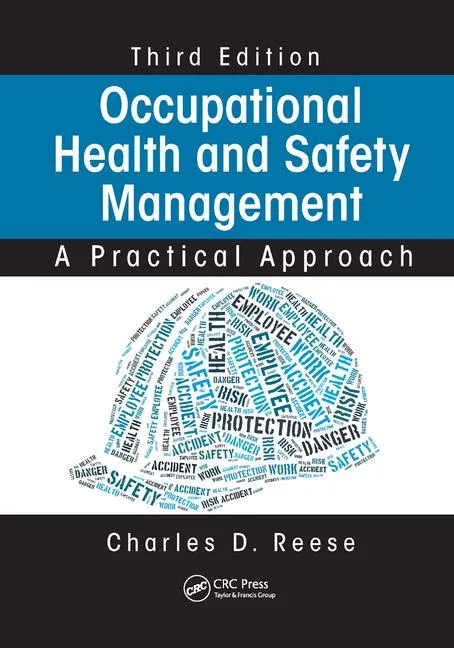
    Occupational Health and Safety Management: A Practical Approach, Third Edition

See More Products

Events

View AllSubmit An Event
  • March 26, 2026

    Electrical Safety Essentials: A Practical Guide for Safety Professionals

    ON DEMAND: This one-hour webinar provides general safety professionals with a practical, non-technical overview of electrical hazards, injury mechanisms, and prevention strategies aligned with OSHA 29 CFR 1910 Subpart S and related standards.
View AllSubmit An Event

Related Directories

  • SAS Safety Corp.

    SAS Safety Corp. offers head-to-toe safety products and solutions for respiratory, hearing, eyes, hands, body, face, first-aid kits, absorbents, spill containment, and other crucial safety accessories. Our goal is to provide safety managers, wholesalers, and DIY’ers with simple solutions for determining safety needs and solutions.
  • Hughes Safety Showers

    Hughes design and manufacture emergency safety showers, eye/face wash units and decontamination equipment to provide you with a safer working environment, greater protection against serious injury and peace of mind that you’re compliant with crucial safety standards. From mains and tank fed safety showers to portable self-contained eye washes, we have solutions for every environment.
  • PK Safety

    After 75+ years in the safety business, we understand the importance of staying safe in your work and home environments. We’ve vetted thousands of safety equipment and products including gas detectors, confined space gear, fall protection and respirators. We are also a Factory Authorized Service Center for gas monitors with factory trained certified technicians in house.
×

Become a Leader in Safety Culture

Build your knowledge with ISHN, covering key safety, health and industrial hygiene news, products, and trends.

JOIN TODAY
  • RESOURCES
    • Advertise
    • Contact Us
    • Directories
    • Manufacturing Division
    • Store
    • Want More
  • SIGN UP TODAY
    • Create Account
    • eMagazine
    • Newsletters
    • Customer Service
    • Manage Preferences
  • SERVICES
    • Marketing Services
    • Reprints
    • Market Research
    • List Rental
    • Survey/Respondent Access
  • STAY CONNECTED
    • LinkedIn
    • Facebook
    • YouTube
    • X (Twitter)
  • PRIVACY
    • PRIVACY POLICY
    • TERMS & CONDITIONS
    • DO NOT SELL MY PERSONAL INFORMATION
    • PRIVACY REQUEST
    • ACCESSIBILITY

Copyright ©2026. All Rights Reserved BNP Media, Inc. and BNP Media II, LLC.

Design, CMS, Hosting & Web Development :: ePublishing