ISHN logo
search
cart
facebook twitter linkedin youtube
  • Sign In
  • Create Account
  • Sign Out
  • My Account
ISHN logo
  • NEWS
    • Today's News
    • Global Safety News
    • Government Regulations
  • PRODUCTS
    • Product Innovations
    • Featured Products
  • TOPICS
    • Environmental Health and Safety
    • Facility Safety
    • Workplace Health
    • Occupational Safety
    • PPE
    • More Topics
  • CONSTRUCTION
  • TECHNOLOGY
  • COLUMNS
    • Best Practices
    • Dave Johnson: What’s going on
    • Editorial Comments
    • Leading Safety
  • MULTIMEDIA
    • ISHN Podcast
    • Videos
    • Cold Stress Education Quiz
    • Webinars
    • White Papers
  • MORE
    • Buyer's Guide
    • Newsletters
    • Convention Companion
    • Polls
    • Events
    • ISHN Store
    • Sponsor Insights
  • EMAGAZINE
    • eMagazine
    • Archived Issues
    • Contact
    • Advertise
  • JOIN TODAY!
Today's Safety NewsEnvironmental Health and SafetyPPEWorkplace Training Strategies

Many fire departments in U.S. lack safety essentials, according to NFPA

October 31, 2011

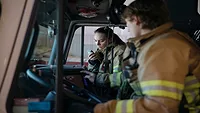
firefightersFirefighters in many fire departments across the U.S. lack basic health and safety protections, adding unnecessary risks to an already risky occupation, according to an assessment released last week by the National Fire Protection Association (NFPA). Inadequate training, insufficient safety equipment and the lack of basic fitness and health programs were among the findings of the The Third Needs Assessment of the U.S. Fire Service, which compared the current needs of America's fire departments to those identified in assessments done in 2001 and 2005.

The report looked at staffing, training, certification, wellness/fitness, PPE, the ability to handle unusually challenging incidents, and communications and new technologies, among other other things.

Key findings:

• Nearly half (46 percent) of all fire departments that are responsible for structural firefighting have not formally trained all their personnel involved in structural firefighting, down from 55 percent in 2001 and 53 percent in 2005.
• Seven out of ten (70 percent) fire departments have no program to maintain basic firefighter fitness and health, down from 80 percent in 2001 and 76 percent in 2005.
• Nearly half (46 percent) of all fire department engines and pumpers were at least 15 years old, down from 51 percent in 2001 and 50 percent in 2005.
• Half (52 percent) of all fire departments cannot equip all firefighters on a shift with self-contained breathing apparatus (SCBA), down from 70 percent in 2001 and 60 percent in 2005.
• Two out of five (39 percent) fire departments do not have enough personal alert safety system devices (PASS) to equip all emergency responders on a shift, down from 62 percent in 2001 and 48 percent in 2005.
• Except for cities protecting at least 250,000 population, most cities do not assign at least four career firefighters to an engine or pumper and so are probably not in compliance with NFPA 1710, Standard for the Organization and Deployment of Fire Suppression Operations, Emergency Medical Operations, and Special Operations to the Public by Career Fire Departments, which requires a minimum of four firefighters on an engine or pumper.

The goal of the project was to identify major gaps in the needs of the U.S. fire service and to determine if the Department of Homeland Security Federal Emergency Management Agency’s (DHS/FEMA) Assistance to Firefighters Grant (AFG) programs are continuing to reduce the needs of fire departments.

“The progress that has been made nationally by well-targeted grants is encouraging, but there is more work to be done to ensure fire departments across the country are sufficiently prepared to protect their communities,” said NFPA President James M. Shannon.

The NFPA says needs have declined in some areas -- like PPE and firefighting equipment, because those resources have received the most AFG funding. Innovative technologies like thermal imaging cameras are coming into greater use.

Declines in needs that received much smallers shares of AFG funds -- like trainign -- have been more modest. Still other areas of need, such as apparatus, stations, and the staffing required to support the stations, have seen either limited reductions in need (e.g., apparatus needs in rural areas) or no reductions at all (e.g., adequacy of stations and personnel to meet standards and other guidance on speed and size of response).

Fire prevention and code enforcement needs have not shown any improvement over the past decade. Neither has the ability of departments to handle certain types of challenging incidents, such as homeland security scenarios (structural collapse and chem/bio agent attack) and large-scale emergencies (a wildland/urban interface fire or a major flood).

The full report and state reports are available at www.nfpa.org/needsassessment.

About the National Fire Protection Association (NFPA)

NFPA is a worldwide leader in fire, electrical, building, and life safety. The mission of the international nonprofit organization founded in 1896 is to reduce the worldwide burden of fire and other hazards on the quality of life by providing and advocating consensus codes and standards, research, training, and education.

KEYWORDS: firefighting

Share This Story

Looking for a reprint of this article?
From high-res PDFs to custom plaques, order your copy today!

Recommended Content

JOIN TODAY
to unlock your recommendations.

Already have an account? Sign In

  • forklift safety

    Exploring the latest technologies in forklift safety

    With more staff and more stock in warehousing now more...
    Facility Safety
    By: Josh Cramer
  • welding

    All about welder’s flash or arc eye

    A flash burn is a painful inflammation of the cornea,...
    Environmental Health and Safety
  • dangerous jobs

    The 10 most dangerous jobs in the U.S.

    On-the-job deaths have been rising — hitting the highest...
    Government Safety Regulations
    By: Benita Mehta
Manage My Account
  • eMagazine Subscriptions
  • ISHN Newsletter & Other Newsletter Alerts
  • Online Registration
  • Manage My Preferences
  • Subscription Customer Service

More Videos

Sponsored Content

Sponsored Content is a special paid section where industry companies provide high quality, objective, non-commercial content around topics of interest to the ISHN audience. All Sponsored Content is supplied by the advertising company and any opinions expressed in this article are those of the author and not necessarily reflect the views of ISHN or its parent company, BNP Media. Interested in participating in our Sponsored Content section? Contact your local rep!

close
  • man wearing the the Sundström SR200 Full Face Mask Respirator
    Sponsored byOHD

    5 Fit Testing Mistakes That Could Cost You

  • This image shows Magid AcuSpex polarized blue mirrored safety glasses.
    Sponsored byMagid Glove and Safety

    Construction PPE Guide: What Crews Need for Each Task

  • lone worker in confined space
    Sponsored byAlphasense Ltd.

    GET THE LEAD OUT of your Safety Oxygen Sensors!

Popular Stories

SpaceX 7 launch

OSHA Investigating Fatal Fall at SpaceX Starbase

Worker Impairment

How to Tell When a Co-Worker is Impaired? A Safety Pro’s Challenge

Automated loading dock equipment

After March 2026 Rivian Death, Safety Managers Reassess Loading Dock Systems Under OSHA's Warehouse Emphasis Program

top 10 most dangerous jobs

Poll

Seasonal Readiness

With the federal heat stress prevention rule on the horizon, which area of your safety program needs the most attention?
View Results Poll Archive

Products

Surviving an OSHA Audit A Management Guide, 2nd Edition

Surviving an OSHA Audit A Management Guide, 2nd Edition

See More Products

ISHN Podcasts

Related Articles

  • Seven fire departments respond to house fire

    See More
  • Blackline-Safety-Fire-Hazmat fire department

    Blackline Safety Working With 350 Fire Departments Globally

    See More
  • Requirements set for volunteer fire departments

    See More

Related Products

See More Products
  • 9781566703703.jpg

    Safety, Health, and Asset Protection: Management Essentials, Second Edition

  • 1119906652.webp

    Alive and Well at the End of the Day: The Supervisor's Guide to Managing Safety in Operations, 2E

See More Products

Events

View AllSubmit An Event
  • March 26, 2026

    Electrical Safety Essentials: A Practical Guide for Safety Professionals

    ON DEMAND: This one-hour webinar provides general safety professionals with a practical, non-technical overview of electrical hazards, injury mechanisms, and prevention strategies aligned with OSHA 29 CFR 1910 Subpart S and related standards.
View AllSubmit An Event

Related Directories

  • National Fire Protection Assn. (NFPA)

    Known as the trusted source of safety knowledge, the National Fire Protection Association (NFPA) has been helping to solve some of the planet’s toughest safety problems for more than 125 years. To remain relevant for over a century as a knowledge and information organization, we’ve continually evolved our scope of expertise—from fire prevention, wildfire preparedness, and electrical safety to hazardous materials, community risk reduction, and public safety.
×

Become a Leader in Safety Culture

Build your knowledge with ISHN, covering key safety, health and industrial hygiene news, products, and trends.

JOIN TODAY
  • RESOURCES
    • Advertise
    • Contact Us
    • Directories
    • Manufacturing Division
    • Store
    • Want More
  • SIGN UP TODAY
    • Create Account
    • eMagazine
    • Newsletters
    • Customer Service
    • Manage Preferences
  • SERVICES
    • Marketing Services
    • Reprints
    • Market Research
    • List Rental
    • Survey/Respondent Access
  • STAY CONNECTED
    • LinkedIn
    • Facebook
    • YouTube
    • X (Twitter)
  • PRIVACY
    • PRIVACY POLICY
    • TERMS & CONDITIONS
    • DO NOT SELL MY PERSONAL INFORMATION
    • PRIVACY REQUEST
    • ACCESSIBILITY

Copyright ©2026. All Rights Reserved BNP Media, Inc. and BNP Media II, LLC.

Design, CMS, Hosting & Web Development :: ePublishing