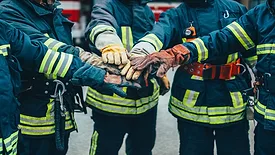
Milliken & Company announced they have become the first textile manufacturer to sign the International Association of Fire Fighter’s (IAFF) new PPE Manufacturer Code of Conduct for Fire Fighter Protective Clothing and Equipment, reinforcing the company’s longstanding commitment to firefighter safety.
Aqueous Film-Forming Foam has saved numerous lives with its effectiveness, but recent studies have revealed just how dangerous it is, chiefly due to the presence of PFAS.
While there isn’t a direct relationship between climate change and fire, researchers at the USGS have found strong correlations between warmer summer temperatures and large fire years.
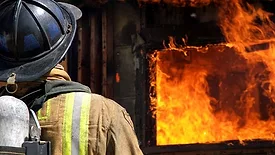
Numerous studies show that firefighters’ exposure on the fireground, where smoke and hazardous chemicals are released from burning materials, may increase the risk of certain types of cancer.
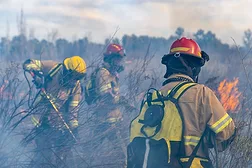
Wildland fire fighters are required to pass an “arduous duty” physical fitness test annually to help ensure that they are prepared for the physical nature of the job. Unlike structural fire fighting, wildland fire fighting often requires long work shifts that may last up to 14 continuous days, and often takes place in environments that are challenging with regard to temperature and terrain.
Fast and efficient responses to crash events and disasters depend upon emergency medical services (EMS) workers, who include first responders, emergency medical technicians, and paramedics, as well as firefighters and nurses. Often, EMS workers treat patients in ambulances en route to the hospital, which presents the inherent risk of high-speed travel.