ISHN logo
search
cart
facebook twitter linkedin youtube
  • Sign In
  • Create Account
  • Sign Out
  • My Account
ISHN logo
  • NEWS
    • Today's News
    • Global Safety News
    • Government Regulations
  • PRODUCTS
    • Product Innovations
    • Featured Products
  • TOPICS
    • Environmental Health and Safety
    • Facility Safety
    • Workplace Health
    • Occupational Safety
    • PPE
    • More Topics
  • CONSTRUCTION
  • TECHNOLOGY
  • COLUMNS
    • Best Practices
    • Dave Johnson: What’s going on
    • Editorial Comments
    • Leading Safety
  • MULTIMEDIA
    • ISHN Podcast
    • Videos
    • Cold Stress Education Quiz
    • Webinars
    • White Papers
  • MORE
    • Buyer's Guide
    • Newsletters
    • Convention Companion
    • Polls
    • Events
    • ISHN Store
    • Sponsor Insights
  • EMAGAZINE
    • eMagazine
    • Archived Issues
    • Contact
    • Advertise
  • JOIN TODAY!
Environmental Health and SafetyWorkplace Health

Odorless & invisible

Know the risks of radiation
By Bobby Sheikhan
January 4, 2012
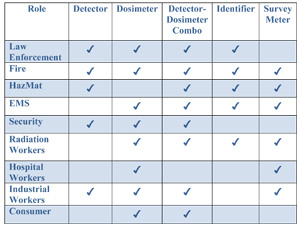
Radiation has added a new dimension to the industrial hygienist’s role — a dimension that includes extreme time pressure in response, identification, isolation and protection.chart

Exposure to high levels of radiation can be dangerous. Because radiation is odorless and invisible, those who must work with radioactive materials need special equipment to ensure their safety and the safety of those around them. Therefore, speed, accuracy and reliability are more important than ever in radiation detection instruments used to assess radioactive threats and to guide life-saving decisions.

All personnel who work with radioisotopes need different detection and measurement devices. Knowing more about radiation and how to detect it can help keep industrial hygienists, first responders and the public safe from overexposure.

Radiation protection and detection

Radiation is part of daily life on our planet. Ionizing radiation is all around us. There’s naturally occurring cosmic radiation from space as well as radioactive material in the ground. Ionizing radiation represents one of two forms of radiation and the one known to damage cell structures and increase the risk of cancer. Exposure to elevated levels of radiation for extended periods of time can be life threatening.

The fundamental principle of radiation safety is to reduce exposure to ionizing radiation and its source. The goal is to maintain exposure to As Low As Reasonably Achievable, or ALARA. The three factors influencing radiation dose are time, distance and shielding, so the best ways to protect yourself are to limit your time near the radiation source; put distance between you and the source; and/or increase the amount of shielding material between you and the source.

Types of detection equipment

For those who need to work with radioactive materials, deploying specialized radiation-detection equipment is key to ensuring safety. There are four main types of radiation-detection instruments:

1. Personal radiation detectors

A personal radiation detector is a small pager-like device. Its main purpose is to alert the wearer to the presence of radiation as quickly as possible. Detectors typically sense gamma radiation or gamma and neutron radiation. Personal radiation detectors typically cost between $600 and $1,200 and last many years.

2. Dosimeters

A dosimeter accurately measures the accumulated radiation dose that the wearer has received. Dosimeters can measure gamma, alpha, beta and neutron radiation doses, but most electronic personal dosimeters measure only gamma radiation because it is the most likely type of radiation exposure. Electronic personal dosimeters are less expensive than personal radiation detectors and range from $200 to $500 per unit.

3. Identifiers

An identifier uses the differences in radiation emission energies to determine which radioisotope is present. Identifiers are mainly used to identify an unknown radioactive source or contamination. Identifiers are expensive, and a single unit can cost more than $10,000.

4. Survey Meters

Survey meters measure radiation levels using the same radiation sensors employed in detectors and dosimeters. These have a probe that’s held in one hand, while the meter box is held in the other. Each probe is specifically tailored to a particular type of radiation, and can measure gamma, neutron, alpha or beta radiation levels. Cost of a survey meter can range from $1,000 to $20,000.


Selecting appropriate detection equipment

Most people only need one or two types of devices, which, when used properly, can make their jobs easier and safer.

Workers in industrial facilities with radioactive materials

Personnel entering areas where the radioactive material is stored should wear a personal radiation detector to alert them of any leaking sources and high dose rate areas. Workers at refineries and chemical plants must wear intrinsically safe equipment, especially during plant turnarounds.

Radiation workers

Each radiation worker should wear a dosimeter when entering a radiation area. Dosimeters are used because it is known that there is radiation in the area, and by law the dose to each worker must be carefully tracked.

First responders

First responders need the most rugged and fastest responding equipment possible that includes intrinsic safety, water, shock and EMI resistance, ease of operation while wearing several layers of gloves, and illuminated, easy-to-read displays. Since HazMat responders may be exposed to more significant amounts of radiation, a detector-dosimeter combination instrument is ideal. A survey meter or detector should be used to determine a safe distance from the source.


Detection, prevention and safety

The proper use of appropriate radiation detection can help protect the industrial hygienist and the public. New technologies have been developed to organize, simplify and better meet the challenges that face you on a daily basis.

Selecting the right equipment can be challenging. Things to consider when selecting a radiation-detection instrument include:

• How important is speed-of-response for your application?

• Will the device be used in a rugged or harsh environment?

• How important is portability?

• How important is ease of use?

• Do you want readings on radiation levels?

• Do you want to track exposure over time?

• Are you interested in identifying specific radioisotope types?

KEYWORDS: detection equipment protection radiation

Share This Story

Looking for a reprint of this article?
From high-res PDFs to custom plaques, order your copy today!

Bobby Sheikhan is director of product management for RAE Systems, Inc. He is experienced in providing training in air-monitoring and emergency-response planning for a wide range of industries.

Mr. Sheikhan led the RAE Systems team that worked directly with HazMat first responders in the Gulf Oil Crisis and has assisted civil defense, high-profile public event safety, major metropolitan first responder and Hazmat teams, multinational oil & gas corporations and major industrial sites measure, track and evaluate real time data from RAE Systems gas and radiation monitors. RAE Systems develops a full range of radiation detection meters and dosimeters.

Recommended Content

JOIN TODAY
to unlock your recommendations.

Already have an account? Sign In

  • forklift safety

    Exploring the latest technologies in forklift safety

    With more staff and more stock in warehousing now more...
    Workplace Training Strategies
    By: Josh Cramer
  • welding

    All about welder’s flash or arc eye

    A flash burn is a painful inflammation of the cornea,...
    Environmental Health and Safety
  • dangerous jobs

    The 10 most dangerous jobs in the U.S.

    On-the-job deaths have been rising — hitting the highest...
    Government Safety Regulations
    By: Benita Mehta
Manage My Account
  • eMagazine Subscriptions
  • ISHN Newsletter & Other Newsletter Alerts
  • Online Registration
  • Manage My Preferences
  • Subscription Customer Service

More Videos

Sponsored Content

Sponsored Content is a special paid section where industry companies provide high quality, objective, non-commercial content around topics of interest to the ISHN audience. All Sponsored Content is supplied by the advertising company and any opinions expressed in this article are those of the author and not necessarily reflect the views of ISHN or its parent company, BNP Media. Interested in participating in our Sponsored Content section? Contact your local rep!

close
  • man wearing the the Sundström SR200 Full Face Mask Respirator
    Sponsored byOHD

    5 Fit Testing Mistakes That Could Cost You

  • This image shows Magid AcuSpex polarized blue mirrored safety glasses.
    Sponsored byMagid Glove and Safety

    Construction PPE Guide: What Crews Need for Each Task

  • lone worker in confined space
    Sponsored byAlphasense Ltd.

    GET THE LEAD OUT of your Safety Oxygen Sensors!

Popular Stories

chemical safety

It Was Just Sugar: Catastrophic Safety Failures in Louisville

psychology in the workplace

Most Workplaces Measure Psychological Safety, Ignoring Psychosocial Risks

Workers in high-visibility clothing descending stairs in an industrial facility.

Faster evacuations and lower operating costs with the SST Series Solution from WatchGas Detection

top 10 most dangerous jobs

Events

July 21, 2026

When Dust Becomes a Disaster

In this webinar, attendees will gain a foundational understanding of combustible dust hazards, including the conditions that lead to fires and explosions, common ignition sources, and high-risk processes found throughout industry.

View All Submit An Event

Poll

Seasonal Readiness

With the federal heat stress prevention rule on the horizon, which area of your safety program needs the most attention?
View Results Poll Archive

Products

Surviving an OSHA Audit A Management Guide, 2nd Edition

Surviving an OSHA Audit A Management Guide, 2nd Edition

See More Products

ISHN Podcasts

Related Articles

  • Wireless gas detection systems help refineries prevent accidents from turning into disasters

    See More
  • Emergency Department

    How to test for carbon monoxide in your home

    See More
  • Arc flash prediction and prevention myths

    See More

Related Products

See More Products
  • 1119010160.jpg

    Guidelines for Combustible Dust Hazard Analysis

  • 1119772133.jpg

    Delivering Safety Excellence: Engagement Culture at Every Level

  • 3E

    Safety Professional's Reference and Study Guide, Third Edition

See More Products

Events

View AllSubmit An Event
  • September 22, 2016

    Bang! Damage from impulse noise and the effectiveness of hearing protection

    Some of the most hazardous sounds we hear are brief sounds – noises from impacts and impulses. These arise from sources like household tools, construction, industrial noise, firecrackers, guns, and even automotive airbags.
View AllSubmit An Event

Related Directories

  • CO2Meter

    Since 2006, CO2Meter has been a trusted leader in gas detection, monitoring, and analytical solutions designed to protect people, facilities, and processes across critical industries. Our mission is simple to make invisible gases visible through reliable, accurate, and compliant gas detection safety solutions. From carbon dioxide to oxygen deficiency, combustible, toxic, and refrigerant gases, CO2Meter delivers innovative gas safety devices that help organizations meet OSHA, NFPA, and local fire code requirements while safeguarding worker health and environmental integrity. Our portfolio includes fixed and portable gas detection systems, multi-gas sampling data loggers, and industrial monitoring solutions engineered for EHS programs, laboratory safety, manufacturing, food and beverage, cryogenics, and life sciences applications.
  • Haws Corp.

    For more than 110 years, Haws® has been improving the health and safety of global communities by providing hydration, safety, and tempering solutions. Haws serves a variety of customers, from heavy industrial and refinery sites to schools and local municipalities. With more than 8,000 distribution locations and 250 employees worldwide, we continually focus on quality, service, reliability and complete solution support.
  • Thermo Fisher Scientific

    Thermo Fisher Scientific is the world leader in serving science. Our mission is to enable our customers to make the world healthier, cleaner and safer. We support our customers with technologies such as gas and fugitive emission analyzers, and dust monitors designed to help solve environmental and process monitoring challenges.
×

Become a Leader in Safety Culture

Build your knowledge with ISHN, covering key safety, health and industrial hygiene news, products, and trends.

JOIN TODAY
  • RESOURCES
    • Advertise
    • Contact Us
    • Directories
    • Manufacturing Division
    • Store
    • Want More
  • SIGN UP TODAY
    • Create Account
    • eMagazine
    • Newsletters
    • Customer Service
    • Manage Preferences
  • SERVICES
    • Marketing Services
    • Reprints
    • Market Research
    • List Rental
    • Survey/Respondent Access
  • STAY CONNECTED
    • LinkedIn
    • Facebook
    • YouTube
    • X (Twitter)
  • PRIVACY
    • PRIVACY POLICY
    • TERMS & CONDITIONS
    • DO NOT SELL MY PERSONAL INFORMATION
    • PRIVACY REQUEST
    • ACCESSIBILITY

Copyright ©2026. All Rights Reserved BNP Media, Inc. and BNP Media II, LLC.

Design, CMS, Hosting & Web Development :: ePublishing