NTSB: Weak regs, company failures caused oil spill
Enbridge employees "behaved like Keystone Kops"
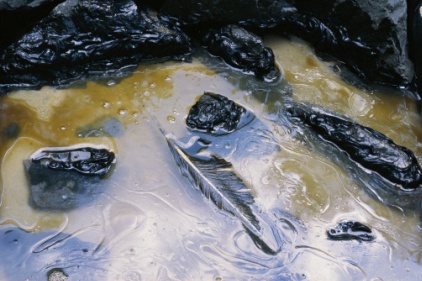 Pervasive organizational failures by a pipeline operator along with weak federal regulations led to a pipeline rupture and subsequent oil spill in 2010, the National Transportation Safety Board (NTSB) said yesterday.
On Sunday, July 25, 2010, at about 5:58 p.m., a 30 inch-diameter pipeline (Line 6B) owned and operated by Enbridge Incorporated ruptured and spilled crude oil into an ecologically sensitive area near the Kalamazoo River in Marshall, Mich., for 17 hours until a local utility worker discovered the oil and contacted Enbridge to report the rupture.
The NTSB found that the material failure of the pipeline was the result of multiple small corrosion-fatigue cracks that over time grew in size and linked together, creating a gaping breach in the pipe measuring over 80 inches long.
"This investigation identified a complete breakdown of safety at Enbridge. Their employees performed like Keystone Kops and failed to recognize their pipeline had ruptured and continued to pump crude into the environment," said NTSB Chairman Deborah A.P. Hersman. “Despite multiple alarms and a loss of pressure in the pipeline, for more than 17 hours and through three shifts they failed to follow their own shutdown procedures.”
Clean up costs are estimated by Enbridge and the EPA at $800 million and counting, making the Marshall rupture the single most expensive on-shore spill in US history.
Over 840,000 gallons of crude oil – enough to fill 120 tanker trucks – spilled into hundreds of acres of Michigan wetlands, fouling a creek and a river. A Michigan Department of Community Health study concluded that over 300 individuals suffered adverse health effects related to benzene exposure, a toxic component of crude oil.
Line 6B had been scheduled for a routine shutdown at the time of the rupture to accommodate changing delivery schedules. Following the shutdown, operators in the Enbridge control room in Edmonton, Alberta, received multiple alarms indicating a problem with low pressure in the pipeline, which were dismissed as being caused by factors other than a rupture. "Inadequate training of control center personnel" was cited as contributing to the accident.
The investigation found that Enbridge failed to accurately assess the structural integrity of the pipeline, including correctly analyzing cracks that required repair. The NTSB characterized Enbridge's control room operations, leak detection, and environmental response as deficient, and described the event as an "organizational accident."
Following the first alarm, Enbridge controllers restarted Line 6B twice, pumping an additional 683,000 gallons of crude oil, or 81 percent of the total amount spilled, through the ruptured pipeline. The NTSB determined that if Enbridge's own procedures had been followed during the initial phases of the accident, the magnitude of the spill would have been significantly reduced. Further, the NTSB attributed systemic flaws in operational decision-making to a "culture of deviance," which concluded that personnel had a developed an operating culture in which not adhering to approved procedures and protocols was normalized.
The NTSB also cited the Pipeline and Hazardous Materials Safety Administration's weak regulations regarding pipeline assessment and repair criteria as well as a cursory review of Enbridge's oil spill response plan as contributing to the magnitude of the accident.
The investigation revealed that the cracks in Line 6B that ultimately ruptured were detected by Enbridge in 2005 but were not repaired. A further examination of records revealed that Enbridge's crack assessment process was inadequate, increasing the risk of a rupture.
"This accident is a wake-up call to the industry, the regulator, and the public. Enbridge knew for years that this section of the pipeline was vulnerable yet they didn't act on that information," said Chairman Hersman. "Likewise, for the regulator to delegate too much authority to the regulated to assess their own system risks and correct them is tantamount to the fox guarding the hen house. Regulators need regulations and practices with teeth, and the resources to enable them to take corrective action before a spill. Not just after."
As a result of the investigation, the NTSB reiterated one recommendation to PHMSA and issued 17 new safety recommendations to the Department of the Transportation, PHMSA, Enbridge Incorporated, the American Petroleum Institute, the International Association of Fire Chiefs, and the National Emergency Number Association.
A synopsis of the NTSB report, including the probable cause, findings, and a complete list of the safety recommendations, is available at http://go.usa.gov/wsO. The full report will be available on the website in several weeks.
Looking for a reprint of this article?
From high-res PDFs to custom plaques, order your copy today!


.webp?t=1721257160 "download (1).jpg")