ISHN logo
search
cart
facebook twitter linkedin youtube
  • Sign In
  • Create Account
  • Sign Out
  • My Account
ISHN logo
  • NEWS
    • Today's News
    • Global Safety News
    • Government Regulations
  • PRODUCTS
    • Product Innovations
    • Featured Products
  • TOPICS
    • Environmental Health and Safety
    • Facility Safety
    • Workplace Health
    • Occupational Safety
    • PPE
    • More Topics
  • CONSTRUCTION
  • TECHNOLOGY
  • COLUMNS
    • Best Practices
    • Dave Johnson: What’s going on
    • Editorial Comments
    • Leading Safety
  • MULTIMEDIA
    • ISHN Podcast
    • Videos
    • Cold Stress Education Quiz
    • Webinars
    • White Papers
  • MORE
    • Buyer's Guide
    • Newsletters
    • Convention Companion
    • Polls
    • Events
    • ISHN Store
    • Sponsor Insights
  • EMAGAZINE
    • eMagazine
    • Archived Issues
    • Contact
    • Advertise
  • JOIN TODAY!
Today's Safety NewsTransportation Safety

Traveling hazmats need better documentation, says TSB

Canadian, U.S. regulators called upon to make changes
September 11, 2013

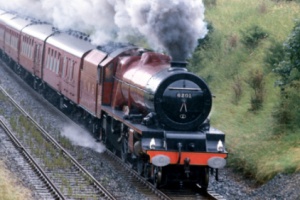
truckIn the wake of the deadly July 6 train derailment and explosion in Lac-Mégantic, Québec, the Transportation Safety Board of Canada (TSB) has issued safety advisory letters to Transport Canada and the United States Pipeline and Hazardous Materials Safety Administration, asking regulators to review the processes for suppliers and companies transporting or importing dangerous goods to ensure the properties of the goods are accurately determined and documented for safe transportation.

The TSB’s ongoing investigation into the derailment of a Montreal, Maine & Atlantic Railway (MMA) train TSB test has found that the level of hazard posed by the petroleum crude oil transported in the tank cars on the accident train was not accurately documented. Petroleum crude oil is classified as a Class 3 Dangerous Good (flammable liquid), and is further divided into packing groups (PG) to further categorize its hazards (PG I being most hazardous, to PG III being least hazardous). In analyzing product samples from the 9 intact tank cars from the Lac-Mégantic accident, the TSB identified the product as having the characteristics of a Dangerous Good of Class 3, PG IIproduct. However, the product was offered for transport, packaged, and transported as a Class 3, PG III product, which represented it as a lower hazard, less volatile flammable liquid.

The lower flash point of the crude oil explains in part why it ignited so quickly once the Class 111 tank cars were breached.  Since product characteristics are one of the factors when selecting a container, this also brings into question the adequacy of Class 111 tanks cars for use in transporting large quantities of low flash flammable liquids (PG I and PG II). The TSB investigation in this area is ongoing. Further tests are being done on the product samples and testing has started on the components of the tank cars. A review of the relevant regulations and company operating practices is also underway. These analyses will help determine the safety performance of the tank cars during the accident and to identify any related safety deficiencies

The Lac-Mégantic train derailment remains a priority for the TSB and a team of experts continues to be dedicated to this investigation. If at any stage during the investigation the TSB identifies additional safety deficiencies, it will communicate directly with regulators and the industry, and will inform the public.

Dangerous Goods of Class 3

Flammable liquids included in Class 3, Flammable Liquids, are included in one of the following packing groups:

  • Packing Group I, if they have an initial boiling point of 35°C or less at an absolute pressure of 101.3 kPa and any flash point;
  • Packing Group II, if they have an initial boiling point greater than 35°C at an absolute pressure of 101.3 kPa and a flash point less than 23°C; or
  • Packing Group III, if the criteria for inclusion in Packing Group I or II are not met.

For details, see the Transportation of Dangerous Goods Regulations, Part II.

Visit the active investigation page for more information about this investigation.

The TSB is an independent agency that investigates marine, pipeline, railway and aviation transportation occurrences in order to advance transportation safety. 

KEYWORDS: Canada train safety

Share This Story

Looking for a reprint of this article?
From high-res PDFs to custom plaques, order your copy today!

Recommended Content

JOIN TODAY
to unlock your recommendations.

Already have an account? Sign In

  • forklift safety

    Exploring the latest technologies in forklift safety

    With more staff and more stock in warehousing now more...
    Facility Safety
    By: Josh Cramer
  • welding

    All about welder’s flash or arc eye

    A flash burn is a painful inflammation of the cornea,...
    Environmental Health and Safety
  • dangerous jobs

    The 10 most dangerous jobs in the U.S.

    On-the-job deaths have been rising — hitting the highest...
    Government Safety Regulations
    By: Benita Mehta
Manage My Account
  • eMagazine Subscriptions
  • ISHN Newsletter & Other Newsletter Alerts
  • Online Registration
  • Manage My Preferences
  • Subscription Customer Service

More Videos

Sponsored Content

Sponsored Content is a special paid section where industry companies provide high quality, objective, non-commercial content around topics of interest to the ISHN audience. All Sponsored Content is supplied by the advertising company and any opinions expressed in this article are those of the author and not necessarily reflect the views of ISHN or its parent company, BNP Media. Interested in participating in our Sponsored Content section? Contact your local rep!

close
  • man wearing the the Sundström SR200 Full Face Mask Respirator
    Sponsored byOHD

    5 Fit Testing Mistakes That Could Cost You

  • This image shows Magid AcuSpex polarized blue mirrored safety glasses.
    Sponsored byMagid Glove and Safety

    Construction PPE Guide: What Crews Need for Each Task

  • lone worker in confined space
    Sponsored byAlphasense Ltd.

    GET THE LEAD OUT of your Safety Oxygen Sensors!

Popular Stories

SpaceX 7 launch

OSHA Investigating Fatal Fall at SpaceX Starbase

Worker Impairment

How to Tell When a Co-Worker is Impaired? A Safety Pro’s Challenge

psychology in the workplace

Most Workplaces Measure Psychological Safety, Ignoring Psychosocial Risks

top 10 most dangerous jobs

Poll

Seasonal Readiness

With the federal heat stress prevention rule on the horizon, which area of your safety program needs the most attention?
View Results Poll Archive

Products

Surviving an OSHA Audit A Management Guide, 2nd Edition

Surviving an OSHA Audit A Management Guide, 2nd Edition

See More Products

ISHN Podcasts

Related Articles

  • NTSB says pilots need better weather forecasts

    See More
  • We need to be better prepared…for anything

    See More
  • Survey: Workers need to wash hands better

    See More

Related Products

See More Products
  • ISHN Instrument & Controls Industrial Hygiene Buyers Guide

  • 2016_WM.jpg

    ANSI/ASSE Z9.11-2016 Laboratory Decommissioning

See More Products
×

Become a Leader in Safety Culture

Build your knowledge with ISHN, covering key safety, health and industrial hygiene news, products, and trends.

JOIN TODAY
  • RESOURCES
    • Advertise
    • Contact Us
    • Directories
    • Manufacturing Division
    • Store
    • Want More
  • SIGN UP TODAY
    • Create Account
    • eMagazine
    • Newsletters
    • Customer Service
    • Manage Preferences
  • SERVICES
    • Marketing Services
    • Reprints
    • Market Research
    • List Rental
    • Survey/Respondent Access
  • STAY CONNECTED
    • LinkedIn
    • Facebook
    • YouTube
    • X (Twitter)
  • PRIVACY
    • PRIVACY POLICY
    • TERMS & CONDITIONS
    • DO NOT SELL MY PERSONAL INFORMATION
    • PRIVACY REQUEST
    • ACCESSIBILITY

Copyright ©2026. All Rights Reserved BNP Media, Inc. and BNP Media II, LLC.

Design, CMS, Hosting & Web Development :: ePublishing