ISHN logo
search
cart
facebook twitter linkedin youtube
  • Sign In
  • Create Account
  • Sign Out
  • My Account
ISHN logo
  • NEWS
    • Today's News
    • Global Safety News
    • Government Regulations
  • PRODUCTS
    • Product Innovations
    • Featured Products
  • TOPICS
    • Environmental Health and Safety
    • Facility Safety
    • Workplace Health
    • Occupational Safety
    • PPE
    • More Topics
  • CONSTRUCTION
  • TECHNOLOGY
  • COLUMNS
    • Best Practices
    • Dave Johnson: What’s going on
    • Editorial Comments
    • Leading Safety
  • MULTIMEDIA
    • ISHN Podcast
    • Videos
    • Cold Stress Education Quiz
    • Webinars
    • White Papers
  • MORE
    • Buyer's Guide
    • Newsletters
    • Convention Companion
    • Polls
    • Events
    • ISHN Store
    • Sponsor Insights
  • EMAGAZINE
    • eMagazine
    • Archived Issues
    • Contact
    • Advertise
  • JOIN TODAY!
Today's Safety NewsColumnsWorkplace Training Strategies

Quality vs. safety: Not a superiority contest

One-upmanship harms business competitiveness

By James E. Leemann Ph.D.
December 5, 2013
Recently a colleague at my office, Dr. Ron Schulingkamp, shared a Quality Progress article entitled “Quality vs. Safety” by Mustafa Ghaleiw.1  As a quality professional, Ron found it interesting that Ghaleiw draws upon Lowellyne James, a quality lecturer at the Aberdeen Business School in the United Kingdom, pitting the quality culture against the safety culture when describing the BP Deepwater Horizon disaster.  James concludes in his blog post, “Safety is not the issue; it is a lack of an understanding of quality and its impact on the triple bottom-line — economic, social and environmental. It is time for BP, the oil and gas industry and regulators to adopt an industry-wide approach that embraces continuous improvement that goes ‘beyond quality.’”2

In sharing the article, Ron asked the question,

“How would we describe our quality culture at the Strategic Petroleum Reserve?” 

He asserted that everyone can define our safety culture based on a desire to be safe and everyone has “Stop Work” authority for safety.

Ron further defined the SPR culture as being focused on arbitrary milestones assigned to individuals because there is an “award fee” cost if we do not accomplish the milestone task.  Indeed, everyone acknowledges the arbitrary nature of the “schedule” as being paramount to everything else whereas, considerations for such issues as quality and budget are also important, but only as an afterthought.  On the other hand, issues such as strategy, planning, resource allocation, systems and process capabilities to accomplish milestones are rarely, if ever, considered.

Ron expanded his question: “How would we define our behaviors, beliefs, concerns for people, actual treatment of people, decision-making practices, and employee engagement?  Would our answers define our quality culture?”

He had answered his own question when describing the SPR culture.  The reality of our company’s culture is centered on the behaviors associated with meeting both client and self-imposed milestones regardless of what it takes to achieve.  As all of us know, culture is driven by those aspects of the corporation that management values and promotes.

Stop singling out work cultures

I have always taken the position that there is neither a quality culture nor a safety culture in our company or any company.  I do not rely on an environmental culture within our company to direct the environmental function.  Instead, I direct environmental activities to compliment the existing corporate culture with a primary focus on the business of the company and the mission of SPR.

Functional areas within corporations struggle to enhance their relevance with varying degrees of success and failure.  Ghaleiw contends in his article that quality is thought to be second to safety and that the Deepwater Horizon disaster was due to the absence of a “quality culture.”  Really?

Ghaleiw takes the reader through a generic overview of how quality should be viewed in the context of the petroleum, petrochemical, and natural gas industries.  I certainly understand Ghaleiw’s desire to “preach to the choir” in Quality Progress magazine, but to imply safety is subservient to quality is to totally ignore the reality of what occurs in the field of application.

Indeed, if your business involves food, drugs, biologics, or medical devices, there certainly are U.S. Food and Drug Administration regulations that address quality systems.  Otherwise, not adhering to quality practices and procedures in private industry just does not garner the attention or penalties given to not following safety, industrial hygiene or environmental regulations by OSHA, EPA or state and local regulatory bodies.

Quality vs. safety is not an either/or dichotomy viewed as one being superior to another.  They need to be viewed as an and relationship.  Although Ghaleiw occasionally treats quality and safety on par with each other in his article, he obviously has a bias toward safety being subservient to quality as opposed to being equal.  I recall Dr. Russell Ackoff introducing me to Jamshid Gharajedaghi’s work in social dynamics when I needed to address a conflict in a systems thinking project I was facilitating at DuPont.3 The group was struggling with resolving a conflicting opinion using either/or solutions that were “good enough” to dissolving the conflict by changing the nature of the system with and relationships that recognized the interdependence of the opposing tendencies.4

Language problems

Probably the greatest problem any functional area faces is the language functional experts use to explain their importance and relevance to management.  I have listened to presentations by quality experts who use terms of art and statistical tools that frankly only they understand.  Often they have great difficulty describing the relevance of their expertise to their non-quality audiences.

I can say the same about safety, industrial hygiene and environmental professionals.  We all tend to communicate our knowledge using terms that we are most comfortable with; however, our audiences are often dismayed by our jargon and lingo.  Rather than asking questions for clarification, our audiences throw their hands up in the air.  Once back in the field, this same audience is written-up by SHE professionals for not following some rule or procedure.  Ever wonder why our colleagues in operations begrudgingly view SHE requirements in a less than positive fashion?

Check all egos

As safety, industrial hygiene, and environmental professionals we have enough controversy to deal with in the ever-growing proliferation of regulations.  We need to stop the “I’m more important than you are” bickering and recognize these conflicts are harming the competitiveness of the businesses we work in and for.  It is time to embrace systemic approaches to dissolving the issues we are dealing with through more and relationships. 

I would agree with Lowellyne James’ plea to “embrace continuous improvement that goes beyond quality,” with one caveat, that we do it without one-upmanship.


1  Ghaleiw, M. Quality vs. Safety. Quality Progress. September 2013. Also located at: http://www.nxtbook.com/naylor/ASQM/ASQM0913/index.php?startid=24#/24

2  James, L. BP’s Deepwater Horizon – A Quality issue or a Safety issue?  21 October 2012. Blog post at: http://lowellynejames.blogspot.com/2012/10/bps-deepwater-horizon-quality-issue-or.html

3  Gharajedaghi, J. 1983. Social dynamics: Dichotomy or dialectic. Human Systems Management. 4:7-17.

4  Leemann, J.E. April 2002. Applying Interactive Planning at DuPont: The Case of Transforming a Safety, Health and Environmental Function to Deliver Business Value. Systemic Practice and Action Research. 15.2: 85-109.

KEYWORDS: OSHA standards work culture

Share This Story

Looking for a reprint of this article?
From high-res PDFs to custom plaques, order your copy today!

James E. Leemann, Ph.D., retired after more than 40 years in the safety, occupational health, and environmental fields, working for DuPont, Conoco, and as contractors for the U.S. Strategic Petroleum Reserve. He also served as an adjunct assistant professor for 22 years at Tulane’s Celia Scott Weatherhead School of Public Health and Tropical Medicine.

Recommended Content

JOIN TODAY
to unlock your recommendations.

Already have an account? Sign In

  • forklift safety

    Exploring the latest technologies in forklift safety

    With more staff and more stock in warehousing now more...
    Workplace Training Strategies
    By: Josh Cramer
  • welding

    All about welder’s flash or arc eye

    A flash burn is a painful inflammation of the cornea,...
    Environmental Health and Safety
  • dangerous jobs

    The 10 most dangerous jobs in the U.S.

    On-the-job deaths have been rising — hitting the highest...
    Construction Industry Safety and Health
    By: Benita Mehta
Manage My Account
  • eMagazine Subscriptions
  • ISHN Newsletter & Other Newsletter Alerts
  • Online Registration
  • Manage My Preferences
  • Subscription Customer Service

More Videos

Sponsored Content

Sponsored Content is a special paid section where industry companies provide high quality, objective, non-commercial content around topics of interest to the ISHN audience. All Sponsored Content is supplied by the advertising company and any opinions expressed in this article are those of the author and not necessarily reflect the views of ISHN or its parent company, BNP Media. Interested in participating in our Sponsored Content section? Contact your local rep!

close
  • man wearing the the Sundström SR200 Full Face Mask Respirator
    Sponsored byOHD

    5 Fit Testing Mistakes That Could Cost You

  • This image shows Magid AcuSpex polarized blue mirrored safety glasses.
    Sponsored byMagid Glove and Safety

    Construction PPE Guide: What Crews Need for Each Task

  • lone worker in confined space
    Sponsored byAlphasense Ltd.

    GET THE LEAD OUT of your Safety Oxygen Sensors!

Popular Stories

SpaceX 7 launch

OSHA Investigating Fatal Fall at SpaceX Starbase

Automated loading dock equipment

After March 2026 Rivian Death, Safety Managers Reassess Loading Dock Systems Under OSHA's Warehouse Emphasis Program

psychology in the workplace

Most Workplaces Measure Psychological Safety, Ignoring Psychosocial Risks

top 10 most dangerous jobs

Poll

Seasonal Readiness

With the federal heat stress prevention rule on the horizon, which area of your safety program needs the most attention?
View Results Poll Archive

Products

Surviving an OSHA Audit A Management Guide, 2nd Edition

Surviving an OSHA Audit A Management Guide, 2nd Edition

See More Products

ISHN Podcasts

Related Articles

  • HR directors: Workplace safety not a top priority

    See More
  • Footwear technology

    Why Consistent Footwear Fit Is a Safety Issue, Not a Comfort One

    See More
  • Safety is not a commodity and neither are its products

    See More

Related Products

See More Products
  • 9780367861148.jpg

    LEAD Safety A Practical Handbook for Frontline Supervisors and Safety Practitioners

  • 9781138749573.jpg

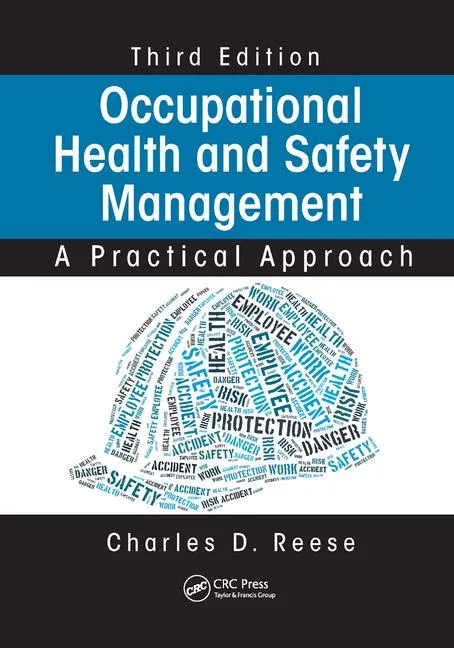
    Occupational Health and Safety Management: A Practical Approach, Third Edition

See More Products

Related Directories

  • Superior Glove

    Superior Glove is a leading innovator in the design and manufacture of safety gloves and sleeves. Since 1910, we have been protecting workers across the globe with specialized hand and arm protection for every major industry.
  • A. P. Buck Inc.

    A.P. Buck Inc. manufactures air sampling pumps and calibrators for industrial hygiene, indoor air quality, occupational health, environmental, health physics and safety disciplines.
×

Become a Leader in Safety Culture

Build your knowledge with ISHN, covering key safety, health and industrial hygiene news, products, and trends.

JOIN TODAY
  • RESOURCES
    • Advertise
    • Contact Us
    • Directories
    • Manufacturing Division
    • Store
    • Want More
  • SIGN UP TODAY
    • Create Account
    • eMagazine
    • Newsletters
    • Customer Service
    • Manage Preferences
  • SERVICES
    • Marketing Services
    • Reprints
    • Market Research
    • List Rental
    • Survey/Respondent Access
  • STAY CONNECTED
    • LinkedIn
    • Facebook
    • YouTube
    • X (Twitter)
  • PRIVACY
    • PRIVACY POLICY
    • TERMS & CONDITIONS
    • DO NOT SELL MY PERSONAL INFORMATION
    • PRIVACY REQUEST
    • ACCESSIBILITY

Copyright ©2026. All Rights Reserved BNP Media, Inc. and BNP Media II, LLC.

Design, CMS, Hosting & Web Development :: ePublishing