ISHN logo
search
cart
facebook twitter linkedin youtube
  • Sign In
  • Create Account
  • Sign Out
  • My Account
ISHN logo
  • NEWS
    • Today's News
    • Global Safety News
    • Government Regulations
  • PRODUCTS
    • Product Innovations
    • Featured Products
  • TOPICS
    • Environmental Health and Safety
    • Facility Safety
    • Workplace Health
    • Occupational Safety
    • PPE
    • More Topics
  • CONSTRUCTION
  • TECHNOLOGY
  • COLUMNS
    • Best Practices
    • Dave Johnson: What’s going on
    • Editorial Comments
    • Leading Safety
  • MULTIMEDIA
    • ISHN Podcast
    • Videos
    • Cold Stress Education Quiz
    • Webinars
    • White Papers
  • MORE
    • Buyer's Guide
    • Newsletters
    • Convention Companion
    • Polls
    • Events
    • ISHN Store
    • Sponsor Insights
  • EMAGAZINE
    • eMagazine
    • Archived Issues
    • Contact
    • Advertise
  • JOIN TODAY!
Today's Safety NewsGovernment Safety RegulationsFacility Safety

"The U.S. is facing an industrial chemical crisis"

CSB chief testifies before Senate about preventable accidents

March 10, 2014

U.S. Chemical Safety Board Chairperson Rafael Moure-Eraso testified March 6, 2014 before the Senate Environment and Public Works Committee Hearing Entitled “Preventing Potential Chemical Threats and Improving Safety: Oversight of the President’s Executive Order on Improving Chemical Facility Safety and Security.”


Chairman Boxer, Senator Vitter, and distinguished Committee members – thank you for inviting me today. I am Dr. Rafael Moure-Eraso, Chairperson of the U.S. Chemical Safety Board.

The Chevron refinery fire in California in 2012 – the West Texas explosion last year – the West Virginia water crisis in January:

All of these were preventable accidents. 

The United States is facing an industrial chemical safety crisis.

After all of these accidents, we hear frustration and heartbreak.  Workers, emergency responders, and the public continue to die and suffer injuries.

Estus Powell, a father who lost his daughter in the 2010 fire at the Tesoro refinery in Washington, recently told us, “My life was forever changed. All I want to know is, does anybody care?  It seems we can get nobody to have any teeth in anything, to get anything done.” 

Paper complicance v. real risk reduction

Our investigations have concluded that certain fundamental changes are needed. We have a regulatory system that sometimes encourages paper compliance over real risk reduction.

As an interim measure, I advocate that the EPA use its existing authority under the Clean Air Act to encourage chemical facilities to make their operations inherently safer where it is feasible to do so.

Then the EPA should follow up by adopting specific regulations with clear requirements.

Europe: a much lower chemical accident rate than U.S.

The goal should be to drive chemical process risks “as low as reasonably practicable.” In Europe, this is a cornerstone of the regulatory system.  Insurance statistics tell us European chemical sites have an accident rate at least three times lower than the U.S.

Time and again, as our reports show, we find examples where companies could have used available, feasible, safer technologies to prevent disastrous accidents, but chose not to do so.

IST

I realize inherently safer technology, or IST, is a term that has drawn some controversy. But it is really just a well-established concept, developed by industry and used by industry. 

It focuses on eliminating or minimizing hazards, instead of just trying to control hazards that already exist.Many accidents could be prevented using off-the-shelf technologies such as corrosion resistant materials, or reducing the storage of hazardous materials to the minimum necessary. 

In West Virginia, applying these principles could have prevented or reduced the consequences of the recent spill. For example, the chemical storage tank could have been sited away from drinking water supplies and constructed of resistant materials.

I commend Senators Boxer, Manchin, and Rockefeller for promptly introducing legislation on this and encourage you to pass a strong bill.

I am also encouraged by the leadership of the White House on these issues – especially the executive order on chemical safety – and I hope that regulatory agencies respond in kind.  

The EPA has the authority today to require companies to apply IST in design, equipment, and processes. I call on industry to join in supporting this reform, which companies know will go a long way to stopping these catastrophes.

EPA, OSHA need more resources

I must add that no regulatory system will work unless regulatory agencies like the EPA and OSHA receive more resources for more highly specialized, technical inspectors.

Madam Chairman, your own state of California has been leading the way in this. Following the Chevron fire in 2012, the legislature has moved to triple the number of process safety inspectors, using fees collected from the refining industry. And California is going to mandate using safer technologies and is looking at what’s called the “safety case” model.  Under the safety case, the burden is on companies to prove they can operate safely by following the most up to date safety standards.  It’s a condition of operating.

In conclusion, these major accidents don’t have to happen. They kill and injure workers, harm communities, and destroy productive businesses. The best companies in the U.S. and overseas know how to prevent these disasters – but we need a regulatory system here that ensures all companies are operating to the same high standards.

That concludes my testimony. Thank you.

KEYWORDS: chemicals refinery safety

Share This Story

Looking for a reprint of this article?
From high-res PDFs to custom plaques, order your copy today!

Recommended Content

JOIN TODAY
to unlock your recommendations.

Already have an account? Sign In

  • forklift safety

    Exploring the latest technologies in forklift safety

    With more staff and more stock in warehousing now more...
    Workplace Training Strategies
    By: Josh Cramer
  • welding

    All about welder’s flash or arc eye

    A flash burn is a painful inflammation of the cornea,...
    Environmental Health and Safety
  • dangerous jobs

    The 10 most dangerous jobs in the U.S.

    On-the-job deaths have been rising — hitting the highest...
    Government Safety Regulations
    By: Benita Mehta
Manage My Account
  • eMagazine Subscriptions
  • ISHN Newsletter & Other Newsletter Alerts
  • Online Registration
  • Manage My Preferences
  • Subscription Customer Service

More Videos

Sponsored Content

Sponsored Content is a special paid section where industry companies provide high quality, objective, non-commercial content around topics of interest to the ISHN audience. All Sponsored Content is supplied by the advertising company and any opinions expressed in this article are those of the author and not necessarily reflect the views of ISHN or its parent company, BNP Media. Interested in participating in our Sponsored Content section? Contact your local rep!

close
  • man wearing the the Sundström SR200 Full Face Mask Respirator
    Sponsored byOHD

    5 Fit Testing Mistakes That Could Cost You

  • This image shows Magid AcuSpex polarized blue mirrored safety glasses.
    Sponsored byMagid Glove and Safety

    Construction PPE Guide: What Crews Need for Each Task

  • lone worker in confined space
    Sponsored byAlphasense Ltd.

    GET THE LEAD OUT of your Safety Oxygen Sensors!

Popular Stories

SpaceX 7 launch

OSHA Investigating Fatal Fall at SpaceX Starbase

Worker Impairment

How to Tell When a Co-Worker is Impaired? A Safety Pro’s Challenge

Automated loading dock equipment

After March 2026 Rivian Death, Safety Managers Reassess Loading Dock Systems Under OSHA's Warehouse Emphasis Program

top 10 most dangerous jobs

Poll

Seasonal Readiness

With the federal heat stress prevention rule on the horizon, which area of your safety program needs the most attention?
View Results Poll Archive

Products

Surviving an OSHA Audit A Management Guide, 2nd Edition

Surviving an OSHA Audit A Management Guide, 2nd Edition

See More Products

ISHN Podcasts

Related Articles

  • American flag

    The U.S. Presidential election is stressing us out!

    See More
  • Is U.S. (finally) on the verge of chemical safety reform?

    See More
  • YOUR TURN: An industrial hygienist goes to Congress

    See More

Related Products

See More Products
  • industrial hy.jpg

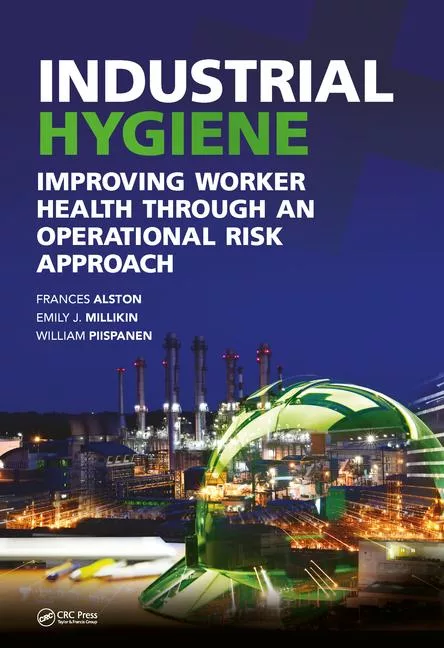
    Industrial Hygiene: Improving Worker Health through an Operational Risk Approach

  • 9781498773416.jpg

    The Legal Aspects of Industrial Hygiene and Safety

See More Products

Events

View AllSubmit An Event
  • May 28, 2026

    The Mental Health Crisis in Construction

    ON DEMAND: Each year, about 1,000 construction workers die from on-the-job incidents – but more than 5,000 die from suicide and 11,000 from overdoses.
View AllSubmit An Event
×

Become a Leader in Safety Culture

Build your knowledge with ISHN, covering key safety, health and industrial hygiene news, products, and trends.

JOIN TODAY
  • RESOURCES
    • Advertise
    • Contact Us
    • Directories
    • Manufacturing Division
    • Store
    • Want More
  • SIGN UP TODAY
    • Create Account
    • eMagazine
    • Newsletters
    • Customer Service
    • Manage Preferences
  • SERVICES
    • Marketing Services
    • Reprints
    • Market Research
    • List Rental
    • Survey/Respondent Access
  • STAY CONNECTED
    • LinkedIn
    • Facebook
    • YouTube
    • X (Twitter)
  • PRIVACY
    • PRIVACY POLICY
    • TERMS & CONDITIONS
    • DO NOT SELL MY PERSONAL INFORMATION
    • PRIVACY REQUEST
    • ACCESSIBILITY

Copyright ©2026. All Rights Reserved BNP Media, Inc. and BNP Media II, LLC.

Design, CMS, Hosting & Web Development :: ePublishing