ISHN logo
search
cart
facebook twitter linkedin youtube
  • Sign In
  • Create Account
  • Sign Out
  • My Account
ISHN logo
  • NEWS
    • Today's News
    • Global Safety News
    • Government Regulations
  • PRODUCTS
    • Product Innovations
    • Featured Products
  • TOPICS
    • Environmental Health and Safety
    • Facility Safety
    • Workplace Health
    • Occupational Safety
    • PPE
    • More Topics
  • CONSTRUCTION
  • TECHNOLOGY
  • COLUMNS
    • Best Practices
    • Dave Johnson: What’s going on
    • Editorial Comments
    • Leading Safety
  • MULTIMEDIA
    • ISHN Podcast
    • Videos
    • Cold Stress Education Quiz
    • Webinars
    • White Papers
  • MORE
    • Buyer's Guide
    • Newsletters
    • Convention Companion
    • Polls
    • Events
    • ISHN Store
    • Sponsor Insights
  • EMAGAZINE
    • eMagazine
    • Archived Issues
    • Contact
    • Advertise
  • JOIN TODAY!
Today's Safety NewsGovernment Safety Regulations

Are arc flash warning signs required by OSHA?
September 3, 2014

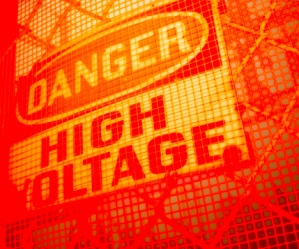
electrical hazardsA letter to OSHA’s Directorate of Enforcement Programs (DEP) regarding the agency's requirements and the National Fire Protection Association's (NFPA) 70E-2004, Standard for Electrical Safety in the Workplace, posed the following question: When work must be performed on energized electric equipment that is capable of exposing employees to arc-flash hazards, does OSHA require the marking of the electric equipment to warn qualified persons of potential electric arc-flash hazards — i.e., as required by NFPA 70E-2004?1

The short answer

The short answer (from OSHA’s Edwin G. Foulke, Jr.): No.

“OSHA has no specific requirement for such marking,” Foulke wrote in reply to a 2006 letter from Joanne B. Linhard of ORC Worldwide in Washington, D.C. “A requirement to mark equipment with flash hazard warnings was not included in the 1981 Subpart S revision.

However...

“However, paragraph (e) of §1910.303 requires employers to mark electrical equipment with descriptive markings, including the equipment's voltage, current, wattage, or other ratings as necessary. OSHA believes that this information, along with the training requirements for qualified persons, will provide employees the necessary information to protect themselves from arc-flash hazards. 

Additionally, in §1910.335(b), OSHA requires employers to use alerting techniques (safety signs and tags, barricades, and attendants) . . . to warn and protect employees from hazards which could cause injury due to electric shock, burns or failure of electric equipment parts. Although these Subpart S electrical provisions do not specifically require that electric equipment be marked to warn qualified persons of arc-flash hazards, §1910.335(b)(1) requires the use of safety signs, safety symbols, or accident prevention tags to warn employees about electrical hazards (e.g., electric-arc-flash hazards) which may endanger them as required by §1910.145.” 


1 Section 400.11 of NFPA 70E-2004 states: Switchboards, panelboards, industrial control panels, and motor control centers that are in other than dwelling occupancies and are likely to require examination, adjustment, servicing, or maintenance while energized shall be field marked to warn qualified persons of potential electric arc flash hazards. The marking shall be located so as to be clearly visible to qualified persons before examination, adjustment, servicing, or maintenance of the equipment.

KEYWORDS: Arc flash electrical safety NFPA standards

Share This Story

Looking for a reprint of this article?
From high-res PDFs to custom plaques, order your copy today!

Recommended Content

JOIN TODAY
to unlock your recommendations.

Already have an account? Sign In

  • forklift safety

    Exploring the latest technologies in forklift safety

    With more staff and more stock in warehousing now more...
    Workplace Training Strategies
    By: Josh Cramer
  • welding

    All about welder’s flash or arc eye

    A flash burn is a painful inflammation of the cornea,...
    Environmental Health and Safety
  • dangerous jobs

    The 10 most dangerous jobs in the U.S.

    On-the-job deaths have been rising — hitting the highest...
    Construction Industry Safety and Health
    By: Benita Mehta
Manage My Account
  • eMagazine Subscriptions
  • ISHN Newsletter & Other Newsletter Alerts
  • Online Registration
  • Manage My Preferences
  • Subscription Customer Service

More Videos

Sponsored Content

Sponsored Content is a special paid section where industry companies provide high quality, objective, non-commercial content around topics of interest to the ISHN audience. All Sponsored Content is supplied by the advertising company and any opinions expressed in this article are those of the author and not necessarily reflect the views of ISHN or its parent company, BNP Media. Interested in participating in our Sponsored Content section? Contact your local rep!

close
  • man wearing the the Sundström SR200 Full Face Mask Respirator
    Sponsored byOHD

    5 Fit Testing Mistakes That Could Cost You

  • This image shows Magid AcuSpex polarized blue mirrored safety glasses.
    Sponsored byMagid Glove and Safety

    Construction PPE Guide: What Crews Need for Each Task

  • lone worker in confined space
    Sponsored byAlphasense Ltd.

    GET THE LEAD OUT of your Safety Oxygen Sensors!

Popular Stories

SpaceX 7 launch

OSHA Investigating Fatal Fall at SpaceX Starbase

Automated loading dock equipment

After March 2026 Rivian Death, Safety Managers Reassess Loading Dock Systems Under OSHA's Warehouse Emphasis Program

psychology in the workplace

Most Workplaces Measure Psychological Safety, Ignoring Psychosocial Risks

top 10 most dangerous jobs

Poll

Seasonal Readiness

With the federal heat stress prevention rule on the horizon, which area of your safety program needs the most attention?
View Results Poll Archive

Products

Surviving an OSHA Audit A Management Guide, 2nd Edition

Surviving an OSHA Audit A Management Guide, 2nd Edition

See More Products

ISHN Podcasts

Related Articles

  • questions

    What is the lettering size required by OSHA for safety signage?

    See More
  • Heat exhaustion vs. heatstroke: What are the warning signs?

    See More
  • Warning signs – Do you warn about hazards that no longer exist?

    See More

Related Products

See More Products
  • A Basic Guide to RCRA—Understanding Solid and Hazardous Waste Management, Second Edition

  • 9781264257829_24.jpeg

    Construction Safety: Health, Practices and OSHA

  • surviving.webp

    Surviving an OSHA Audit A Management Guide, 2nd Edition

See More Products

Related Directories

  • CarbonX by Tex Tech Industries

    CarbonX non-flammable fabrics deliver ultimate protection and maximum comfort when safety matters most. With TPP and ATPV ratings far surpassing industry standards, CarbonX solutions are optimized to protect against direct flame, extreme heat, molten metal splash, flammable liquids, certain chemicals, and arc flash in lightweight, flexible, and breathable PPE. Products sold in roll form to allow for customization.
  • e-Hazard

    E-Hazard is dedicated to building an electrical safety culture with you. Our electrical engineering services and training will prepare your team for any electrical safety needs or concerns. E-Hazard can help with electrical training, arc flash studies, electrical audits, electrical safety programs, LOTO, infrared scanning, NFPA 70B, consulting and much more.
×

Become a Leader in Safety Culture

Build your knowledge with ISHN, covering key safety, health and industrial hygiene news, products, and trends.

JOIN TODAY
  • RESOURCES
    • Advertise
    • Contact Us
    • Directories
    • Manufacturing Division
    • Store
    • Want More
  • SIGN UP TODAY
    • Create Account
    • eMagazine
    • Newsletters
    • Customer Service
    • Manage Preferences
  • SERVICES
    • Marketing Services
    • Reprints
    • Market Research
    • List Rental
    • Survey/Respondent Access
  • STAY CONNECTED
    • LinkedIn
    • Facebook
    • YouTube
    • X (Twitter)
  • PRIVACY
    • PRIVACY POLICY
    • TERMS & CONDITIONS
    • DO NOT SELL MY PERSONAL INFORMATION
    • PRIVACY REQUEST
    • ACCESSIBILITY

Copyright ©2026. All Rights Reserved BNP Media, Inc. and BNP Media II, LLC.

Design, CMS, Hosting & Web Development :: ePublishing