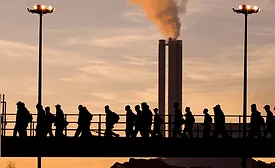
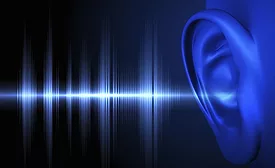
We live in a noisy world. Some noises can damage our hearing, leading to hearing loss, tinnitus (ringing in the ears), and difficulty communicating especially in background noise. Permanent noise-induced hearing damage is incurable.
Drilling into concrete can be dusty, loud, and physically exhausting. It also can expose workers to silica dust from sand and rock, which can damage the lungs if inhaled. Drilling also exposes workers to hand vibration and noise at levels well above recommended limits. Now, two NIOSH-funded studies through CPWR–The Center for Construction Research and Training and the University of California at Berkeley have identified ways to reduce these hazards.
Did you know that a single exposure to excessive noise can cause permanent hearing loss? That means that cutting your lawn, taking in a concert, going to a sporting event or even enjoying fireworks can damage your hearing.
Did you know that you have a “daily sound allowance”?
There may be many things you don’t know about noise induced hearing loss (NIHL).
Noise monitoring instrument suppliers and manufacturers, Cirrus Research, have taken a further step in cementing their position as the one of the world’s leading noise experts, as they have just received UKAS accreditation for the calibration of sound level meters, acoustic calibrators and octave band filters.
It may seem obvious, but it bears repeating: loud noises can cause permanent hearing loss. And once hearing is gone, you can’t get it back.
The National Institute for Occupational Safety and Health (NIOSH) wants to remind people during October – National Protect Your Hearing Month – that noise induced hearing loss (NIHL) can be prevented. According to NIOSH, about 70% of people who are exposed to loud noise never or seldom wear hearing protection.
Most employers are aware that occupational noise has the potential to cause permanent hearing loss in exposed workers. Less well known, and less studied, is the link between occupational noise exposure and tinnitus.
During this year’s National Protect Your Hearing Month—observed each October—learn how to protect yourself, your family and co-workers from noise-induced hearing loss (NIHL).
Most people with hearing loss get it with aging. Two out of three people over 70 have trouble hearing. But on average only about 20 percent of adults who have a hearing loss actually use a hearing aid. Research shows that hearing loss is associated with higher risks of hospitalization, depression, and especially dementia.
Viruses and blood flow issues can, in rare cases, trigger sudden and profound hearing loss. Research supports the use of hyperbaric oxygen treatments to restore hearing in some patients.
A review of the collected evidence suggests that -- added to standard drug therapy -- hyperbaric oxygen treatment "is the most beneficial treatment option" for what doctors call "sudden sensorineural hearing loss," according to a specialist in hyperbaric medicine at the National Maritime Medical Center in Seoul.
About 66,000 Americans are surprised each year by a diagnosis of sudden sensorineural hearing loss, or sudden deafness. A new study, published in the journal JAMA Otolaryngology–Head & Neck Surgery, suggests it isn’t as rare as some think — occurring in up to 20 per 100,000 people.