Kansas City Chiefs fans' broke Seattle Seahawks' fans' record of having the loudest outdoor stadium by creating 142.2 decibels worth of noise at Arrowhead Stadium during a Monday night game on September 29, 2014.
By comparison, standing on an aircraft carrier has a noise level of 140 decibels. Standing 30 feet from a jet at take-off has a noise level of 150 decibels.
People who wear earplugs at work may not be getting the full protection they need. That's because they're not wearing earplugs properly – through no fault of their own. Most earplugs employ a one-size-fits-all approach, yet ears vary widely from person to person.
Research conducted by the Centers for Disease Control and Prevention (CDC) on noise-induced hearing loss in non-workplace settings has produced some alarming statistics. Testing on nearly 4,000 adults in the U.S. in 2014 found that:
Approximately 15% of American adults, aged 18 and older, reported some degree of trouble with hearing—about as much as the prevalence reported for both diabetes and cancer combined (Vital Health Stat 10. 2014;260:1 http://bit.ly/2lZlMX0).
Nearly 24% of adults have measurable hearing damage in one or both ears.
Nearly 50% of adults with this damage were not exposed to noise at work (MMWR. 2017; 66[5]:139 http://bit.ly/2lZxpNr).
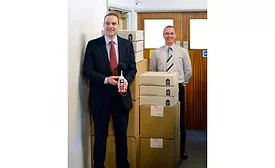
Leading noise monitoring specialist Cirrus Research has just completed a six-figure contract to supply the Costa Rican government with 50 of its Optimus Red sound level meters
November 10, 2017
The large order of 50 Optimus Reds were recently shipped to the Central American country where they are going to be deployed by the Government's Road Safety Council in a campaign to reduce traffic noise pollution in some of its most built-up cities such as the Capital, San Jose.
The Optimus Red kits had already been used by the Costa Rican police force and proved so popular among the officers for its user-friendly application and reading accuracy that the Road Safety Council followed suit.
10. Nursery Worker or Teacher (85 dB)
A class of 30 children can be exceptionally noisy. Nursery workers and teachers suffer the effects of excessive noise — up to 85 dB — which, with continued and prolonged exposure, can cause damage to the eardrum.
The most widespread and well-documented subjective response to noise is annoyance, which may include fear and mild anger, related to a belief that one is being avoidably harmed. Noise is also seen as intrusive into personal privacy, while its meaning for any individual is important in determining whether that person will be annoyed by it.
Evolution did not equip you to live in a world of constant noise. Your nervous system was engineered by natural selection for an environment of almost total quiet. Nature is mostly filled with soft, quiet sounds: leaves rustling, water trickling, insects buzzing. An animal call here and there. This is what your amygdala (the fear center in the brain) rates as a normal sound level. Sharp sounds, loud bangs, people yelling and crying, revving engines and the like all trigger a fear/danger response.
Unwanted and potentially unhealthy noise permeates everything we do -- our homes, offices, leisure time, even our sleep, says the National Academy of Engineering.
The worst noisemakers are machines -- all forms of transportation, including planes, trains, cars and trucks; lawnmowers, snow blowers, leaf blowers and other loud household products; and manufacturing machines.
According to studies, the noisiest cities are the largest ones (those with a population in excess of one million). The quietest among them is Phoenix, AZ at only 47.2 dBA. Chicago, IL is on the other side of the scale – the average noise level here is 54.8 dBA.
The Anchorage municipality is technically the quietest city with a population greater than 250,000; the average noise level here is 34.5 dB, which is more in line with the numbers encountered in small villages.
While most industrial facilities offer hearing protection to their employees, there are some very basic, yet overlooked, questions you can ask of your hearing conservation program (HCP) to determine if you are maximizing its effectiveness.