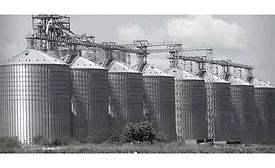
The growing enthusiasm for the annual National Safety Stand-Down to Prevent Falls in Construction has given rise to a new, similar event: the National Safety Stand-Up for Grain Safety Week. It’s happening this week. The event is designed to raise awareness about the hazards in the grain handling industry, which include engulfment/entrapment; slip, trip, and fall prevention; mechanical hazards; machine guarding; and lockout/tagout. Demonstrations of those hazards – along with discussions about how to abate them, were held at the Asmark Institute Agricenter in Bloomington, Illinois yesterday.
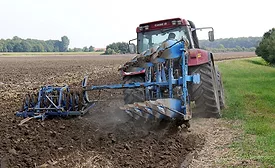
Rollover protective structures, or ROPS, saved more than $4 million in prevented deaths and injuries among New York State farm workers from 2007 to 2017, according to a NIOSH-funded study published in the American Journal of Public HealthExternal.
ROPS, which became standard tractor equipment in 1985, help prevent injuries from tractor overturns –the leading cause of farm-related deaths.
OSHA has cited Thiele Dairy in Clearwater, Nebraska for failing to develop and implement safety and health programs related to grain bin entry after an employee suffered fatal injuries.
OSHA inspectors determined that an operating sweep auger lacerated an employee's leg as he attempted to remove corn from inside a grain bin at the dairy.
As the dim early light washed over the Appalachian countryside, Jason Kingsley began his climb up the side of an 80-foot silo. Kingsley was not a morning person. But he was also broke and unemployed. So when a dairy farmer named Ronald Wood called to ask him to help to rescue a piece of machinery that had accidentally been buried under tons of hay and legumes, Kingsley said yes.
It’s old news but not surprising news. Minnesota researchers studied the nature, incidence, and cause of work‐related amputation injuries between 1994-1995. 832 workers were identified as having amputation injuries during these years – and incidence rate of 39 per 100,000.
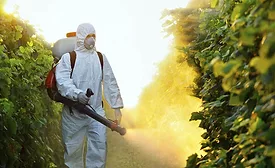
OSHA has launched a new program to address hazards from exposure to fertilizer-grade ammonium nitrate (FGAN) and agricultural anhydrous ammonium. The Regional Emphasis Program (REP) will be effective in the states of Arkansas, Kansas, Louisiana, Missouri, Nebraska, Oklahoma, and Texas.
For the second time in recent months, the U.S. Department of Labor has extracted penalties from a California farm business blamed for the deadly crash of a vehicle transporting migrant field workers to their jobs.
Next week, April 9-13, is “Stand-Up for Grain Engulfment Prevention Week,” an effort on the part of OSHA and the National Grain and Feed Association to reduce the number of grain engulfment deaths in the U.S. – which usually occur from suffocation.
Safely operating large, potentially dangerous construction and agricultural equipment can be challenging. Information that enhances training and usage can help reduce the risks of working with such equipment.
One source of information about equipment safety is the Association of Equipment Manufacturers (AEM), which has resources available to both its 900+ members and to the general public.