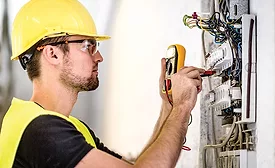
Eager to get to that project you’ve been planning – the one that will require you to use power tools? In addition to the obvious hazards (saws cut off about 4,000 fingers in the U.S. each year, for instance), there are electrical hazards that you may not be thinking about – but you should be.
Industrial work is somewhat known for its risk for injury. However, it's still not something people often think about when actually doing the work that risks so much injury in such a substantial way. There are various ways injuries can happen when doing industrial work.
The final version of the 2018 edition of NFPA 70E® - Standard for Electrical Safety in the Workplace® is scheduled to be published next month (September) and will be active 15 days after publication.
A group of schoolkids on a field trip noticed something strange when swimming at Martha’s Vineyard, an island near Cape Cod, Massachusetts popular with vacationers.
NFPA states that hundreds of deaths and thousands of burn injuries occur each year due to shock, electrocution, arc flash, and arc blast — and most could be prevented through compliance with NFPA 70E: Standard for Electrical Safety in the Workplace®.
What is the first category that comes to mind when you think about the hazards that miners face? Chances are it's not electrical, yet electrical accidents are the leading cause of mining fatalities, responsible for more than six percent of all mining industry deaths between 2000 and 2009.
Just in time for National Electrical Safety Month – May -- the Electrical Safety Foundation International (ESFI) is launching its annual effort to help reduce electrically-related fatalities, injuries, and property loss. This year’s campaign theme is "Decoding the National Electrical Code® (NEC) to Prevent Shock and Electrocution," which features resources to help protect against common electrical hazards.
Flame-resistant clothing company highlights key hazards to encourage proactive safety measures
March 10, 2017
Flash fire, arc flash and other thermal hazards pose a significant safety threat in a variety of workplaces. Recognizing the key causes of these hazards in industrial settings — as well as wearing the proper personal protective equipment (PPE) — can go a long way toward reducing worker injuries. In light of this, Workrite Uniform Company, a flame-resistant (FR) clothing manufacturer, encourages all industrial personnel to pay careful attention to the following common fire starters and implement proper safety measures.