Responders need certified PPE
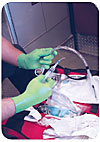
When accidents or emergencies occur, isn’t it reassuring to know there are people who are willing to help? EMTs, firemen, police officers and many others devote their time to ensure the well-being of others. But who keeps these emergency responders safe? What guidelines exist to protect the health and safety of these heroes?
In the United States there is an organization that considers the needs of such workers. The National Fire Protection Association (NFPA) provides standards, research and other information on fire prevention and public safety. Comprised of professionals from a diverse cross-section of society, the NFPA standards committees have one common goal: to ensure the safest working conditions and best personal protective equipment (PPE) for emergency response personnel.
Specific focus
While NFPA standards pertain to a wide variety of work environments in the U.S., the NFPA 1999 Standard on Protective Clothing for Emergency Medical Operations has a specific focus. Developed by the Technical Correlating Committee on Fire and Emergency Services Protective Clothing and Equipment, the NFPA 1999 standard establishes performance criteria for hand, torso, limb and face protection for emergency services responders during incidents that involve emergency medical operations.The primary objective in the development of NFPA 1999 is to provide emergency response personnel with garments, including gloves and face wear, that protect against exposure to bloodborne pathogens during emergency medical operations. This standard defines the minimum performance requirements for protective clothing as required by OSHA.
Why create a standard so specific? The main concern was the possible exposure of medical personnel to hepatitis and HIV. These highly pathogenic viruses have been the major worry of healthcare providers for the past two decades and, with the recent emergence of terrorist activity and fears of a global pandemic, there are new fears over anthrax, smallpox, SARS and avian influenza.
Put to the test
In the safety industry, testing procedures need to address several items before being put into practice. Many test methods and performance requirements are based on surveys of emergency medical services personnel from their actual experiences in the field.PPE garments must pass a variety of requirements before use, including viral penetration protection, overall liquid-tight integrity, material strength, physical hazard resistance, seam strength and closure strength. The NFPA 1999 standard includes performance requirements for examination gloves, work gloves, cleaning gloves, footwear, footwear covers and face protection devices.
There are precise parameters for each individual piece of PPE. These standards ensure that no matter what kind of PPE is used, the user will be safe. The following is a sample of the criterion that is used to create the PPE standards:
Emergency medical exam gloves:
Sizing — The glove must be available in a variety of sizes consistent with internationally recognized EN-455 Standard on Medical Gloves for Single Use.
Liquid-tight integrity — The glove must have an AQL (Acceptable Quality Limit) of 1.5 or better using ISO sampling criteria.
Blood and body-borne pathogen protection — The glove must pass the Biopenetration test using the Bacteriophage Phi-X 174 test, with no penetration of the model virus for at least one hour of exposure of the entire glove to the test virus.
Rubber properties in tension — The glove must pass the tensile strength and elongation properties in an “as received†condition, following heat aging and after isopropyl alcohol immersion.
Puncture resistance — The exam glove must pass a puncture test and exhibit a minimal degree of protection (> 4.5 Newtons of force to puncture). This does not provide protection from a needle-like object, but rather a nail-like object.
Dexterity testing — The glove must exhibit a great degree of dexterity, including a marked difference in performance between bare hands and gloved hands.
Protein levels — The glove cannot have extractable proteins above 50 µg/g.
In addition to exam gloves, emergency medical work gloves and cleanup gloves are also specified in the latest version of NFPA 1999. They, too, require much of the same testing requirements needed by emergency medical exam gloves. Some additional testing requirements include chemical and abrasion resistance, grip test, donning ease and tactility.
Emergency medical work gloves provide the barrier protection from blood and liquid-borne pathogens, as well as a higher level of physical protection for incidents where rough or sharp surfaces could be contacted. In contrast, cleaning gloves are single-use items to protect wearers during cleaning and decontamination of EMS equipment. All of the performance requirements specified in NFPA standards are based on existing ASTM, EN or ANSI standards.
Most qualified garments
Today, security should be foremost on our minds. In an effort to provide the most qualified safety garments for first responders, the Department of Homeland Security announced in February 2004 that DHS grant money must be used to purchase PPE that has been certified as compliant with one of five different NFPA standards. While the war on terror may be headline news, it is important to note that many standards are pre-existing and were developed by the NFPA long before the attacks on September 11, 2001. They were written relying on hours of effort and expertise gleaned from years of experience in the field. Some of them even address unthinkable terrorist events. Others, such as NFPA 1999, are applicable to the everyday use of our local and national emergency medical services.Third-party certifications of PPE, like those for the NFPA 1999 for emergency medical services, are processes that are monitored by certifying bodies that visit the manufacturing facilities and perform inspections. Products that are certified by third-party organizations are proven to be the safest for emergency medical services personnel.
EMS personnel are there to protect us in times of trouble and emergency. NFPA 1999 certified products are their best protection.
Links
Looking for a reprint of this article?
From high-res PDFs to custom plaques, order your copy today!


