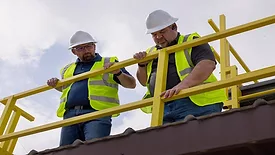
OSCO’s offering of ReadySeries products represents the most extensive fiberglass-reinforced plastic (FRP) modular solutions available for access and safety structure needs.
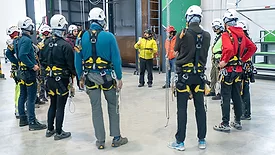
To safeguard workers from fall hazards, OSHA's fall protection standard focuses on both human-related factors and equipment-related concerns. Here are three steps you can implement to avoid fall regulation violations of the standard.
When guardrails are installed for worker safety in the state of California, Federal OSHA AND Cal/OSHA are the governing regulations that shall be followed. There are some differences in the specific regulations between the two regulations.
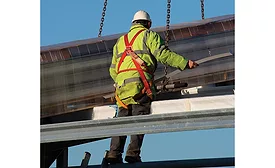
Preventing falls from heights when performing construction work is a top priority because falls are the leading cause of fatalities in the construction industry. According to the Bureau of Labor Statistics, in 2017, there were 366 fatal falls to a lower level out of 971 construction fatalities.
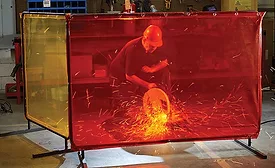
Welders are generally well-versed in the face shields, ear plugs, respirators and protective clothing required by 29 CFR 1910, but the guards and barricades also required by this standard are often misunderstood and underutilized.
The owner of a Bensonhurst, NY construction company and his businesses have been indicted on manslaughter and other charges stemming from an incident at a Coney Island construction site in April 2015 that left a 50-year-old construction worker dead, Brooklyn District Attorney Ken Thompson and Department of Investigation Commissioner Mark G. Peters announced.
A Pennsylvania company hired to provide labor for a store remodeling job has been fined $93,000 by OSHA for exposing its employees to fall and other hazards.
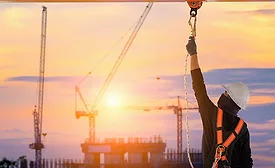
Employers must set up the work place to prevent employees from falling off of overhead platforms, elevated work stations or into holes in the floor and walls. OSHA requires that fall protection be provided at elevations of four feet in general industry workplaces, five feet in shipyards, six feet in the construction industry and eight feet in longshoring operations.
OSHA offers best practices on avoiding injuries and illness for the oil and gas industry. Even though you may be wearing protective gear to prevent slips, trips and falls, they still happen. The following guidelines should be used to either prevent slips, trips and falls or to minimize the consequences if they should happen.
A Texas drilling company has been cited by OSHA for seven safety violations, after an employee was electrocuted while performing repair work on an oil drilling rig.