ISHN logo
search
cart
facebook twitter linkedin youtube
  • Sign In
  • Create Account
  • Sign Out
  • My Account
ISHN logo
  • NEWS
    • Today's News
    • Global Safety News
    • Government Regulations
  • PRODUCTS
    • Product Innovations
    • Featured Products
  • TOPICS
    • Environmental Health and Safety
    • Facility Safety
    • Workplace Health
    • Occupational Safety
    • PPE
    • More Topics
  • CONSTRUCTION
  • TECHNOLOGY
  • COLUMNS
    • Best Practices
    • Dave Johnson: What’s going on
    • Editorial Comments
    • Leading Safety
  • MULTIMEDIA
    • ISHN Podcast
    • Videos
    • Cold Stress Education Quiz
    • Webinars
    • White Papers
  • MORE
    • Buyer's Guide
    • Newsletters
    • Convention Companion
    • Polls
    • Events
    • ISHN Store
    • Sponsor Insights
  • EMAGAZINE
    • eMagazine
    • Archived Issues
    • Contact
    • Advertise
  • JOIN TODAY!
Government Safety RegulationsOccupational SafetyConstruction Industry Safety and Health

The differences between guardrail standards compliant with OSHA 1910 and Cal/OSHA

They're often the first choice for passive fall protection
By Matt Boulant, PE
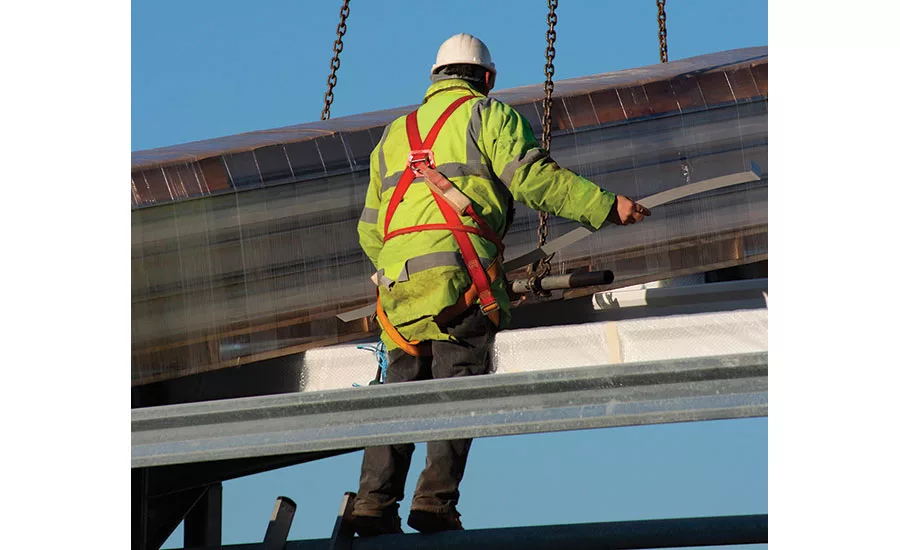
A Construction Worker Protected by a Guardrail and a Fall Arrest System

This construction worker is protected from falling by a fall arrest system, and a guardrail.

September 5, 2023

The General Duty Clause of the Occupational Safety and Health Act (Federal OSHA) requires employers to provide a workplace free from recognized hazards that may cause serious injury or death. This clause is often used by OSHA to enforce fall protection requirements. OSHA follows a hierarchy of fall protection controls, which prioritizes certain methods over others. Guardrails are considered one of the preferred methods of fall protection, alongside personal fall arrest systems (PFAS) and safety nets. They are often the first choice for providing passive fall protection.

Guardrails are designed to passively protect workers from falls. Design requirements and loading criteria for guardrails can be found in city adopted building codes. Where code allowed exceptions are met (such as the occupancy of the building is type S and the occupancy load is less than 50), Federal OSHA regulations and California Division of Occupational Safety and Health (Cal/OSHA) regulations apply.

Differences between regulations

Federal OSHA regulations for guardrail are found throughout the country. However, Cal/OSHA regulations are only found in California along with Federal OSHA regulations. When guardrails are installed for worker safety in the state of California, Federal OSHA AND Cal/OSHA are the governing regulations that shall be followed. There are some differences in the specific regulations between the two regulations.

Unlike most adopted building code regulations (such as the International Building Code and California Building Code), Cal/OSHA provides additional safety requirements to those set by Federal OSHA rather than a full replacement. When designing guardrails in California, both Federal OSHA and Cal/OSHA shall be adhered to.

Federal OSHA regulations state that guardrails must be installed along any open-sided walking surface or platform that is 4 feet or more above a lower level. The top rail of the guardrail must be 42 inches (+/- 3 inches) above the walking surface, and the mid-rail must be installed halfway between the top rail and the walking surface. The guardrails must be able to withstand a force of at least 200 pounds applied in a downward or outward direction. When the 200-pound point load is applied, the top rail shall not deflect to a height of less than 39”.

Cal/OSHA regulations are similar, but there are some differences. Most importantly, Cal/OSHA states that guardrails shall be provided on all open sides of unenclosed elevated work locations where the elevation difference to the level below is more than 30 inches different. Cal/OSHA also requires that the top rail of the guardrail must be installed between 42 and 45 inches above the walking surface with a permissible height tolerance of 1 inch. Additionally, Cal/OSHA requires that the guardrails must be able to withstand a live load force of at least 20 pounds per linear foot applied in a downward or outward direction along the top rail in addition to Federal OSHA requirements.

The spacing of vertical posts differs between the two sets of code as well. When designing a guardrail system outside of California, the vertical post spacing is typically governed by the horizontal span of the top rail by applying a 200 lbs point load at the center. Federal OSHA does not specify a maximum post spacing but allows for calculations to optimize the layout. Cal/OSHA limits post spacings to 8 feet on center even if the posts and rails are capable of longer spans. 

Toeboards are installed at the base of guardrails to protect from objects falling from between the guardrail posts. Both Federal OSHA and Cal/OSHA require toeboards to be a minimum of 3.5 inches tall as measured from the top edge of the toeboard to the level of the walking surface with no more than a ¼ inch gap between the bottom of the toeboard and the walking surface. Federal OSHA does provide an exception around vehicle repair, service, or assembly pits for the toeboard height to be reduced to 2.5 inches.

It's also worth noting that Cal/OSHA has additional requirements for guardrails in specific industries or situations, such as construction and scaffolding. Therefore, it's important for employers in California to be familiar with the Cal/OSHA regulations specific to their industry and work environment to ensure compliance and worker safety.

KEYWORDS: Cal/OSHA Fall Protection guardrails OSHA standards

Share This Story

Looking for a reprint of this article?
From high-res PDFs to custom plaques, order your copy today!

Matt Boulant, PE, is Engineering Manager, West Division at Diversified Fall Protection.

Recommended Content

JOIN TODAY
to unlock your recommendations.

Already have an account? Sign In

  • forklift safety

    Exploring the latest technologies in forklift safety

    With more staff and more stock in warehousing now more...
    Facility Safety
    By: Josh Cramer
  • welding

    All about welder’s flash or arc eye

    A flash burn is a painful inflammation of the cornea,...
    Environmental Health and Safety
  • dangerous jobs

    The 10 most dangerous jobs in the U.S.

    On-the-job deaths have been rising — hitting the highest...
    Government Safety Regulations
    By: Benita Mehta
Manage My Account
  • eMagazine Subscriptions
  • ISHN Newsletter & Other Newsletter Alerts
  • Online Registration
  • Manage My Preferences
  • Subscription Customer Service

More Videos

Sponsored Content

Sponsored Content is a special paid section where industry companies provide high quality, objective, non-commercial content around topics of interest to the ISHN audience. All Sponsored Content is supplied by the advertising company and any opinions expressed in this article are those of the author and not necessarily reflect the views of ISHN or its parent company, BNP Media. Interested in participating in our Sponsored Content section? Contact your local rep!

close
  • man wearing the the Sundström SR200 Full Face Mask Respirator
    Sponsored byOHD

    5 Fit Testing Mistakes That Could Cost You

  • This image shows Magid AcuSpex polarized blue mirrored safety glasses.
    Sponsored byMagid Glove and Safety

    Construction PPE Guide: What Crews Need for Each Task

  • lone worker in confined space
    Sponsored byAlphasense Ltd.

    GET THE LEAD OUT of your Safety Oxygen Sensors!

Popular Stories

SpaceX 7 launch

OSHA Investigating Fatal Fall at SpaceX Starbase

Automated loading dock equipment

After March 2026 Rivian Death, Safety Managers Reassess Loading Dock Systems Under OSHA's Warehouse Emphasis Program

psychology in the workplace

Most Workplaces Measure Psychological Safety, Ignoring Psychosocial Risks

top 10 most dangerous jobs

Poll

Seasonal Readiness

With the federal heat stress prevention rule on the horizon, which area of your safety program needs the most attention?
View Results Poll Archive

Products

Surviving an OSHA Audit A Management Guide, 2nd Edition

Surviving an OSHA Audit A Management Guide, 2nd Edition

See More Products

ISHN Podcasts

Related Articles

  • Assessing the animosity between CSB and Cal/OSHA

    See More
  • California

    Cal/OSHA approves revised emergency temporary standards

    See More
  • One year after the coup: Who’s running the show at Cal/OSHA?

    See More

Related Products

See More Products
  • 9781264257829_24.jpeg

    Construction Safety: Health, Practices and OSHA

See More Products

Related Directories

  • Uticom Systems Inc.

    Uticom Systems, Inc. designs, engineers and manufactures safety signs, labels and tags compliant to all OSHA / ANSI / NFPA safety standards. Uticom has a complete in-house art department that can create products by request that follow specific requirements. (i.e. logos, extreme fade, chemical & abrasion resistance, phone number)
×

Become a Leader in Safety Culture

Build your knowledge with ISHN, covering key safety, health and industrial hygiene news, products, and trends.

JOIN TODAY
  • RESOURCES
    • Advertise
    • Contact Us
    • Directories
    • Manufacturing Division
    • Store
    • Want More
  • SIGN UP TODAY
    • Create Account
    • eMagazine
    • Newsletters
    • Customer Service
    • Manage Preferences
  • SERVICES
    • Marketing Services
    • Reprints
    • Market Research
    • List Rental
    • Survey/Respondent Access
  • STAY CONNECTED
    • LinkedIn
    • Facebook
    • YouTube
    • X (Twitter)
  • PRIVACY
    • PRIVACY POLICY
    • TERMS & CONDITIONS
    • DO NOT SELL MY PERSONAL INFORMATION
    • PRIVACY REQUEST
    • ACCESSIBILITY

Copyright ©2026. All Rights Reserved BNP Media, Inc. and BNP Media II, LLC.

Design, CMS, Hosting & Web Development :: ePublishing