ISHN logo
search
cart
facebook twitter linkedin youtube
  • Sign In
  • Create Account
  • Sign Out
  • My Account
ISHN logo
  • NEWS
    • Today's News
    • Global Safety News
    • Government Regulations
  • PRODUCTS
    • Product Innovations
    • Featured Products
  • TOPICS
    • Environmental Health and Safety
    • Facility Safety
    • Workplace Health
    • Occupational Safety
    • PPE
    • More Topics
  • CONSTRUCTION
  • TECHNOLOGY
  • COLUMNS
    • Best Practices
    • Dave Johnson: What’s going on
    • Editorial Comments
    • Leading Safety
  • MULTIMEDIA
    • ISHN Podcast
    • Videos
    • Cold Stress Education Quiz
    • Webinars
    • White Papers
  • MORE
    • Buyer's Guide
    • Newsletters
    • Convention Companion
    • Polls
    • Events
    • ISHN Store
    • Sponsor Insights
  • EMAGAZINE
    • eMagazine
    • Archived Issues
    • Contact
    • Advertise
  • JOIN TODAY!

Textured floors, footwear & cleaning

By Robert Kravitz
March 3, 2006


Various studies have been conducted in industrial environments to assess situations that most often contribute to slip-and-fall accidents. Among the findings:

  • Many slip-and-fall accidents happen when workers believe the floor is in “satisfactory” condition, requiring them to wear no special footwear or take other safety precautions. Workers go about their usual routine but then either lean against a counter or stretch to reach something, and the accident occurs.
  • Some slip-and-fall accidents occur because products or materials have fallen onto the floor, requiring busy workers to work around the spill. While some spillage is common in an industrial setting, if it is excessive or happens regularly, an engineering solution of some kind may be required to protect workers.
  • Poor floor drainage is another issue. Spillage, such as animal matter and vegetables commonly found in a food-processing facility, or oil, grease, and fine debris in other types of industrial settings, can accumulate in and near floor drains, preventing them from functioning properly. As this matter gathers around the plugged drain, it can contribute to a slip and fall. In addition, it can be tracked throughout the work area, spreading the danger.
  • Footwear is critically important. Some studies found workers do not always wear proper footwear, such as rubber-soled shoes with a tread pattern that improves traction. Plus, footwear is not always cleaned regularly or replaced as it begins to wear.
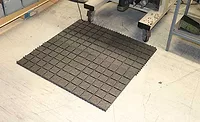
  • Floors should be nonporous, easy to clean, and textured for increased slip-resistance. Floors should also withstand high traffic, high temperatures, as well as powerful cleaning chemicals. Sealants applied to the floor must be highly slip-resistant and made specifically for industrial applications. Not all sealants can withstand the heavy traffic in these types of environments. Studies have found that as cardboard and plastic containers, steel-wheeled trolleys, bins, and tray racks are rolled or pushed over a floor, the sealant can lose its slip-resistance qualities quickly.

    Housekeeping

    Of course, the cleanliness of a floor is a major concern. No matter how careful workers are, what type of floor is installed, or what slip protection is applied to the floor, if the floor is not cleaned and maintained well, it will be slippery. And if the floor is slippery, the chances of an accident occurring are high.

    Many food-processing and industrial floors are cleaned using powerful cleansers or degreasers that are mopped onto the floor. To remove excess soil and buildup, custodians often use a deck brush to loosen grit. They then mop the floors with clean rinse water or hose them down to remove the chemicals and debris. If they mop the floors, it is not uncommon that they have to repeat the process.

    In many settings, they also machine scrub the floors regularly, if not daily, usually using a standard rotary floor machine and scrubbing pad. The goal is to remove as much debris from the floors and grout areas as possible to improve safety and reduce the possibility of slip-and-fall accidents.

    But as the pad becomes soiled, it can actually spread dirt and soils into pores and grout areas. These soils can build up and result in a slip and fall.

    Newer floor care technologies have been introduced that appear to alleviate this problem, more thoroughly clean industrial floors, and help to reduce slip-and-fall accidents. Instead of using pads, these machines use cylindrical brushes that penetrate the textured areas of the floor, pores, and grout to remove grease, grit, and soils.

    “Unlike conventional round or rotary buffers, cylindrical machines have counter-rotating brushes on each side of the machine rotating at more than 1,000 rpm at 3.5 pounds per square inch,” says David Frank, president of the American Institute for Cleaning Sciences, Highlands Ranch, Colorado, an independent testing organization for the cleaning industry. “Although these machines weigh as much as a conventional buffer, they have six times the contact pressure, which also improves their ability to deep-clean floors.”

    Forty-one percent of all workers’ compensation costs are attributed to slip-and-fall accidents, according to the National Floor Safety Institute. Textured floors, proper footwear, improved safety procedures, and proper cleaning are all essential to prevent these costly injuries. Newer floor care technologies are now available that help improve worker safety, which in turn helps improve productivity and the employer’s bottom line.

    Sidebar: When someone slips and falls…

  • Notice the condition of the victim’s footwear.
  • Inspect the area around the fall for surface contamination.
  • Secure as much information as possible from the victim.
  • Secure statements from witnesses.
  • Photograph the fall area and victim’s clothing and shoes, if possible.
  • Fill out a detailed accident report (limit commentary to known facts and what the victim alleges).
  • Ask employees to be careful about what they say regarding the circumstances of the accident.
  • Notify your insurance company of any accidents.
  • Share This Story

    Looking for a reprint of this article?
    From high-res PDFs to custom plaques, order your copy today!

    Robert Kravitz is a frequent writer for the professional cleaning and building industries. He may be reached at rkravitz@rcn.com.

    Recommended Content

    JOIN TODAY
    to unlock your recommendations.

    Already have an account? Sign In

    • forklift safety

      Exploring the latest technologies in forklift safety

      With more staff and more stock in warehousing now more...
      Workplace Training Strategies
      By: Josh Cramer
    • welding

      All about welder’s flash or arc eye

      A flash burn is a painful inflammation of the cornea,...
      Environmental Health and Safety
    • dangerous jobs

      The 10 most dangerous jobs in the U.S.

      On-the-job deaths have been rising — hitting the highest...
      Transportation Safety
      By: Benita Mehta
    Manage My Account
    • eMagazine Subscriptions
    • ISHN Newsletter & Other Newsletter Alerts
    • Online Registration
    • Manage My Preferences
    • Subscription Customer Service

    More Videos

    Sponsored Content

    Sponsored Content is a special paid section where industry companies provide high quality, objective, non-commercial content around topics of interest to the ISHN audience. All Sponsored Content is supplied by the advertising company and any opinions expressed in this article are those of the author and not necessarily reflect the views of ISHN or its parent company, BNP Media. Interested in participating in our Sponsored Content section? Contact your local rep!

    close
    • man wearing the the Sundström SR200 Full Face Mask Respirator
      Sponsored byOHD

      5 Fit Testing Mistakes That Could Cost You

    • This image shows Magid AcuSpex polarized blue mirrored safety glasses.
      Sponsored byMagid Glove and Safety

      Construction PPE Guide: What Crews Need for Each Task

    • lone worker in confined space
      Sponsored byAlphasense Ltd.

      GET THE LEAD OUT of your Safety Oxygen Sensors!

    Popular Stories

    SpaceX 7 launch

    OSHA Investigating Fatal Fall at SpaceX Starbase

    Automated loading dock equipment

    After March 2026 Rivian Death, Safety Managers Reassess Loading Dock Systems Under OSHA's Warehouse Emphasis Program

    psychology in the workplace

    Most Workplaces Measure Psychological Safety, Ignoring Psychosocial Risks

    top 10 most dangerous jobs

    Poll

    Seasonal Readiness

    With the federal heat stress prevention rule on the horizon, which area of your safety program needs the most attention?
    View Results Poll Archive

    Products

    Surviving an OSHA Audit A Management Guide, 2nd Edition

    Surviving an OSHA Audit A Management Guide, 2nd Edition

    See More Products

    ISHN Podcasts

    Related Articles

    • Eliminate explosions with safe cleaning methods

      See More
    • ISHN0317_F5_pic.jpg

      Hard facts about Hard floors

      See More
    • See you in court

      See More
    ×

    Become a Leader in Safety Culture

    Build your knowledge with ISHN, covering key safety, health and industrial hygiene news, products, and trends.

    JOIN TODAY
    • RESOURCES
      • Advertise
      • Contact Us
      • Directories
      • Manufacturing Division
      • Store
      • Want More
    • SIGN UP TODAY
      • Create Account
      • eMagazine
      • Newsletters
      • Customer Service
      • Manage Preferences
    • SERVICES
      • Marketing Services
      • Reprints
      • Market Research
      • List Rental
      • Survey/Respondent Access
    • STAY CONNECTED
      • LinkedIn
      • Facebook
      • YouTube
      • X (Twitter)
    • PRIVACY
      • PRIVACY POLICY
      • TERMS & CONDITIONS
      • DO NOT SELL MY PERSONAL INFORMATION
      • PRIVACY REQUEST
      • ACCESSIBILITY

    Copyright ©2026. All Rights Reserved BNP Media, Inc. and BNP Media II, LLC.

    Design, CMS, Hosting & Web Development :: ePublishing