ISHN logo
search
cart
facebook twitter linkedin youtube
  • Sign In
  • Create Account
  • Sign Out
  • My Account
ISHN logo
  • NEWS
    • Today's News
    • Global Safety News
    • Government Regulations
  • PRODUCTS
    • Product Innovations
    • Featured Products
  • TOPICS
    • Environmental Health and Safety
    • Facility Safety
    • Workplace Health
    • Occupational Safety
    • PPE
    • More Topics
  • CONSTRUCTION
  • TECHNOLOGY
  • COLUMNS
    • Best Practices
    • Dave Johnson: What’s going on
    • Editorial Comments
    • Leading Safety
  • MULTIMEDIA
    • ISHN Podcast
    • Videos
    • Cold Stress Education Quiz
    • Webinars
    • White Papers
  • MORE
    • Buyer's Guide
    • Newsletters
    • Convention Companion
    • Polls
    • Events
    • ISHN Store
    • Sponsor Insights
  • EMAGAZINE
    • eMagazine
    • Archived Issues
    • Contact
    • Advertise
  • JOIN TODAY!

Pardon the interruption. . .

August 29, 2003
Have you been experiencing what economists call a "state of disequilibrium" lately? Feeling spooked by the endless rounds of layoffs?

Join the club. Everyone is having trouble understanding an economy that supposedly is on the road to recovery, yet keeps destroying jobs. Since March 2001, 2.1 million jobs have been lost in the U.S. New work, meanwhile, can be hard to find, especially for educated employees such as safety and health pros. Of almost two million workers who have been unemployed for at least half a year, one in five is a former executive, manager, or professional, according to a study by the National Employment Law Project.

Specific technical expertise can be an albatross in this economy, limiting job choices. Compounding the challenge, some technical work has become a commodity, courtesy of technological advances that have dumbed down jobs like air sampling. "The art has gone out of industrial hygiene," says one IH.

That chill wind you feel has a name. It is the gale of "creative destruction." Joseph Schumpeter, a Vienna-born, Harvard-educated economist coined the term in the 1930s. He's the rage in Washington these days. Capitalism, said Schumpeter, needs destruction in order to sustain itself. A never-ending cleansing process of sifting out loser companies and industries and reallocating resources to the winners.

Where are the winners?

This is how it can work in the safety and health world: An industrial hygienist in his 40s is taking stock after the recent mega-merger between his employer, for whom he's worked most of his adult life, and a competitor. "It's good for shareholders in the long run, lousy for employees," he says. "For every winner, there will be ten losers, some who will lose their jobs, be transferred or retooled.

"I feel a chapter is ending and beginning in my life with the passing of this deal. I'm carefully weighing options and opportunities in this new world."

This IH is going through his own personal process of creative destruction, or professional "mutation," a concept Schumpeter applied to evolving industries. It's messy, confusing, and for those out of work for months and months, painful and cruel. It's a process that could lead to this IH reinventing himself, his niche in the professional marketplace, his personal branding as a specialist. This is what creative destruction forces individuals, companies, entire professions to do.

He's embracing the chaos, as management consultant Tom Peters urges. We don't have much choice. In this "new economic order" there are no safe harbors.

Survival of the savviest

Creative destruction's regenerative process produces casualties - always. In the profession's ranks, call it safety and health Darwinism. Just listen to these pros discuss the profession's downsizing:

"A significant number of people that had safety jobs should never have been there in the first place," says consultant Carl Metzgar, CSP. "Since they weren't doing anything in the first place, eliminating their job didn't hurt anything."

"Perhaps those that got laid off were not really passionate about the profession," says Mark Hansen, CSP, immediate past president of the American Society of Safety Engineers. "The ones remaining sometimes work at a faster rate and a higher standard of quality. I've seen achievers perform at three to four times the pace of those just putting in time."

Progress comes at a price. "Companies are finally starting to view safety as a functional area that can be managed just like productivity, quality and cost," says safety engineer A.J. DeRose, CSP. "Companies have pushed safety responsibilities traditionally handled by the safety department out into operations. We've always said safety must be a line responsibility, I just don't think we realized that this would thin out the herd of safety professionals in the process."

Consultant Chip Dawson says he has a number of manufacturing clients where there is no full-time safety pro. Instead, a strong organizational culture values and supports safety.

It's inevitable. No industry, organization, professional society, group of professionals, heck, even a regulatory agency like OSHA, can hide from creative destruction.

Plan for disruption

If creative destruction is inevitable, you might as well plan for it - both professionally and in terms of managing your company's safety and health program. Why should your career and your program - especially in today's turbulent times - be any different from these examples:

  • U.S. automakers endured creative destruction when Toyota and the other Japanese imports hit the market with better manufacturing processes and better and cheaper cars in the 1980s.

  • IBM's loss was Microsoft's gain.

  • Word processors sent typewriters to the Smithsonian, just ask Smith Corona.

  • More recently, Lucent, Nortel, Motorola and other telecoms have shed thousands of jobs to stay viable.

  • Airlines now are asking for federal protection from the gale winds of creative destruction.

  • In 1987, Forbes magazine published its original "Forbes 100" list from 1917. Of those, 61 no longer existed. Only 18 corporations were still in Forbes' top 100 list 60 years later, including Kodak, DuPont, General Electric, Ford, General Motors, and Procter & Gamble.

    These companies survived, as Richard Foster and Sarah Kaplan point out in their book, "Creative Destruction," but not as superstars. The authors conclude, based on years of research, that even the most admired and best-run companies are unable to earn a return for their investors that outperforms the overall market for more than ten to fifteen years.

    The same can be said for probably most safety and health programs. How many will outperform national or industry injury and illness averages for longer than ten to fifteen years? Even DuPont's venerable safety program saw a spike in rates in the early 1990s that company officials attributed to a loss of focus. Many safety programs reach plateaus and coast.

    And the same goes for careers. How many careers today will follow an unimpeded, upward projectory for 30 or 40 years? "Maybe we safety professionals have done our job so well that we've worked ourselves out of a job," says Margaret Carroll, CSP, a consultant in New Mexico.

    The lesson? Safety and health programs, and careers, should not be constructed simply to survive. That's how programs and careers become outmoded. Accept creative destruction, and design your program and your career to be flexible. Don't get locked into convention. Too many safety programs and careers have cruised along on old attitudes and rules until reality bites and a newly-hired, hassled and harried manager asks: What's your value to the bottom line?

    "We must show that safety is an important business function that positively affects profits and losses," says A.J. DeRose. "Now it's all about demonstrating our value to the business."

    Cashing in on chaos

    OK, what's it take to cash in on creative destruction? To "deconstruct, transform, and rebuild" careers and programs, as one management expert says?

    The goal: Develop safety and health careers, and programs within organizations, that evolve with changes in the marketplace and meet the market's demand for value.

    This requires safety and health pros to be more than recordkeepers and inspectors, vapor or noise samplers, or OSHA police, says consultant Tom Lawrence.

    Here are some suggestions:

  • Think ahead. Research and anticipate emerging issues and future shocks. Know which way the gale winds of creative destruction are blowing.

  • Be organized for constant change. Know how to manage information to make sense of large volumes of numbers and words that describe issues and trends.

  • Be organized to innovate. Have a business plan for your career, and the safety and health program you currently manage. And have a Plan B just in case.

  • Be ready and able to abandon established, customary, familiar, and comfortable products, partners, services, relationships, skills, and organizations.

  • Have the will to conquer. The impulse to fight. The desire to prove yourself - and your program - superior to competitors.

  • Hone your ability to gather information quickly. To analyze (separate what's important from what's not important), and then communicate what you learn (through writing, speaking, and editing).

  • To expand your knowledge of issues and trends and coming changes, sharpen your listening and questioning skills.

  • Be an information sponge. Soak up news from as many sources as you can find.

  • Be open to change, ready for new circumstances.

  • Use your imagination, creativity, and information-gathering to develop ideas that will position you professionally - and position your safety and health program - to meet the demands of customers (managers, employees, clients, regulators, etc.)

  • Have courage to break with conventional wisdom, to plot your own course. Says one of safety's wise men, Dan Petersen: "The biggest challenge today is to break away from traditional safety thinking."

  • Have courage to make mistakes. Creative destruction guarantees misfortune.

  • Don't fret over being confused. No one has a fog-free crystal ball these days.

  • Have persistence. Says OSHA chief John Henshaw: "Staying on course requires persistence. As a sailor I know you can't set the direction of the wind. We can deal with sudden storms and hidden hazards provided we remain focused."

  • Doubt the wisdom of the status quo. (Such as climbing that linear career ladder.)

  • Don't get locked into practices that have proven successful in the past. (This is common with safety programs that emphasize benchmarking, follow-the-herd thinking, and 30-year-old OSHA standards.)

  • Follow Emerson's insight: Learn self-reliance by relying upon yourself.

  • Listen to what the market wants. Don't force an idea or service that's not wanted.

  • Your goal is not merely to "hang in there." Creative destruction is too remorseless for that. It forces us to be smart, optimistic, and resourceful.
  • Share This Story

    Looking for a reprint of this article?
    From high-res PDFs to custom plaques, order your copy today!

    Recommended Content

    JOIN TODAY
    to unlock your recommendations.

    Already have an account? Sign In

    • forklift safety

      Exploring the latest technologies in forklift safety

      With more staff and more stock in warehousing now more...
      Facility Safety
      By: Josh Cramer
    • welding

      All about welder’s flash or arc eye

      A flash burn is a painful inflammation of the cornea,...
      Environmental Health and Safety
    • dangerous jobs

      The 10 most dangerous jobs in the U.S.

      On-the-job deaths have been rising — hitting the highest...
      Transportation Safety
      By: Benita Mehta
    Manage My Account
    • eMagazine Subscriptions
    • ISHN Newsletter & Other Newsletter Alerts
    • Online Registration
    • Manage My Preferences
    • Subscription Customer Service

    More Videos

    Sponsored Content

    Sponsored Content is a special paid section where industry companies provide high quality, objective, non-commercial content around topics of interest to the ISHN audience. All Sponsored Content is supplied by the advertising company and any opinions expressed in this article are those of the author and not necessarily reflect the views of ISHN or its parent company, BNP Media. Interested in participating in our Sponsored Content section? Contact your local rep!

    close
    • man wearing the the Sundström SR200 Full Face Mask Respirator
      Sponsored byOHD

      5 Fit Testing Mistakes That Could Cost You

    • This image shows Magid AcuSpex polarized blue mirrored safety glasses.
      Sponsored byMagid Glove and Safety

      Construction PPE Guide: What Crews Need for Each Task

    • lone worker in confined space
      Sponsored byAlphasense Ltd.

      GET THE LEAD OUT of your Safety Oxygen Sensors!

    Popular Stories

    SpaceX 7 launch

    OSHA Investigating Fatal Fall at SpaceX Starbase

    psychology in the workplace

    Most Workplaces Measure Psychological Safety, Ignoring Psychosocial Risks

    Worker Impairment

    How to Tell When a Co-Worker is Impaired? A Safety Pro’s Challenge

    top 10 most dangerous jobs

    Poll

    Seasonal Readiness

    With the federal heat stress prevention rule on the horizon, which area of your safety program needs the most attention?
    View Results Poll Archive

    Products

    Surviving an OSHA Audit A Management Guide, 2nd Edition

    Surviving an OSHA Audit A Management Guide, 2nd Edition

    See More Products

    ISHN Podcasts

    Related Articles

    • PSYCHOLOGY OF SAFETY: Pardon the inconvenience

      See More
    • The good, the bad and the ugly of respiratory protection

      See More
    • Illustrating the point: Choosing the right ART for the message

      See More

    Related Products

    See More Products
    • 1119906652.webp

      Alive and Well at the End of the Day: The Supervisor's Guide to Managing Safety in Operations, 2E

    • fearless world.jpg

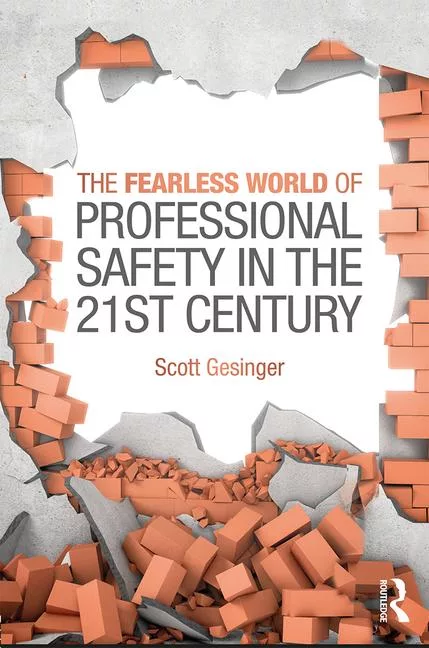
      The Fearless World of Professional Safety in the 21st Century

    See More Products

    Related Directories

    • The Back School

      The Back School facilitates reducing work-related injuries; increasing employee productivity, safety, efficiency and job satisfaction; and reducing absenteeism.
    ×

    Become a Leader in Safety Culture

    Build your knowledge with ISHN, covering key safety, health and industrial hygiene news, products, and trends.

    JOIN TODAY
    • RESOURCES
      • Advertise
      • Contact Us
      • Directories
      • Manufacturing Division
      • Store
      • Want More
    • SIGN UP TODAY
      • Create Account
      • eMagazine
      • Newsletters
      • Customer Service
      • Manage Preferences
    • SERVICES
      • Marketing Services
      • Reprints
      • Market Research
      • List Rental
      • Survey/Respondent Access
    • STAY CONNECTED
      • LinkedIn
      • Facebook
      • YouTube
      • X (Twitter)
    • PRIVACY
      • PRIVACY POLICY
      • TERMS & CONDITIONS
      • DO NOT SELL MY PERSONAL INFORMATION
      • PRIVACY REQUEST
      • ACCESSIBILITY

    Copyright ©2026. All Rights Reserved BNP Media, Inc. and BNP Media II, LLC.

    Design, CMS, Hosting & Web Development :: ePublishing