A FairWarning story
Gridlock on anti-lock brakes baffles motorcycle safety advocates
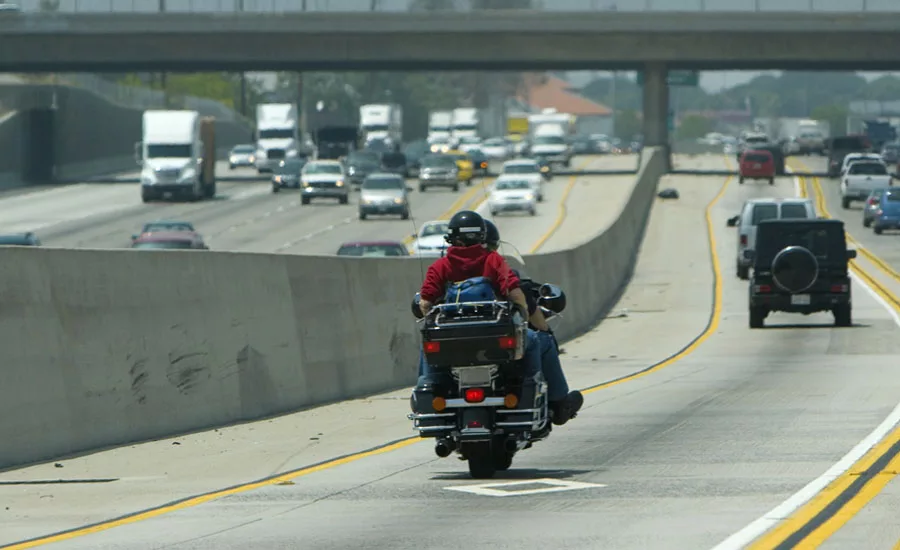
Improper braking has long been identified as a major factor in motorcycle crashes.
Studies have shown that most riders instinctively slam on the brakes to avoid accidents. But if the brakes are applied too hard, the wheels can lock, sending the bike into a tailspin or down to the ground. Braking on a motorcycle can be particularly tricky for less experienced riders and in poor weather because bikes have separate brake controls for the front and rear wheels, and either one can lock up.
ABS works by anticipating lockup, and modulating pressure on the brakes until traction is restored. While some riders may be able to stop as well or better with conventional brakes, it is a different story when conditions deteriorate.
“It’s one of those things silent in the background until you need it and then it has your back if the rider makes a mistake, panics or the road surface changes,” said Stacey Axmaker, who runs becrashfree.com, a web-based membership organization for riders who pledge to wear protective gear and take other crash-prevention measures. ABS is “great technology for motorcycles,” he said.
Less than a decade ago, NHTSA seemed close to mandating ABS on motorcycles, which long have been the most dangerous mode of travel. Motorcycle sales – and deaths – surged as a spurt of new motorcyclists, many of them older than the usual beginners in the past, started hitting the road. That, in turn, sent regulators scrambling to end the carnage.
Citing “potentially large benefits for braking improvements,” the safety agency put ABS on its regulatory agenda in July 2009, with plans to launch a rule-making process the next year.
By then, a significant and growing body of pro-ABS research had emerged, some conducted by the agency itself. Road tests consistently showed ABS outperforming conventional brakes in rider control and bike stability.
The Insurance Institute was the first to look at actual crash data, and its conclusions were stunning. Eventually, in a 2013 study, motorcycles equipped with ABS were found to be 31 percent less likely to be involved in fatal crashes, signaling the potential to save more than 1,500 lives a year if all bikes had the feature. In all, motorcycle deaths totaled 4,976 in 2015, up 8.3 percent from the year before though below 2008’s record high of 5,312.
Other research by an affiliated organization, the Highway Loss Data Institute, found that collision losses for ABS-equipped bikes were 21 percent lower than those for motorcycles with conventional brakes. ABS was seen as rivaling helmets as the best tool for reducing deaths and injuries.
Additional pro-ABS evidence piled up overseas. Researchers in Sweden concluded that 42 percent of all severe and fatal motorcycle accidents in that country could be avoided with motorcycle ABS. The Federal Research Institute of Germany determined in 2009 that benefits of ABS were “undeniable.”
The motorcycle industry pushed back, funding research that raised questions about ABS. But with the bulk of evidence behind ABS, the European Union voted to require it on medium and high-performance motorcycles starting in January 2016.
In the U.S., however, the push for ABS stalled. Engineers at NHTSA questioned whether it was the brakes or other factors leading to lower crash rates. Maybe, for instance, riders who chose ABS bikes tended to be more experienced or careful. The skepticism was fueled partly by the mixed safety record with early versions of ABS on cars.
The safety agency decided to launch its own study. Its methodology and conclusions remain controversial to this day.
The study used accident data involving motorcycles with, and without, ABS. But it made questionable judgments about the kinds of accidents that ABS brakes would likely prevent. For example, according to an analysis by the Insurance Institute, the study excluded some crashes where a vehicle turned left in front of the motorcyclist, on the debatable theory that there was nothing the biker could have done to prevent the collision.
The conclusion, in a report published in June 2010, was a muddle. In one scenario, NHTSA found that ABS bikes were actually slightly more crash-prone; in another, it said the data were too thin to provide answers. “Using this methodology, we did not find statistically-significant results to suggest that ABS affects motorcycle crash risk,” the authors concluded.
Critics considered the study an outlier, and said waiting for more data before acting would mean needlessly allowing more people to be killed.
“It is both defective and, by ignoring the other research available to NHTSA, disingenuous,” said Fergus Nolan, a Memphis, Tenn., rider and activist. Nolan runs a website called the Motorcycle Action Network, which is “dedicated to making American streets safer for motorcyclists and the drivers around them.”
Nonetheless, in March 2011, the agency dropped motorcycle ABS from its regulatory agenda. A report on the agency website declared: “Decision to evaluate with more data later.”
-Adrian Lund, president of the Insurance Institute for Highway Safety
The Insurance Institute petitioned NHTSA in 2013 to revive an ABS rulemaking but it was rebuffed. “We don’t see any action on their part to move this forward,” Lund said. “We are not entirely clear why.”David Strickland, NHTSA’s administrator from 2010 to 2014, said in an interview with FairWarning that he remains enthusiastic about the possibility of ABS-equipped motorcycles saving lives. But he said the agency faced a Catch 22: Too few motorcycles with ABS were being sold to give the agency enough crash data to conduct a thorough analysis that could justify making a new rule.
Other former NHTSA officials and engineers also defend the agency’s stance.
“When issuing a rule, the research and analysis has to be airtight,” said Marilena Amoni, a former associate administrator of the agency who signed off on the June 2010 ABS report.
Amoni has served on the board of a nonprofit group that supports a worldwide motorcycle ABS mandate as part of a road safety campaign backed by the United Nations and World Health Organization. “My personal views aside, the analysis wasn’t strong [enough] to support a rule,” Amoni said. “More research was needed.”
George Soodoo, a NHTSA engineer who oversaw much of the agency’s work on motorcycle ABS before retiring in 2015, dismissed the significance of foreign regulators moving ahead with ABS mandates. “They don’t have to show the same level of rigor we have,” he said.
Yet the agency’s ambivalence was apparent when BMW became the first manufacturer to offer ABS as standard equipment on its entire line of motorcycles. “It’s time for all of us in the motorcycle industry to embrace the benefits of ABS,” Pieter de Waal, a vice president in BMW’s U.S. unit, said in an April 2011 news release announcing the company’s ABS plans.
“Extensive testing by safety experts, law enforcement authorities and journalists around the world consistently demonstrates that ABS reduces overall crashes and saves lives.”
NHTSA cheered the company’s initiative. “We commend BMW for taking the lead to improve motorcycle safety,” Strickland, then the agency’s administrator, stated in the same news release. “Motorcycle fatalities and injuries have been on an upward trend for the past ten years and ABS and other safety technologies can help reduce these tragedies.”
About FairWarning
This story was reported by FairWarning (www.fairwarning.org), a nonprofit news organization based in Pasadena, Calif., that focuses on public health, safety and environmental issues.
Looking for a reprint of this article?
From high-res PDFs to custom plaques, order your copy today!
 Paul Feldman is a staff writer for FairWarning. Paul worked as a staff writer and editor at the Los Angeles Times for more than 30 years. He was a reporter on the Metro staff, and later a Metro desk editor, overseeing coverage of the environment, legal affairs and other topics. From 2003 through 2015, he served as an assistant foreign editor, working with a team of foreign correspondents on breaking news and features. He was a member of Metro teams that won two Pulitzer Prizes and two American Bar Assn. Silver Gavel awards. He also won the gold medal in a ping pong tournament on a Royal Caribbean cruise to Alaska. paul.feldman@fairwarning.org.