ISHN logo
search
cart
facebook twitter linkedin youtube
  • Sign In
  • Create Account
  • Sign Out
  • My Account
ISHN logo
  • NEWS
    • Today's News
    • Global Safety News
    • Government Regulations
  • PRODUCTS
    • Product Innovations
    • Featured Products
  • TOPICS
    • Environmental Health and Safety
    • Facility Safety
    • Workplace Health
    • Occupational Safety
    • PPE
    • More Topics
  • CONSTRUCTION
  • TECHNOLOGY
  • COLUMNS
    • Best Practices
    • Dave Johnson: What’s going on
    • Editorial Comments
    • Leading Safety
  • MULTIMEDIA
    • ISHN Podcast
    • Videos
    • Cold Stress Education Quiz
    • Webinars
    • White Papers
  • MORE
    • Buyer's Guide
    • Newsletters
    • Convention Companion
    • Polls
    • Events
    • ISHN Store
    • Sponsor Insights
  • EMAGAZINE
    • eMagazine
    • Archived Issues
    • Contact
    • Advertise
  • JOIN TODAY!
Workplace Health

A common pain in the toe…
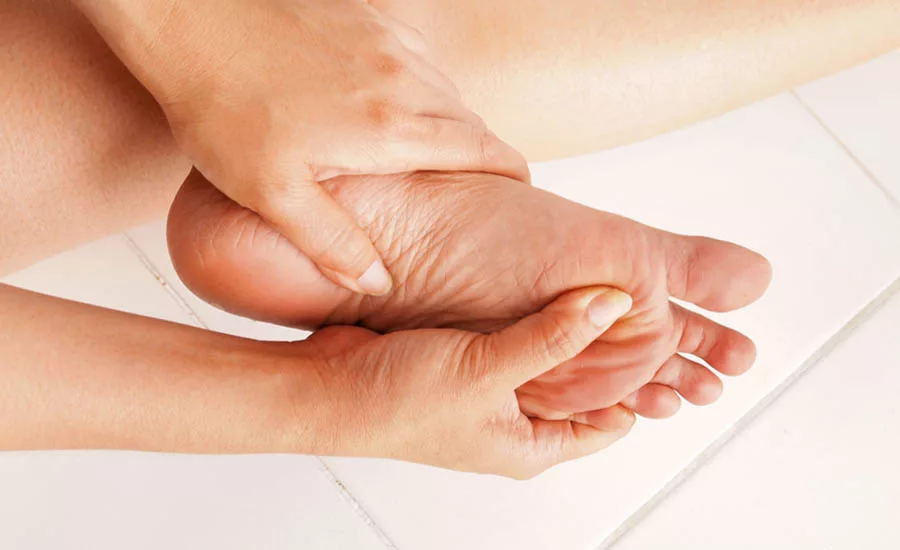
foot
January 22, 2018

Ingrown toenails are a common condition in which the corner or side of a toenail grows into the soft flesh. The result is pain, redness, swelling and, sometimes, an infection. Ingrown toenails usually affect your big toe.

Often you can take care of ingrown toenails on your own. If the pain is severe or spreading, your doctor can take steps to relieve your discomfort and help you avoid complications of ingrown toenails.

If you have diabetes or another condition that causes poor blood flow to your feet, you're at greater risk of complications of ingrown toenails.

Symptoms

Ingrown toenail symptoms include:

  • Pain and tenderness in your toe along one or both sides of the nail
  • Redness around your toenail
  • Swelling of your toe around the nail
  • Infection of the tissue around your toenail

See your doctor if you:

  • Experience severe discomfort in your toe or pus or redness that seems to be spreading
  • Have diabetes or another condition that causes poor blood flow to your feet and you experience any foot sore or infection

Causes

Common ingrown toenail causes include:

  • Wearing shoes or boots that crowd your toenails
  • Cutting your toenails too short or not straight across
  • Injuring your toenail
  • Having unusually curved toenails

Complications

Left untreated or undetected, an ingrown toenail can infect the underlying bone and lead to a serious bone infection.

Complications can be especially severe if you have diabetes, which can cause poor blood flow and damage nerves in your feet. So a minor foot injury — a cut, scrape, corn, callus or ingrown toenail — may not heal properly and become infected. A difficult-to-heal open sore (foot ulcer) may require surgery to prevent the decay and death of tissue (gangrene). Gangrene results from an interruption in blood flow to an area of your body.

Prevention

To help prevent an ingrown toenail:

  • Trim your toenails straight across. Don't curve your nails to match the shape of the front of your toe. If you have your toenails done at a salon, be sure to tell your pedicurist to trim your nails straight across. If you have a condition that causes poor blood flow to your feet and you can't trim your nails, see a podiatrist regularly to have your nails trimmed.
  • Keep toenails at a moderate length. Trim toenails so they're even with the tips of your toes. If you trim your toenails too short, the pressure from your shoes or boots on your toes may direct a nail to grow into the tissue.
  • Wear shoes that fit properly. Shoes that place too much pressure on your toes or pinch them may cause a nail to grow into surrounding tissue. If you have nerve damage to your feet, you may not be able to sense if your shoes fit too tightly. Take care to buy and wear properly fitted shoes, preferably from a shoe store specializing in fitting shoes for people with foot problems.
  • Wear protective footwear. If your work puts you at risk of injuring your toes, wear protective footwear, such as steel-toed shoes.
  • Check your feet. If you have diabetes, check your feet daily for signs of ingrown toenails or other foot problems.

Source: Mayo Clinic https://www.mayoclinic.org/diseases-conditions/ingrown-toenails/symptoms-causes/syc-20355903

Share This Story

Looking for a reprint of this article?
From high-res PDFs to custom plaques, order your copy today!

Recommended Content

JOIN TODAY
to unlock your recommendations.

Already have an account? Sign In

  • forklift safety

    Exploring the latest technologies in forklift safety

    With more staff and more stock in warehousing now more...
    Facility Safety
    By: Josh Cramer
  • welding

    All about welder’s flash or arc eye

    A flash burn is a painful inflammation of the cornea,...
    Environmental Health and Safety
  • dangerous jobs

    The 10 most dangerous jobs in the U.S.

    On-the-job deaths have been rising — hitting the highest...
    Construction Industry Safety and Health
    By: Benita Mehta
Manage My Account
  • eMagazine Subscriptions
  • ISHN Newsletter & Other Newsletter Alerts
  • Online Registration
  • Manage My Preferences
  • Subscription Customer Service

More Videos

Sponsored Content

Sponsored Content is a special paid section where industry companies provide high quality, objective, non-commercial content around topics of interest to the ISHN audience. All Sponsored Content is supplied by the advertising company and any opinions expressed in this article are those of the author and not necessarily reflect the views of ISHN or its parent company, BNP Media. Interested in participating in our Sponsored Content section? Contact your local rep!

close
  • man wearing the the Sundström SR200 Full Face Mask Respirator
    Sponsored byOHD

    5 Fit Testing Mistakes That Could Cost You

  • This image shows Magid AcuSpex polarized blue mirrored safety glasses.
    Sponsored byMagid Glove and Safety

    Construction PPE Guide: What Crews Need for Each Task

  • lone worker in confined space
    Sponsored byAlphasense Ltd.

    GET THE LEAD OUT of your Safety Oxygen Sensors!

Popular Stories

SpaceX 7 launch

OSHA Investigating Fatal Fall at SpaceX Starbase

Worker Impairment

How to Tell When a Co-Worker is Impaired? A Safety Pro’s Challenge

Automated loading dock equipment

After March 2026 Rivian Death, Safety Managers Reassess Loading Dock Systems Under OSHA's Warehouse Emphasis Program

top 10 most dangerous jobs

Poll

Seasonal Readiness

With the federal heat stress prevention rule on the horizon, which area of your safety program needs the most attention?
View Results Poll Archive

Products

Surviving an OSHA Audit A Management Guide, 2nd Edition

Surviving an OSHA Audit A Management Guide, 2nd Edition

See More Products

ISHN Podcasts

Related Articles

  • Joint pain in the workplace

    See More
  • When pain causes more pain: opioid hazards in the workplace

    See More
  • Ergonomic solutions for common foot pain

    Alleviate and prevent common foot pain with ergonomic solutions

    See More

Related Products

See More Products
  • fearless world.jpg

    The Fearless World of Professional Safety in the 21st Century

See More Products

Events

View AllSubmit An Event
  • March 4, 2015

    ACGIH® TLV® for Heat Stress and Strain in the Context of Heat Stress Management webinar

    While the Heat Stress and Strain TLV® is designed for exposure assessment, it exists in the context of an integrated heat stress management program. This webinar will outline the components of a heat stress management program to illustrate how the TLV® can be used for exposure assessment and the development of controls.
View AllSubmit An Event
×

Become a Leader in Safety Culture

Build your knowledge with ISHN, covering key safety, health and industrial hygiene news, products, and trends.

JOIN TODAY
  • RESOURCES
    • Advertise
    • Contact Us
    • Directories
    • Manufacturing Division
    • Store
    • Want More
  • SIGN UP TODAY
    • Create Account
    • eMagazine
    • Newsletters
    • Customer Service
    • Manage Preferences
  • SERVICES
    • Marketing Services
    • Reprints
    • Market Research
    • List Rental
    • Survey/Respondent Access
  • STAY CONNECTED
    • LinkedIn
    • Facebook
    • YouTube
    • X (Twitter)
  • PRIVACY
    • PRIVACY POLICY
    • TERMS & CONDITIONS
    • DO NOT SELL MY PERSONAL INFORMATION
    • PRIVACY REQUEST
    • ACCESSIBILITY

Copyright ©2026. All Rights Reserved BNP Media, Inc. and BNP Media II, LLC.

Design, CMS, Hosting & Web Development :: ePublishing