Editor’s Letter
Who “actively cares” for Congolese miners?
Empathy only goes so far
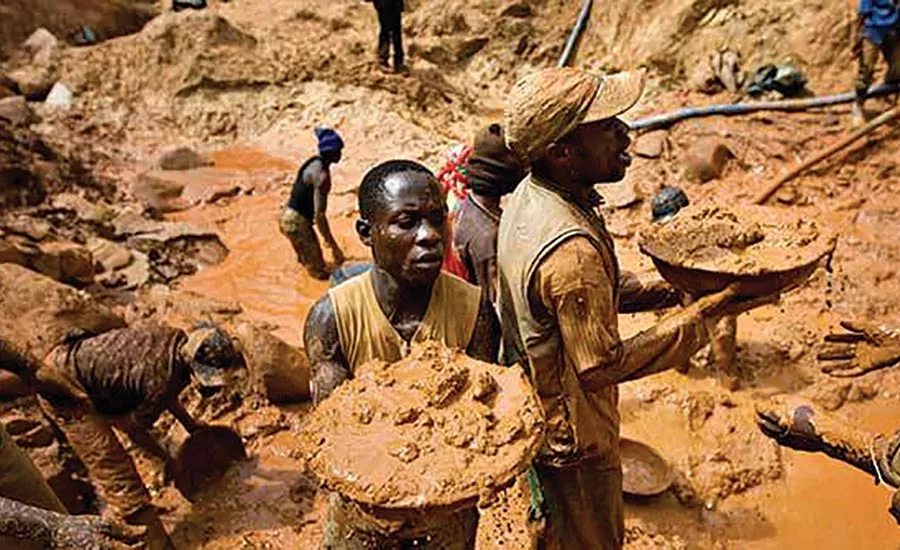
Just by putting “Congo miners” in the title here will have most readers flipping to the next page. I learned this lesson years ago writing an article about workplace safety, or the lack thereof, in China. “Why did you write this article?” asked a reader. “I don’t read ISHN for articles about China.” Another reader opined: “Everybody knows nobody values life in a country like China.”
This piece was written long before China became the economic juggernaut it is today. Its vast economic arsenal threatens U.S. companies and has triggered a trade war. Hundreds of multinationals have set up shop in China. Today that article would be more meaningful to more readers.
But why write about the inhumane work conditions faced every day by Congolese miners?
First, no one reads articles or really cares what goes on in Africa in general. It’s like a blanket thrown over the continent. Second, until recently, the DR Congo has been at the center of what’s been called Africa’s world war, with six million dead due to the fighting or disease or malnutrition. It’s a dangerous place to do business.
How many U.S. safety and health pros have any interest in a remote country of 85 million people that is corrupt and one of the poorest in Africa? The average male in the DR Congo lives to 58 (versus 76 years for a U.S. male). Radio is the major media medium. Journalists face arrest, threats and violence. The DR Congo ranks 227th in the world for per capita income, with an average citizen bringing home about $800 a year.
Not the kind of country profiled in the consultancy ORCHSE’s library of EHS laws and regs in 60+ countries.
What does that tell you? Mineral rich Africa makes, the world takes.
Cobalt king
The DR Congo is far and away the world’s biggest supplier of cobalt (around 67 percent).
How does the cobalt supply chain start? Mostly by digging for cobalt by hand – often children’s hands.
In 2016 it was estimated 100,000 cobalt miners in the DR Congo used their own shovels and hammers, often working day and night, digging hundreds of feet underground. This is a down-and-out, deadly version of the gig economy. It’s fueled by freelance miners, risk-based entrepreneurs selling “blood cobalt” to large mining operations, who then sell it up a maze-like supply chain until it is part of something you probably use daily – your cell phone, car, jewelry, the tile in your kitchen.
“Of course people die…”
It is a brutal, injurious, often fatal form of global outsourcing called artisanal mining. For decades it’s been exploited, anarchic, unsupervised, and ridden with accidents and deaths. “Of course people die,” a mining executive recently told The Wall Street Journal. “This is really (expletive) work.” He calls workers “barbarians.” His company has resisted handing out personal protective equipment because he claims the “barbarians” would just sell it. This executive’s boss, though, told The Journal, “We are going to make it right,” and said thousands of freelance miners have been provided safety helmets and gloves.
Human rights abuses in global supply chains are nothing new. Think of athletic shoes, clothes, toys, electronics – almost any product manufactured at least in part by hand – made in decrepit or hidden factories large and small in Vietnam, Bangladesh, China, Malaysia, Indonesia and other distant countries around the world. Congo’s cobalt trade has been harshly condemned by advocacy groups for nearly a decade. Even U.S. trade groups have owned up to abuses.
Short attention spans
Concern about how cobalt is mined “comes to the fore every now and again,” Guy Darby, a veteran cobalt analyst with Darton Commodities in London, told The Washington Post. “And it’s met with much muttering and shaking of the head and tuttering — and goes away again.”
Consumers love cobalt-powered devices, with no little muttering and shaking of the head. Cobalt is used to make alloys for jet engines. It’s an important source of gamma rays and used to treat some forms of cancer and as a medical tracer. It’s used to make industrial-strength magnets; high-speed cutting tools; rechargeable batteries in cellphones, laptops, electric vehicles; as a catalyst for petroleum and chemicals; and as drying agents in paints and inks. Cobalt blue is found in stained glass, pottery, porcelain, tiles and enamel jewelry.
Umicore NV, a Belgian chemicals giant, in 2016 hired accounting firm PricewaterhouseCoopers to review its cobalt supply chain; the company is “very concerned about human rights, child abuse, health and safety,” an executive told The Wall Street Journal. VW, the carmaker, works with battery-cell providers to analyze mines for unacceptable working conditions. An Apple spokesman told The Journal that freelance cobalt mining in the DR Congo has “real challenges… but we believe deeply that walking away would do nothing to improve conditions.”
Get real
These companies have reputations to protect. Cobalt consumers, who don’t even realize they’re benefiting from cobalt, walk away and do nothing to improve conditions. Some safety consultants and professionals like to promote the mission of “actively caring” for co-workers. It’s a term popularized by Dr. Scott Geller. Scott likes to say in an ideal world, we will all care actively about each other; be our brother and sister’s keeper. But there are limits to how far we’ll go. Recall the saying, “Not in my backyard?” The backyard is the boundary line. If it’s not in my backyard, it’s not my problem. Sorry, Scott, we don’t live in an ideal world.
Want to help? CharityWatch (the American Institute of Philanthropy) lists these DR Congo relief organizations: CARE USA, Doctors Without Borders USA, International Medical Corps, International Rescue Committee, Mercy Corps, Oxfam-America, and Save the Children. Just Google for their web addresses.
— Dave Johnson, ISHN Editor, johnsond@bnpmedia.com
Looking for a reprint of this article?
From high-res PDFs to custom plaques, order your copy today!