ISHN logo
search
cart
facebook twitter linkedin youtube
  • Sign In
  • Create Account
  • Sign Out
  • My Account
ISHN logo
  • NEWS
    • Today's News
    • Global Safety News
    • Government Regulations
  • PRODUCTS
    • Product Innovations
    • Featured Products
  • TOPICS
    • Environmental Health and Safety
    • Facility Safety
    • Workplace Health
    • Occupational Safety
    • PPE
    • More Topics
  • CONSTRUCTION
  • TECHNOLOGY
  • COLUMNS
    • Best Practices
    • Dave Johnson: What’s going on
    • Editorial Comments
    • Leading Safety
  • MULTIMEDIA
    • ISHN Podcast
    • Videos
    • Cold Stress Education Quiz
    • Webinars
    • White Papers
  • MORE
    • Buyer's Guide
    • Newsletters
    • Convention Companion
    • Polls
    • Events
    • ISHN Store
    • Sponsor Insights
  • EMAGAZINE
    • eMagazine
    • Archived Issues
    • Contact
    • Advertise
  • JOIN TODAY!
Occupational SafetyConstruction Industry Safety and Health

Teen roofer electrocuted when ladder touches power line

January 31, 2019

A 16-year-old roofer was killed last year in Kentucky when he lost control of a 25-foot ladder and it made contact with a 7200-volt electric power line, according to Fatality Assessment & Control Evaluation (FACE) by the Kentucky Injury Prevention and Research Center.

The incident occurred at a private residential home, when the victim was trying to position an aluminum extension ladder against a roof.

Although there were no witnesses, safety specialist DeAnna McIntosh surmised that the worker had trouble accessing the roof because of two 4 feet x 4 feet boxwood bushes that were planted 3 feet from the home’s exterior wall.

With the ladder still fully extended, the victim attempted to move it closer by lifting the ladder and walking between the bushes to find a suitable base. The ladder became unstable, causing the victim to lose his balance falling backwards. As the victim and ladder were falling, the ladder fell into a top phase power line carrying 7.2 kilovolts (7,200 volts). Because the victim was still in contact with the highly conductive aluminum ladder when it struck the power line, electricity was able to travel through the metal and into the young worker. He was immediately electrocuted.

According to the FACE report, contributing factors include:

  • Work performed outside youth employment regulations
  • Lack of hazard recognition and safety training
  • Use of a conductive ladder around high voltage lines
  • Transporting an extension ladder in the vertical position

To prevent similar occurrences, FACE investigators issued the following recommendations:

  • Perform a job hazard analysis of the worksite
  • Become familiar with and comply with all federal, state, and local regulations associated with youth employment
  • Use non-conductive ladders around power lines
  • Lower the extension ladder and transport it horizontally.

The report notes that occupational injuries and fatalities are often the result of one or more contributing factors or key events in a larger sequence of events that ultimately result in the injury or fatality. National Institute Occupational Safety and Health (NIOSH) investigators identified the following unrecognized hazards as key contributing factors in this incident:

  • Work performed outside youth employment regulations
  • Lack of hazard recognition and safety training
  • Use of a conductive ladder around high voltage lines
  • Transporting an extension ladder in the vertical position

NIOSH recommends that employers perform a job hazard analysis prior to performing a new task. In this incident, the employees were exposed to working at heights, working from ladders, and close proximity to high voltage power lines. A job hazard analysis would recognize the numerous hazards that the roofing workforce was being exposed to so that necessary safety precautions could be undertaken.

Special regulations for young workers

Additionally, employers should become familiar with and comply with all federal, state, and local regulations associated with youth employment, including safety training and hazard recognition. According to the Center for Disease Control (CDC), approximately 1.5 million youth under the age of 18 are employed during the school year, with a majority of high school students working at some point before they graduate. Due to their age and inexperience, these workers are more vulnerable to work-related injury and death. In 2014, the rate of work-related injuries treated in emergency departments for workers, ages 15–19, was 2.18 times greater than the rate for workers 25 years of age and older.

Due to the high injury rate of minors in the workplace, the Commonwealth of Kentucky has very specific child labor laws, providing guidelines on how many hours per week young workers are permitted to work, what times of the day they are allowed to work, and what occupations are prohibited for minors under the age of 185. The Kentucky Labor Cabinet lists 19 occupations that are prohibited for minors, including #16: “Roofing operations and all work on or about a roof.” Subcontractors and contractors should familiarize themselves with Kentucky child labor laws and Federal child labor laws before employing youths in specific occupations.

KEYWORDS: electrical safety serious injuries & fatalities (SIFs) workplace deaths workplace safety

Share This Story

Looking for a reprint of this article?
From high-res PDFs to custom plaques, order your copy today!

Recommended Content

JOIN TODAY
to unlock your recommendations.

Already have an account? Sign In

  • forklift safety

    Exploring the latest technologies in forklift safety

    With more staff and more stock in warehousing now more...
    Facility Safety
    By: Josh Cramer
  • welding

    All about welder’s flash or arc eye

    A flash burn is a painful inflammation of the cornea,...
    Environmental Health and Safety
  • dangerous jobs

    The 10 most dangerous jobs in the U.S.

    On-the-job deaths have been rising — hitting the highest...
    Government Safety Regulations
    By: Benita Mehta
Manage My Account
  • eMagazine Subscriptions
  • ISHN Newsletter & Other Newsletter Alerts
  • Online Registration
  • Manage My Preferences
  • Subscription Customer Service

More Videos

Sponsored Content

Sponsored Content is a special paid section where industry companies provide high quality, objective, non-commercial content around topics of interest to the ISHN audience. All Sponsored Content is supplied by the advertising company and any opinions expressed in this article are those of the author and not necessarily reflect the views of ISHN or its parent company, BNP Media. Interested in participating in our Sponsored Content section? Contact your local rep!

close
  • man wearing the the Sundström SR200 Full Face Mask Respirator
    Sponsored byOHD

    5 Fit Testing Mistakes That Could Cost You

  • This image shows Magid AcuSpex polarized blue mirrored safety glasses.
    Sponsored byMagid Glove and Safety

    Construction PPE Guide: What Crews Need for Each Task

  • lone worker in confined space
    Sponsored byAlphasense Ltd.

    GET THE LEAD OUT of your Safety Oxygen Sensors!

Popular Stories

SpaceX 7 launch

OSHA Investigating Fatal Fall at SpaceX Starbase

Worker Impairment

How to Tell When a Co-Worker is Impaired? A Safety Pro’s Challenge

Automated loading dock equipment

After March 2026 Rivian Death, Safety Managers Reassess Loading Dock Systems Under OSHA's Warehouse Emphasis Program

top 10 most dangerous jobs

Poll

Seasonal Readiness

With the federal heat stress prevention rule on the horizon, which area of your safety program needs the most attention?
View Results Poll Archive

Products

Surviving an OSHA Audit A Management Guide, 2nd Edition

Surviving an OSHA Audit A Management Guide, 2nd Edition

See More Products

ISHN Podcasts

Related Articles

  • Worker electrocuted when metal ladder touches overhead power lines

    See More
  • Worker burned when metal pole touches power line

    See More
  • Lineman in bucket truck touches power line, killed by thousands of volts

    See More

Related Products

See More Products
  • 1119906652.webp

    Alive and Well at the End of the Day: The Supervisor's Guide to Managing Safety in Operations, 2E

  • occup safety.jpg

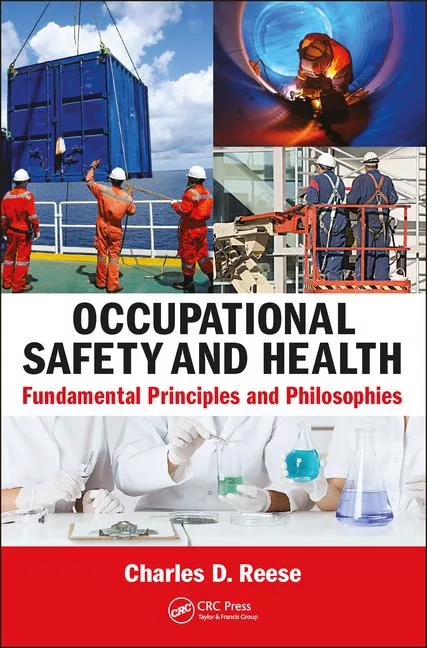
    Occupational Safety and Health: Fundamental Principles and Philosophies

See More Products

Events

View AllSubmit An Event
  • Gas Detectors: The most common mistakes people make when using atmospheric monitors

    Learn the most common mistakes people make when using atmospheric monitors. Join Bob Henderson from GFG Instrumentation for this educational webinar.
View AllSubmit An Event

Related Directories

  • LineDrive

    LineDrive is a solutions-based sales agency that specializes in People Safety, Facility Safety, and Facility Maintenance & Productivity. We partner with top brands to deliver services and solutions that keep your facility safe and productive. Our services and solutions are free of charge; we simply ask that if we help solve a problem, reduce risk or increase productivity, that you support our partner brands with a purchase via your preferred distributor.
×

Become a Leader in Safety Culture

Build your knowledge with ISHN, covering key safety, health and industrial hygiene news, products, and trends.

JOIN TODAY
  • RESOURCES
    • Advertise
    • Contact Us
    • Directories
    • Manufacturing Division
    • Store
    • Want More
  • SIGN UP TODAY
    • Create Account
    • eMagazine
    • Newsletters
    • Customer Service
    • Manage Preferences
  • SERVICES
    • Marketing Services
    • Reprints
    • Market Research
    • List Rental
    • Survey/Respondent Access
  • STAY CONNECTED
    • LinkedIn
    • Facebook
    • YouTube
    • X (Twitter)
  • PRIVACY
    • PRIVACY POLICY
    • TERMS & CONDITIONS
    • DO NOT SELL MY PERSONAL INFORMATION
    • PRIVACY REQUEST
    • ACCESSIBILITY

Copyright ©2026. All Rights Reserved BNP Media, Inc. and BNP Media II, LLC.

Design, CMS, Hosting & Web Development :: ePublishing